Top 10 Highest Paying Play to Earn Web 3.0 Games in 2026
Key Takeaways
- Top Games: The highest paying play-to-earn games in 2026 combine engaging gameplay with sustainable blockchain economies.
- Earning Methods: Players can generate income through NFT trading, tournaments, staking, land ownership, creator programs, and in-game marketplaces.
- Success Factors: Strong tokenomics, active communities, regular updates, and multiple revenue streams help create long-term value for players and developers.
- Future Trends: AI-powered gameplay, cross-chain interoperability, cross-platform gaming, and decentralized economies are shaping the future of Web3 gaming.
- Business Growth: Businesses can build scalable blockchain games by partnering with an experienced play-to-earn game development company that understands Web3 technology and game design.
Introduction
The highest paying play to earn games is no longer a trend. They’ve become a vital part of the Web3 gaming industry. In 2026, developers are creating sustainable blockchain ecosystems that reward talent, strategy and long-term participation, with millions of players earning digital assets through immersive gameplay. This is in stark contrast to the endless grind that is the current norm. But not all play-to-earn games really let you earn. Many projects start out with promising tokenomics, but fail to maintain a balanced economy within the game or a big enough player base.
The games that continue to succeed are the ones that are focused on fun gameplay rather than rewards and build strong economies that are player driven. That’s what separates successful Web3 games from projects that disappear after a few months. In this blog, we will take a look at the most profitable play-to-earn games of 2026, how players can make money from them, and the features that make these Web3 titles successful. If you are building a blockchain game or are on the search for your next one, this list will provide you with a complete overview of where the future of play-to-earn gaming is headed.
For a technical overview, see how Web3 games are built from architecture to launch.
Understanding Play-to-Earn Games in 2026
The world of play to earn games 2026 is a far cry from what it was a few years ago. Most of the early blockchain games were mostly token rewards, which meant the economy depended on a steady stream of new players, and a lot didn’t make it. As growth slowed, reward values declined, player engagement dropped, and many projects eventually lost their player base.
Today’s best Web3 games have learned valuable lessons from those stumbling blocks. They aren’t just focused on rewards. They’re focused on building sustainable digital economies that make playing fun. Players can earn money through competitive matches, NFT trading, seasonal events, creator programs, staking and community participation. The most important difference is that players play the game because they enjoy it, and the earning opportunities just make the experience better.
Teams planning their own economy can explore our blockchain game development capabilities.
What Makes a Play-to-Earn Game Actually Profitable?
The most successful best play to earn crypto games provide more than just rewarding gameplay. Strong economies, vibrant communities and ongoing development create enduring value for both participants and developers.
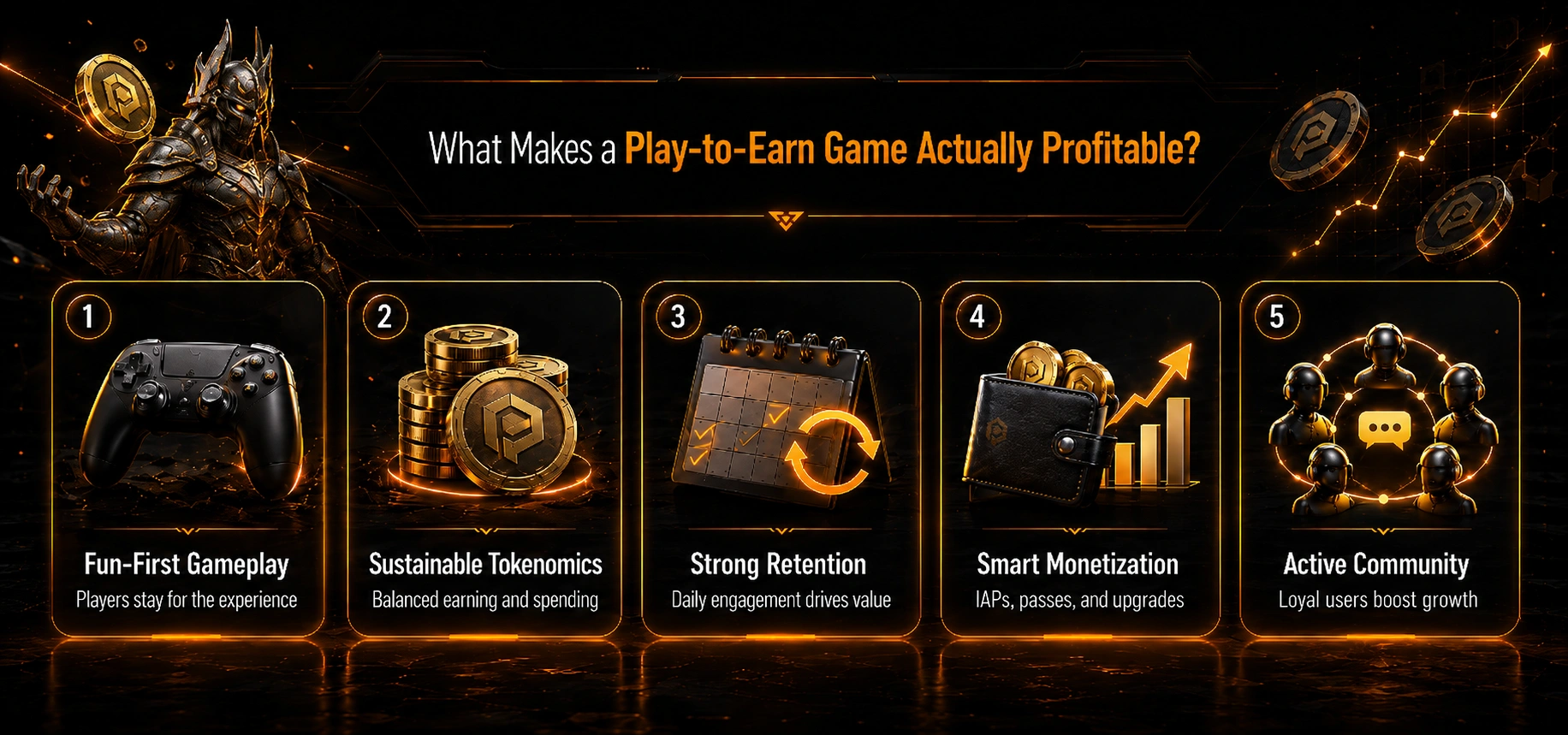
1. Strong Token Economy
A balanced token economy is in place to manage inflation, spur demand for digital assets, and offer consistent rewards, all of which keep a healthy in-game economy thriving.
2. Active Player Community
The more players there are, the more dynamic the marketplace becomes, the more competition there is, trading thrives and the blockchain gaming ecosystem is kept alive and well.
3. Multiple Income Streams
Players in games with multiple revenue opportunities can earn rewards through a variety of activities instead of relying on one income source.
4. Regular Developer Support
Players are kept engaged as the game continues to evolve over time with regular updates, new content, gameplay enhancements and security upgrades.
Reliable releases also require structured game quality assurance across gameplay, wallets, and marketplaces.
Want to Build a Play-to-Earn Game With Sustainable Tokenomics?
Top 10 Highest Paying Play-to-Earn Web3 Games in 2026
The highest paying play to earn games in 2026 combines engaging gameplay with sustainable blockchain economies. Here are ten standout Web3 games offering rewarding experiences, digital ownership, and multiple earning opportunities.
1. Meerkat Mining
Meerkat Mining ranks first on our list because it combines strategic resource management with blockchain-based rewards. The game is built on Ethereum and Tron and allows players to explore a vast mining world, uncover valuable resources, and use skill and strategy to compete for cryptocurrency rewards. Meerkat Mining offers players true ownership of their digital profits and a safe and fun Web3 gaming experience through blockchain-backed transactions, collectible goods, and an open reward system.
Studios planning a network-specific economy can explore Ethereum blockchain development.
How Players Earn
- Mine valuable digital resources
- Win cryptocurrency rewards
- Collect and trade rare assets
- Compete for leaderboard prizes
- Earn through blockchain-backed mining
Best for
Players who enjoy strategy games with real cryptocurrency rewards and blockchain-powered digital ownership.
2. Illuvium
Illuvium is an immersive open-world role-playing game on Unreal Engine and one of the most graphically spectacular blockchain games of 2026. Players can catch Illuvials, powerful creatures to use in strategic auto-battler combat, while exploring a vast fantasy world. It is a game that appeals to players into strategy, exploration and owning digital assets as players can collect, upgrade and trade rare Illuvials as NFTs in the marketplace as they progress through the game.
For similar 3D production workflows, review our Unreal Engine game development services.
How Players Earn
- Selling rare Illuvials
- Winning tournament rewards
- Staking ILV tokens
- Generating income from land ownership
- Trading NFTs on the marketplace
Best for
Players who enjoy RPG adventures mixed with collectible strategy games.
3. Pixels
Pixels shows you don’t need complicated mechanics for a play-to-earn game to have a loyal player base. Players can grow crops, create resources, finish missions and take part in seasonal events to earn money in this farming and social simulation game. Pixels’ simple gameplay and cheap hardware requirements make it suitable for a wide variety of gamers. Farming, NFT land ownership, crafting and marketplace trading make for a player-driven economy that is great for both novice and seasoned Web3 players.
How Players Earn
- Selling harvested crops
- Trading crafted resources
- Owning and monetizing NFT land
- Completing daily quests
- Participating in seasonal events
Best for
Casual players looking for consistent long-term earnings rather than high-risk speculation.
4. Big Time
Big Time blends the excitement of a traditional MMORPG with blockchain ownership without making the Web3 experience feel complicated. Players can team up for dungeon runs, complete co-op missions, defeat powerful bosses, and collect unique cosmetic items throughout their journey. Rather than centering the gameplay around NFTs, it integrates them naturally by allowing players to trade rare cosmetics, equipment, and limited-edition collectibles through its marketplace, creating additional earning opportunities while keeping the gameplay engaging.
How Players Earn
- Collect and trade cosmetic NFTs
- Sell rare equipment and collectibles
- Earn rewards from seasonal events
- Profit from valuable item drops
- Trade assets through the in-game marketplace
Best for
Players who enjoy action RPGs with cooperative gameplay.
5. Gods Unchained
Gods Unchained is one of the leading blockchain trading card games, combining strategic gameplay with true digital ownership. Every collectible card exists as a player-owned NFT, allowing users to build valuable collections that can be traded on the marketplace. Players can earn by winning ranked matches, competing in tournaments, and collecting rare limited-edition cards. Unlike many play-to-earn games, success in Gods Unchained depends more on strategy and skill than on how much money a player spends.
See how NFT game development supports tradable cards and player-owned assets.
How Players Earn
- Win rewards through ranked matches
- Trade valuable NFT cards
- Compete in tournaments for prize pools
- Sell limited-edition card collections
- Earn seasonal competitive rewards
Best for
Competitive strategy gamers who enjoy tactical decision-making.
6. Parallel
Parallel has quickly established itself as one of the fastest-growing blockchain card games, thanks to its polished gameplay, balanced mechanics, and competitive esports scene. The game rewards strategic decision-making while giving players ownership of collectible NFT cards that can be traded on the marketplace. With regular tournaments, competitive seasons, and a strong focus on skill-based gameplay instead of pure NFT speculation, Parallel has earned its place among the best play to earn crypto games in 2026.
How Players Earn
- Win rewards in ranked competitive matches
- Trade rare NFT cards on the marketplace
- Participate in tournament prize pools
- Sell collectible cards to other players
- Earn rewards during competitive seasons
Best for
Players who enjoy skill-based card battles and competitive esports.
7. Axie Infinity
Axie Infinity remains one of the most recognized names in Web3 gaming, thanks to its lasting impact on the play-to-earn industry. Over the years, the game has evolved by strengthening its economy and focusing on long-term sustainability rather than short-lived hype. Players can earn through strategic battles, seasonal competitions, Axie breeding, land-based gameplay, and NFT trading, while regular updates and community-driven improvements continue to keep the ecosystem active and engaging.
How Players Earn
- Win rewards in PvP battles
- Buy, breed, and sell Axie NFTs
- Earn from land-based gameplay
- Participate in seasonal competitions
- Trade digital assets on the marketplace
Best for
Players who enjoy strategy games with an established marketplace and an active community.
8. Star Atlas
Star Atlas is one of the most ambitious blockchain games in the Web3 space, offering a vast space-themed metaverse where exploration, combat, resource management, and economic strategy come together. Players can own and trade spaceships, mining stations, resources, and other digital assets while building wealth through mining, trading, exploration, and fleet management. With its player-driven economy and focus on long-term progression, Star Atlas is an excellent choice for gamers who enjoy strategic planning and immersive gameplay.
Space-based economies often overlap with metaverse game development.
How Players Earn
- Mine valuable in-game resources
- Trade resources and spaceships
- Build income through fleet management
- Sell NFT ships and digital assets
- Own and monetize land or space stations
Best for
Gamers who enjoy open-world exploration, strategy, and virtual economies.
9. The Sandbox
The Sandbox has grown beyond a virtual world into a thriving creator economy where players, developers, and brands can build and monetize interactive experiences. Instead of relying only on gameplay rewards, users can earn by creating games, selling NFT assets, owning or renting virtual land, hosting events, and collaborating with brands. With multiple ways to participate and generate income, The Sandbox appeals to gamers, creators, artists, and developers who want to be part of a dynamic Web3 ecosystem.
How Players Earn
- Create and sell NFT assets
- Rent or sell virtual land
- Monetize player-created experiences
- Earn creator rewards through community engagement
- Trade digital assets on the marketplace
Best for
Creators who enjoy designing virtual experiences and building communities.
10. Off The Grid
Off The Grid stands out by putting engaging gameplay ahead of token rewards, making it one of the most exciting Web3 battle royale games in 2026. Its fast-paced combat, cinematic storytelling, and AAA-quality visuals appeal to both traditional gamers and blockchain enthusiasts. Players can collect, customize, and trade valuable in-game assets, including rare equipment and cosmetic NFTs, while earning rewards through competitive matches and seasonal events. By prioritizing player experience alongside digital ownership, Off The Grid represents the next generation of sustainable play-to-earn gaming.
How Players Earn
- Win ranked match rewards
- Trade NFT weapons and gear
- Earn seasonal event rewards
- Sell limited-edition collectibles
- Compete in tournaments for prizes
Best for
Players looking for a high-quality multiplayer experience with real digital ownership.
Comparison: Which Play-to-Earn Game Fits You?
Each play-to-earn game has a target market, an earning mechanism, and an experience. By comparing them, you will be able to choose the game that best suits your interests, your style of play, and your financial goals.
| Game |
Genre |
Main Earning Method |
Best For |
| Meerkat Mining |
Strategy |
Crypto mining & collectibles |
Strategy gamers |
| Off The Grid |
Battle Royale |
NFT trading & tournaments |
Competitive gamers |
| The Sandbox |
Creator Platform |
User-generated content |
Creators |
| Star Atlas |
Space Strategy |
Mining & trading |
Strategy players |
| Axie Infinity |
Strategy RPG |
Battles & breeding |
Collectors |
| Parallel |
Trading Card |
Ranked competitions |
Card game enthusiasts |
| Gods Unchained |
Trading Card |
NFT cards |
Competitive players |
| Big Time |
MMORPG |
Cosmetic NFTs |
RPG lovers |
| Pixels |
Farming Simulator |
Farming & crafting |
Casual gamers |
| Illuvium |
Open-world RPG |
Creature collection |
Adventure gamers |
The best choice depends on your gaming style, earning goals, and the amount of time you’re willing to invest.
Businesses comparing production models can review our end-to-end game development services.
Need Help Choosing the Right Play-to-Earn Web3 Game Model?
How to Choose the Right Play-to-Earn Game?
Choosing the right play-to-earn game is about more than just earning potential. By evaluating gameplay, community, and enduring sustainability you can ensure you’re making the most of your time and resources.
1. Focus on Gameplay
Choose a game you genuinely enjoy because long-term engagement often leads to better earning opportunities.
2. Understand the Economy
Understand how marketplaces, tokens, and NFTs operate to identify games with long- term economics rather than short-lived reward systems.
3. Check Community Activity
A strong player community encourages active trading, healthy competition, frequent events, and long-term development in the game’s ecosystem.
4. Evaluate Developer Support
Regular updates, new content and ongoing improvements demonstrate a developer’s dedication to providing a reliable and engaging gaming experience.
The Future of Play-to-Earn Games Beyond 2026
The next generation of play-to-earn games 2026 will be more than token rewards. Developers’ top priorities include richer gameplay, stronger player communities, and sustainable economies that support long-term growth.
Here are the biggest trends already shaping the next generation of Web3 gaming:
- AI-powered game systems can create more dynamic and personalized gameplay.
- Frictionless asset transfers with cross-chain interoperability.
- Player-driven decentralized economy.
- Cross-platform gaming across console, PC, VR, and mobile game development ecosystems.
- More AAA-level mainstream gaming experiences.
As blockchain becomes more user-friendly, players will likely spend more time enjoying immersive games and less time worrying about wallets and transactions.
Why Are Businesses Investing in Play-to-Earn Game Development?
The growing success of Web3 games, startups, game studios and businesses are investing in their own blockchain gaming ecosystems. A well designed play-to-earn game can generate revenue through in-game monetization opportunities, NFT marketplaces, digital assets, premium content, transaction fees, virtual land sales, and more. But more important than that, these games increase player engagement by giving players real ownership of their digital goods and an important role in the economy of the game.
But using NFTs or cryptocurrencies is only one component of a successful blockchain game. It needs balanced tokenomics, secure smart contracts, interesting gameplay, scalable infrastructure and regular upgrades to keep players interested. That’s why many companies collaborate with an expert play-to-earn game development company that can transform creative ideas into safe, scalable, and engaging Web3 gaming experiences built for long-term success.
Read how smart contracts work before designing token rewards and marketplace transactions.
Final Thoughts
The highest paying play-to-earn games of 2026 have proven that compelling gameplay and sustainable earning opportunities can go hand in hand and the Web3 gaming industry has come a long way from token incentives. Long-term success comes down to finding or building games with solid gameplay, healthy economies and thriving communities whether you’re a player looking for your next blockchain adventure or a company exploring the possibilities of Web3 gaming. Partnering with an established play-to-earn game development company can turn innovative concepts into scalable, player-focused games that shine in a constantly changing competitive arena.
Frequently Asked Questions
1. Which is the highest paying play-to-earn game in 2026?
There isn’t a single answer because earnings depend on player skill, market demand, and participation. However, titles like Meerkat Mining, Off The Grid, The Sandbox, and Star Atlas consistently rank among the highest paying play to earn games due to their active economies and multiple earning opportunities.
2. Are play-to-earn games still profitable in 2026?
Yes, but profitability depends on choosing games with sustainable economies rather than chasing short-term hype. Games that combine engaging gameplay with healthy marketplaces generally offer better long-term value.
3. Do I need cryptocurrency to start playing?
Not always, many modern Web3 games offer free-to-play or low-cost entry options before players decide to invest in digital assets.
4. What makes the best play-to-earn crypto games successful?
The best play to earn crypto games prioritize enjoyable gameplay, balanced tokenomics, regular updates, active communities, and secure blockchain integration. Rewards are designed to complement the experience rather than replace it.
5. Can businesses build their own play-to-earn game?
Absolutely, with the growing demand for Web3 gaming, businesses across entertainment, esports, education, and virtual communities are launching their own blockchain games. Working with a skilled development team helps ensure the game is secure, scalable, and designed for long-term success.
6. Are play-to-earn games legal?
Yes, play-to-earn games are legal in many countries, but regulations surrounding cryptocurrency, NFTs, and digital assets vary by region. Before investing or withdrawing earnings, it’s important to check the local laws and tax requirements applicable in your country.
7. Can I play play-to-earn games without buying NFTs?
Yes, many play to earn games 2026 now offer free-to-play or low-cost entry options, allowing players to experience the game before purchasing NFTs or other digital assets. This approach makes Web3 gaming more accessible to a wider audience.
8. What blockchain networks are most commonly used for play-to-earn games?
Leading best play to earn crypto games are built on blockchain networks such as Ethereum, Polygon, Immutable, Solana, and BNB Chain. Developers choose these networks based on factors like transaction speed, security, scalability, and gas fees.
9. What features should businesses include in a play-to-earn game?
A successful play-to-earn game should include engaging gameplay, balanced tokenomics, NFT integration, secure smart contracts, multiplayer functionality, an in-game marketplace, and scalable blockchain infrastructure. Partnering with an experienced play to earn game development company can help businesses build a secure and sustainable Web3 gaming ecosystem.
10. What is the future of play-to-earn games after 2026?
The future of play-to-earn gaming will focus on AI-powered gameplay, interoperable digital assets, cross-platform experiences, decentralized player economies, and AAA-quality game design. As blockchain technology becomes more user-friendly, Web3 games are expected to attract a much larger mainstream gaming audience.
Turn Your Web3 Game Idea Into a Scalable Product