Key Takeaways
- Market Opportunity: Hide-and-seek multiplayer games continue to grow because players want quick, social, and highly replayable experiences.
- Essential Features: Dynamic camouflage, multiplayer matchmaking, interactive maps, character progression, and secure backend systems form the foundation of a successful game.
- Development Process: A structured roadmap from research and prototyping to testing, launch, and LiveOps helps create a scalable multiplayer game.
- Monetization Strategy: Cosmetic skins, battle passes, premium currency, and limited-time events can create sustainable revenue without compromising fairness.
- Long-Term Success: Original gameplay, continuous updates, community feedback, and the right development partner help keep players engaged.
Introduction
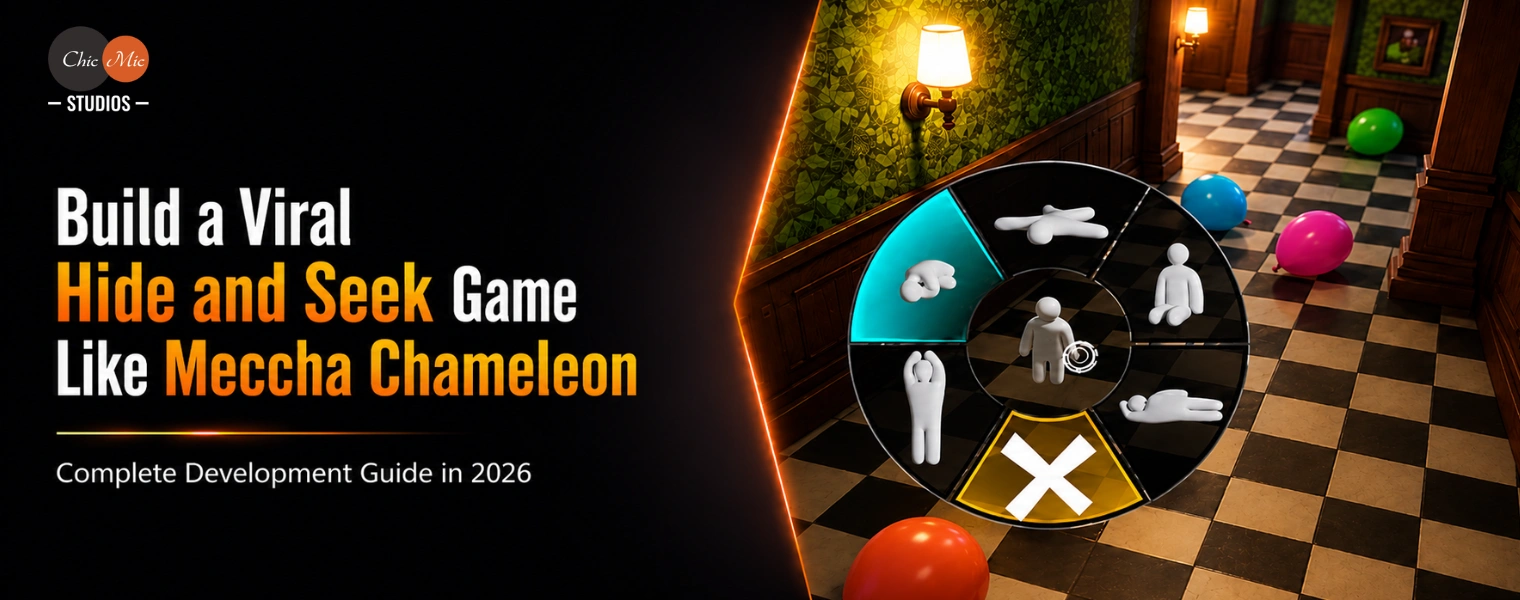
Mobile gaming trends come and go, but sometimes a simple idea catches the attention of millions of players. If you intend to make a hide-and-seek game like Meccha Chameleon, now is a strong time to explore this emerging genre. Fast matches, imaginative gameplay, and social interaction make these games easy to learn but surprisingly difficult to master.
The opportunity is not about copying a popular idea. It is about understanding what makes players stay, designing replayable mechanics, and building a multiplayer experience that feels fresh in every match. If you are still studying the original concept, this overview of Meccha Chameleon pricing and features gives useful market context.
Why Are Hide and Seek Games Becoming So Popular in 2026?
The gaming industry has evolved rapidly. Large open-world games still have loyal audiences, but many players now prefer short, social experiences they can enjoy at any time. This shift has created the right environment for viral hide-and-seek games where every round feels quick, surprising, and replayable.
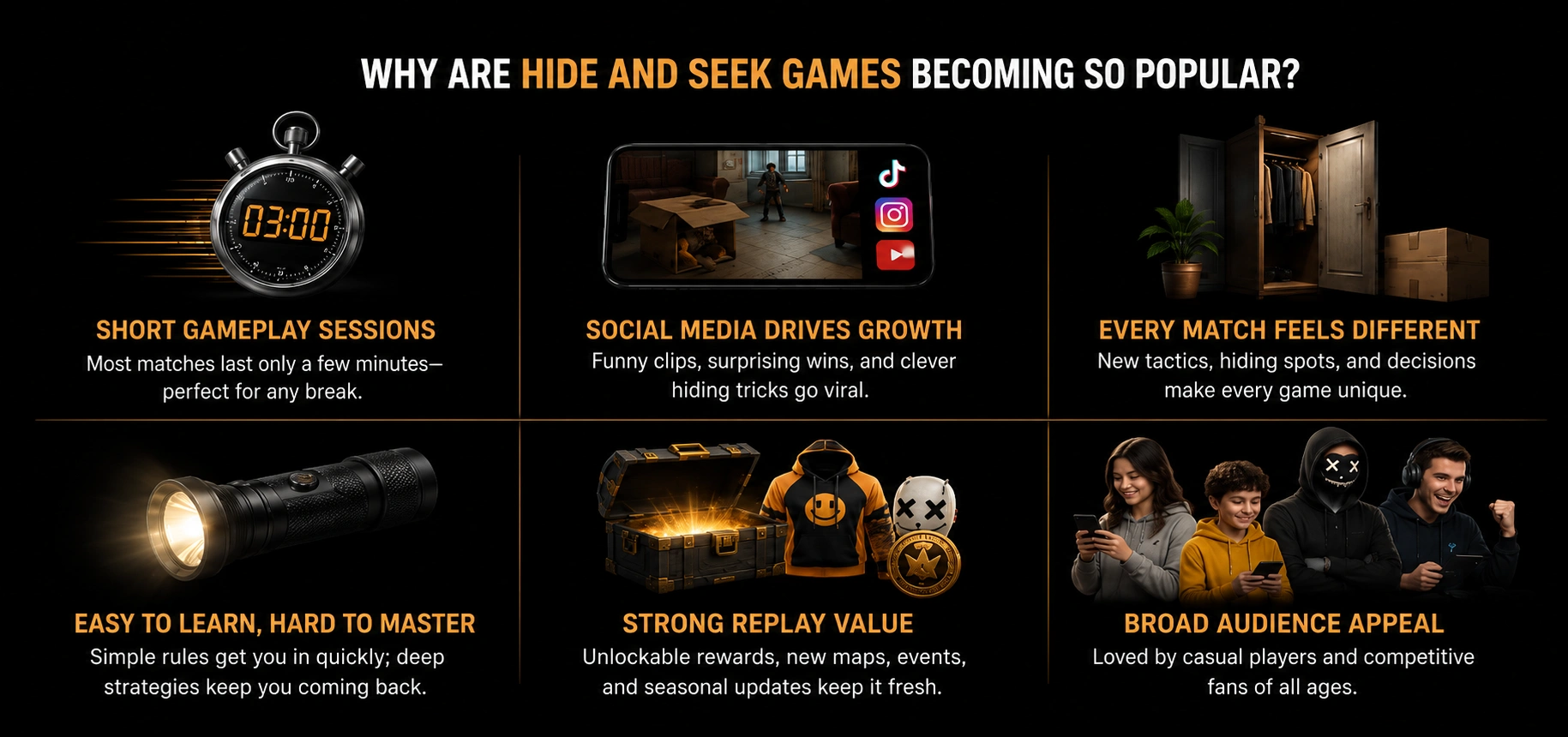
Social media also plays a major role in discovery. Studios targeting this audience often start with a focused mobile game development strategy.
- Short gameplay sessions: Most matches last only a few minutes, making them suitable for breaks, commuting, or casual play.
- Social media drives organic growth: Funny clips, surprising wins, and creative hiding tricks are ideal for TikTok, Instagram Reels, and YouTube Shorts.
- Every match feels different: Players use different tactics and make unpredictable decisions, keeping the experience fresh.
- Easy to learn, difficult to master: Simple rules reduce onboarding friction while strategic depth supports long-term mastery.
- Strong replay value: Unlockable cosmetics, varied maps, dynamic gameplay, and seasonal events encourage repeat sessions.
- Broad audience appeal: The format works for both casual mobile players and competitive multiplayer fans.
What Makes Meccha Chameleon So Addictive?
Viral games rarely become successful by accident. They combine a simple premise with a gameplay loop that gives players a reason to return. You can see the core appeal more clearly in this breakdown of the viral chameleon hide-and-seek game.
1. Instant Learning Curve
Simple controls and clear goals help new players understand the game within minutes. Lower frustration usually leads to stronger early retention.
2. Camouflage Creates Constant Tension
Blending into the environment forces players to think tactically. Every movement and hiding choice can change the outcome of a match.
3. Fast-Paced Gameplay
Short, action-driven rounds maintain excitement and make it easy for players to start another match immediately.
4. Every Match Feels Unique
Different player strategies, hidden areas, and random events create new situations in every session.
5. Friendly Competition
Leaderboards, rankings, and seasonal events encourage improvement while keeping the multiplayer experience social and approachable.
Ready to Build the Next Viral Hide and Seek Game?
Essential Features to Build a Hide and Seek Game Like Meccha Chameleon
Building a hide-and-seek game like Meccha Chameleon requires the right balance of engaging gameplay, multiplayer stability, and long-term retention. For rapid prototyping and flexible deployment, many teams choose Unity game development.
1. Dynamic Camouflage System
A strong camouflage system should reward observation, positioning, timing, and strategic use of the environment.
2. Multiplayer Matchmaking
Low-latency servers and fast, skill-aware matchmaking help create fair matches, reduce waiting time, and improve session quality.
3. Interactive Maps
Maps should include moving obstacles, hiding spots, interactive props, and changing spaces. Strong 3D environment design can make these spaces more readable and memorable.
4. Character Progression
Seasonal rewards, achievements, unlockable skins, and cosmetic upgrades give players meaningful goals without creating pay-to-win advantages.
5. Live Events
Seasonal maps, limited-time events, community challenges, and exclusive rewards give players new reasons to return.
6. AI-Powered Opponents
AI bots can fill empty lobbies, reduce matchmaking delays, and provide a smoother onboarding experience for new players.
7. Cross-Platform Support
Cross-platform progression and multiplayer access can expand the potential audience and reduce friction between devices.
8. Secure Backend Infrastructure
The backend should support authentication, cloud saves, anti-cheat systems, scalable servers, and player data. Scalable database development becomes especially important as concurrent users grow.
How to Build a Viral Hide and Seek Game Like Meccha Chameleon?
A strong multiplayer game needs more than a good concept. Each stage, from research and prototyping to launch and LiveOps, should support performance, retention, and scalability.
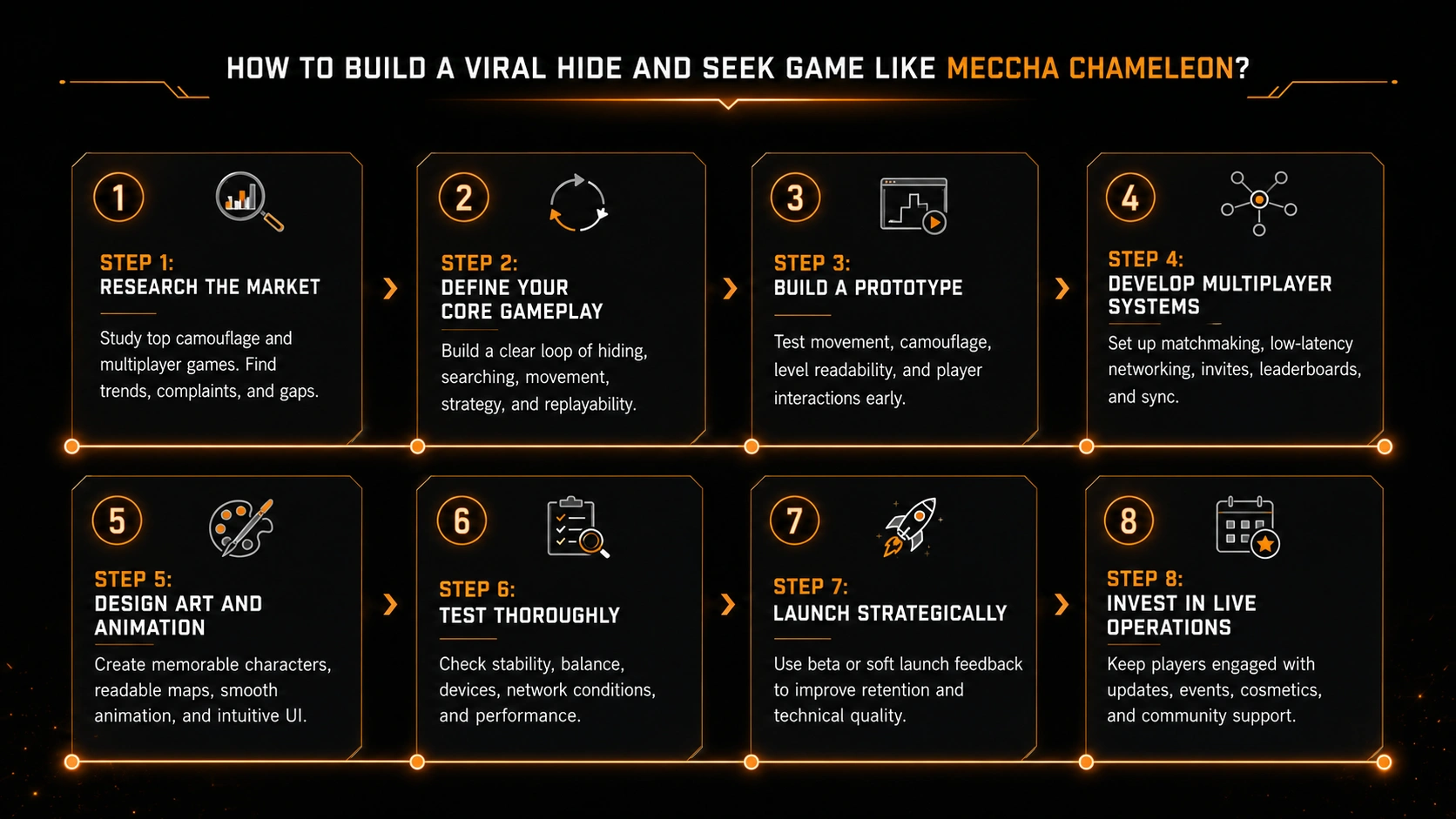
Step 1: Research the Market
Study successful multiplayer and camouflage games. Look for player expectations, recurring complaints, and gaps where your game can offer something original.
Step 2: Define Your Core Gameplay
Create a simple loop that balances hiding, searching, movement, strategy, and replayability. The objective should be clear even to first-time players.
Step 3: Build a Prototype
Test movement, camouflage mechanics, level readability, and multiplayer interactions before investing in full-scale production.
Step 4: Develop Multiplayer Systems
Build reliable matchmaking, low-latency networking, friend invites, leaderboards, and synchronization. A structured multiplayer game development guide can help during technical planning.
Step 5: Design Art and Animation
Create memorable characters, readable maps, fluid animations, and intuitive interfaces. Player readability is especially important when camouflage is a core mechanic.
Step 6: Test Thoroughly
Test across devices, network conditions, and player scenarios. Dedicated game quality assurance helps identify stability, balance, and performance issues before launch.
Step 7: Launch Strategically
Use beta testing or a soft launch to collect feedback, validate retention, measure technical performance, and improve the game before a wider release.
Step 8: Invest in Live Operations
New maps, balance changes, time-limited challenges, and frequent content releases can extend the lifecycle of the game.
Claim Your Free Hide and Seek Game Consultation
Monetization Strategies That Actually Work
A good monetization strategy should complement the player experience instead of interrupting it. The strongest systems add optional value while keeping competition fair.
1. Cosmetic Skins
Offer character skins, animations, visual effects, and accessories that do not provide gameplay advantages.
2. Seasonal Battle Passes
Battle passes can combine challenges, progression milestones, and exclusive cosmetic rewards to support both engagement and recurring revenue.
3. Premium Currency
Premium currency can simplify purchases for cosmetics, event passes, and customization items while keeping progression understandable.
4. Rewarded Advertisements
Rewarded ads allow players to opt in for bonuses instead of interrupting the core game. This model is also common in HTML5 game development projects.
5. Limited-Time Events
Seasonal events can introduce themed content, exclusive rewards, and special offers that increase engagement and optional spending.
6. Brand Collaborations
Partnerships with brands or entertainment properties can introduce exclusive cosmetics and events that attract new audiences.
Common Mistakes Developers Make
Even promising concepts can struggle when core production decisions are handled poorly. Avoiding these mistakes can improve retention, stability, and long-term performance.
1. Copying Instead of Innovating
Use successful games as inspiration, but create original mechanics, maps, progression systems, and visual identity.
2. Ignoring Server Scalability
Plan backend capacity early so traffic spikes do not cause matchmaking failures, downtime, or poor gameplay performance.
3. Weak Progression Systems
Rewards should feel relevant. Achievements, cosmetics, seasonal content, and progression milestones give players clear reasons to keep playing.
4. Poor Matchmaking
Unbalanced matches frustrate both new and experienced players. Better matchmaking improves fairness and satisfaction.
5. Overloading the Game With Ads
Frequent interruptions can reduce retention. Prefer optional or well-timed monetization placements that do not break the gameplay loop.
6. Launching Without Analytics
Analytics help identify retention problems, progression bottlenecks, balance issues, and monetization patterns after launch.
7. Neglecting Community Feedback
Player feedback can reveal issues that internal testing misses. It also helps teams prioritize updates that matter to the community.
Why Partner With a Professional Game Development Company?
Code is only one part of multiplayer production. Networking, backend architecture, security, art, quality assurance, optimization, and LiveOps all need to work together.
A professional team can manage these disciplines under one production pipeline. Explore our game development services if you need support from concept through post-launch operations.
Our Work Speaks Through Every Game We Build
At ChicMic, we’ve developed high-quality multiplayer games, including Path of Titans. From immersive 3D environments and real-time multiplayer systems to scalable game architecture, our team has the expertise to build technically demanding gaming experiences. Whether you’re creating a viral hide-and-seek game or an ambitious multiplayer title, we bring the skills, technology, and experience needed to turn your vision into reality.