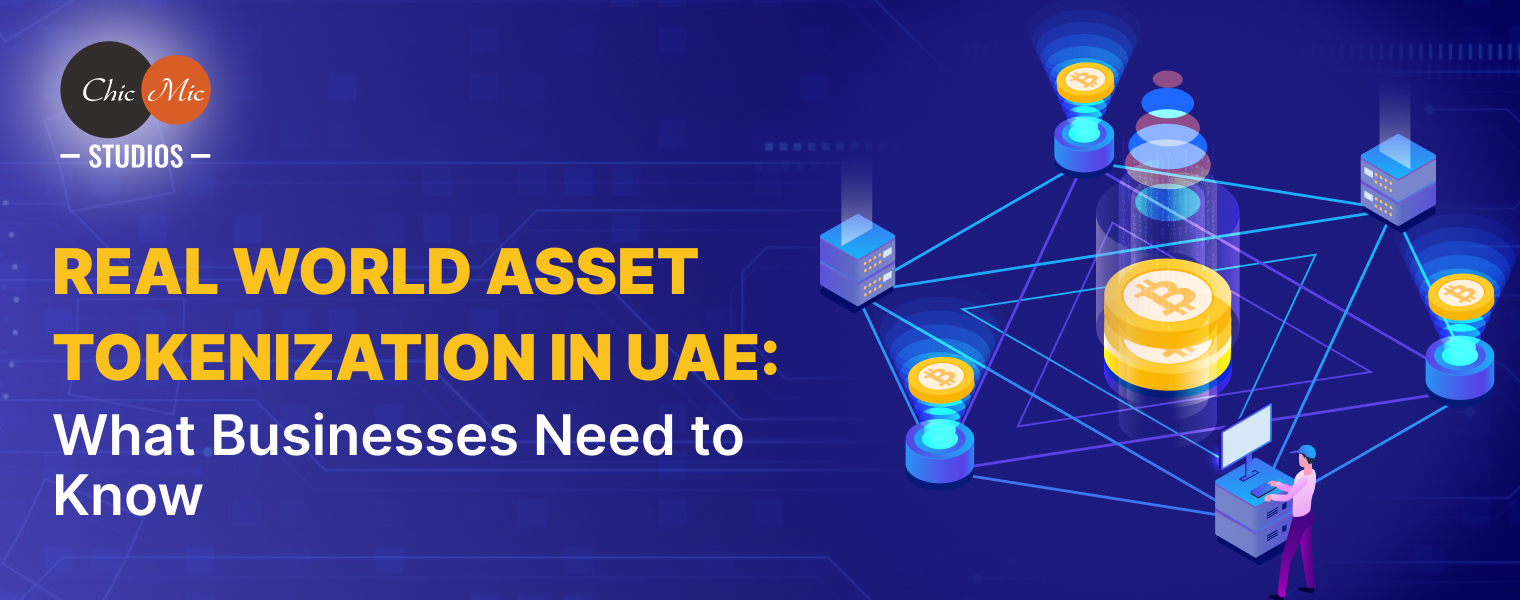
Real World Asset Tokenization in UAE: What Businesses Need to Know
By
Kamlesh Patyal
December 23, 2025
Real-world asset (RWA) tokenization has moved from “future concept” to a practical way to modernize ownership, settlement, and access to traditionally illiquid assets. In the UAE—where regulators are actively building structured digital-asset regimes—RWA tokenization is increasingly viewed as a credible path for innovation across real estate, private credit, commodities, and funds. This guide explains what real world asset tokenization in UAE looks like in practice, the most valuable use cases, and the compliance considerations innovators should plan for—especially when the tokens resemble regulated financial products.
What Is Real World Asset Tokenization?
RWA tokenization is the process of representing rights to an off-chain asset—like real estate, bonds, invoices, carbon credits, or commodities—using digital tokens recorded on a blockchain. The token can represent ownership, beneficial interest, repayment rights, revenue share, or other legally defined claims.
Why Tokenize RWAs?
Tokenization can deliver practical advantages:
- Fractional access: broader investor participation with smaller minimums
- Operational efficiency: streamlined issuance, transfer, and settlement
- Programmability: automated rules (transfer restrictions, distributions, reporting)
- Transparency: auditable transaction history and ownership records
- Liquidity pathways: potential secondary trading (subject to regulation)
In the UAE, these benefits matter because the market is global-facing, finance-forward, and increasingly aligned with regulated digital-asset activity through hubs like Dubai (VARA), DIFC (DFSA), and ADGM (FSRA).
The UAE Regulatory Landscape for Tokenization
Tokenization in the UAE isn’t “one regulator, one rulebook.” Different jurisdictions apply depending on the activity, entity location, and how the token is classified.
Dubai (VARA) – Virtual Assets Oversight
Dubai’s Virtual Assets Regulatory Authority (VARA) is responsible for regulating virtual asset activities in and from Dubai (excluding DIFC). VARA’s role is a key authority signal for projects involving tokens, exchanges, broker-dealer activity, and related services.
DIFC (DFSA) – Crypto Token Rules and Tokenisation Sandbox
In the DIFC, the Dubai Financial Services Authority (DFSA) regulates financial services and has an evolving regime for crypto tokens. DFSA recently issued updated rules that will come into force in January 2026, reinforcing DIFC’s regulatory approach to digital assets. DFSA also launched a Tokenisation Regulatory Sandbox (with strong international interest), reflecting a deliberate push to support tokenization within a supervised innovation pathway.
ADGM (FSRA) – Digital Asset Framework Updates
In Abu Dhabi Global Market, the Financial Services Regulatory Authority (FSRA) has an established digital asset framework and has implemented amendments over time to refine how virtual assets are accepted and regulated within ADGM.
ADGM FSRA continues to publish new updates on its digital asset rules (e.g., frameworks for token categories), showing ongoing regulatory evolution.
Federal Signals (SCA) – Security Token Direction
At the federal level, the UAE’s Securities and Commodities Authority (SCA) is an important part of the broader picture, especially when tokenized instruments resemble securities. SCA consultation activity around a security token regime has been noted by legal analysts as part of UAE’s continued regulatory development.
Practical takeaway: RWA tokenization in the UAE is feasible, but compliance depends on (1) where you operate, (2) what the token represents, and (3) which regulated activities your platform provides.
High-Impact Use Cases for RWA Tokenization in UAE
Below are the RWA categories that typically generate the most demand and business value.
1) Tokenized Real Estate and Fractional Ownership
Real estate is a natural fit: it’s valuable, often illiquid, and ownership/rights can be broken down into digital units. Tokenized real estate models can enable:
- fractional investment access
- faster transfers (subject to land registry/structuring)
- automated distribution of rental income
- transparent cap-table style ownership records
Compliance note: If tokens function like investment products, licensing, investor eligibility, custody, and marketing rules become central.
2) Tokenized Funds and Structured Products
Funds (or fund-like wrappers) can be tokenized to streamline subscriptions, redemptions, reporting, and distribution mechanics. In regulated zones, tokenization can align with supervised innovation pathways (e.g., DIFC’s tokenisation sandbox approach).
3) Private Credit and Invoice/Receivables Tokenization
Tokenizing private credit, trade finance, or receivables can improve transparency and enable fractional participation. A common approach is to tokenize exposure to cash flows rather than the underlying receivable itself, using strong legal agreements and reporting.
Key value drivers include:
- faster settlement
- automated repayment distribution
- clearer investor reporting and audit trails
4) Commodities and Tokenized Gold
Commodities tokenization (e.g., gold-backed tokens) can reduce friction in issuance and transfer while enabling smaller ticket sizes. This category has strict requirements around custody, proof-of-reserves, redemption rights, and disclosure.
5) Carbon Credits and Sustainability Assets
Tokenization can help track provenance, avoid double counting, and support transparent retirement of credits. For the UAE’s sustainability ambitions, credible MRV (measurement, reporting, verification) data and trusted registries are essential.
Compliance Requirements for Tokenization Platforms in UAE
Compliance isn’t just paperwork—it directly shapes product design, architecture, and user flows.
Token Classification and “What Are You Actually Issuing?”
A core first step is determining whether the token is:
- a utility-like token with limited rights
- a payment/settlement token
- a token representing an investment contract / security / collective investment exposure
- a tokenized claim on an off-chain asset managed by a custodian or SPV
In DIFC and ADGM, the regulator’s frameworks and updates around crypto/digital assets underscore how classification drives obligations.
Licensing and Regulatory Perimeter
Your platform may trigger licensing if it performs regulated activities such as:
- operating a marketplace/exchange
- brokerage / dealing / arranging
- custody or safeguarding client assets
- issuing or promoting regulated investment products
- providing payment services tied to token flow
Dubai’s VARA positioning as the regulator for virtual asset activity “in and from” Dubai is a major authority anchor for businesses operating there.
AML/KYC and Risk Controls
Expect robust AML/KYC requirements across regulated environments. Platform-level controls commonly include:
- identity verification (individual + corporate KYB)
- sanctions and PEP screening
- transaction monitoring and suspicious activity flags
- travel rule considerations (where applicable)
- audit logs and tamper-evident reporting
Custody, Client Asset Protection, and Key Management
RWA tokenization UAE becomes high-stakes when client funds and assets are involved. DIFC emphasizes client asset protection as a supervisory priority.
Implementation often requires:
- regulated custody partners (where required)
- MPC/HSM-based key management
- segregation of client assets
- incident response and recovery planning
Transfer Restrictions and Investor Eligibility
Many RWA tokens require permissioned transfers (only verified wallets through wallet app development can receive tokens). This can be enforced via:
- allowlists/identity attestation
- on-chain compliance modules
- jurisdictional restrictions
- holding period and lockup logic
Disclosures, Auditability, and Proof-of-Reserves
Investors and regulators expect transparency:
- asset valuation methodology
- legal structure and rights summary
- redemption rules
- periodic attestations (custody and reserves)
- clear risk disclosures
Recommended Tech Architecture for UAE RWA Tokenization
A compliant RWA platform is both a fintech system and a blockchain system.
Core Components
- Asset onboarding module: SPV setup, documentation storage, approvals workflow
- Identity & compliance layer: KYC/KYB, sanctions screening, wallet linking
- Tokenization smart contracts: mint/burn, transfer rules, corporate actions
- Payments & settlement: bank rails, stablecoin rails (where permitted), reconciliation
- Custody integration: institutional custody APIs, key management, multi-sig/MPC
- Marketplace layer (optional): order matching, RFQ, secondary transfer workflows
- Reporting & audit: dashboards, downloadable statements, regulator-ready logs
Blockchain Selection
Choice depends on audience, liquidity strategy, and compliance needs:
- permissioned or hybrid networks for regulated transfers
- EVM chains for broad tooling and integrations
- chain-agnostic architecture for flexibility
Why UAE Teams Need a Tokenization Development Partner
Tokenization projects fail when teams underestimate the “off-chain reality”:
- legal enforceability and SPV structuring
- custody and key management
- compliance-first product design
- data integrity (oracles, valuations, attestations)
- secure APIs and operational monitoring
A capable partner helps you design a platform regulators can understand, users can trust, and institutions can integrate with.
What ChicMic Studios Offers for RWA Tokenization in UAE
ChicMic Studios supports end-to-end tokenization builds with a focus on security, scalability, and product usability:
- Blockchain development & smart contracts for token issuance and compliance logic
- Web3 dApp development for investor dashboards and on-chain interaction
- Crypto wallet and custody-ready integrations
- Security-first architecture + QA (audits support, testing strategy, monitoring)
- Optional innovation layers like token utility in digital experiences (when relevant), including blockchain gaming integrations
If your roadmap includes automation and personalization for onboarding, fraud detection, or support workflows, ChicMic Studios also delivers AI capabilities via its AI development practice.
FAQ: Real World Asset Tokenization in UAE
What is real world asset tokenization in UAE?
Real world asset tokenization in the UAE is the process of representing rights to physical or traditional financial assets—like real estate, commodities, or private credit—using blockchain-based tokens, typically within a regulated framework depending on the jurisdiction and token type.
Is tokenization legal in the UAE?
UAE regulators have established and continue to evolve frameworks for digital assets across key jurisdictions such as Dubai (VARA), DIFC (DFSA), and ADGM (FSRA). Whether a specific tokenization model is permitted depends on licensing, token classification, and regulated activities involved.
Do RWA tokens count as securities?
Some RWA tokens can resemble securities or investment products depending on the rights they grant (profit share, ownership, redemption rights, governance). Classification is fact-specific and affects licensing and compliance requirements.
What compliance features should a tokenization platform include?
Common requirements include KYC/KYB, AML screening, transaction monitoring, wallet allowlisting, transfer restrictions, audit logs, custody safeguards, and clear disclosures. DIFC highlights client asset protection as a regulatory priority.
What industries in the UAE benefit most from tokenization?
Real estate, private credit, commodities (including gold), funds, and sustainability assets (like carbon credits) are among the strongest RWA tokenization use cases due to high value, operational complexity, and liquidity constraints.
Concluding Note
RWA tokenization in the UAE is moving quickly because the region combines ambitious innovation with increasingly defined regulatory frameworks. For builders, the opportunity is real—but success depends on compliance-first product design, credible custody and reporting, and a tech stack that can support regulated growth. Ready to explore real world asset tokenization in UAE with a secure, scalable platform approach? Book a consultation with ChicMic Studios to plan your RWA tokenization roadmap.