Real World Asset Tokenization: What It Is + Complete Business Guide (2026)
By
Dhirender Singh
January 23, 2026
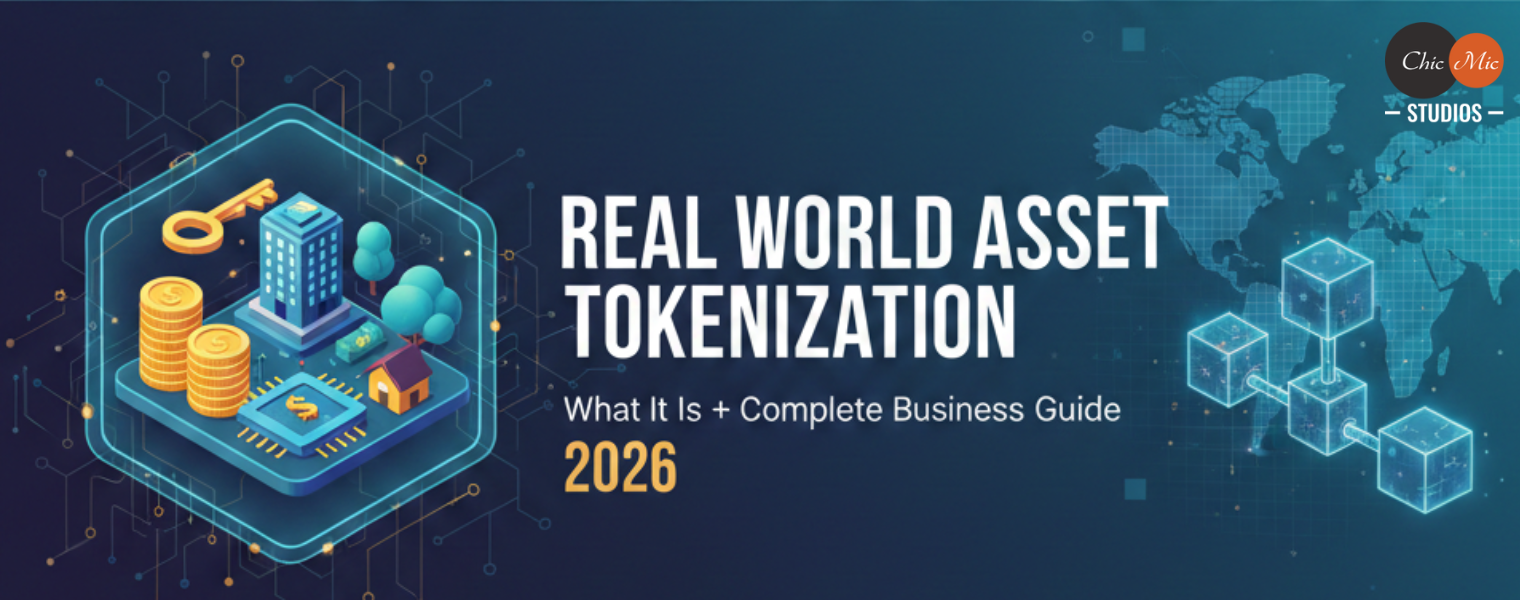
Industries and businesses today are quickly reshaping how they own, manage, and trade physical and financial assets around Real world asset tokenization. These blockchain-based tokens are transforming everything, from, fine art, commodities, real estate, private equity, invoices to carbon credits. Thus, unlocking liquidity, transparency, and global access at a scale never realized before. Moving into 2026, RWA tokenization has progressed beyond an experiment. It has become a strategic business tool for startups, enterprises, and financial institutions looking to modernize asset ownership and create new revenue models. This guide explains exactly what real world asset tokenization is, how asset tokenization on blockchain works, real use cases, benefits, and risks. It also dives into how your business can launch a complaint, scalable RWA tokenization platform. Businesses exploring region-specific frameworks and regulations can also read our detailed guide on Real World Asset Tokenization in UAE to understand compliance, use cases, and market opportunities in the Middle East.
What Is Real World Asset Tokenization?
Real World Asset tokenization is a process that involves converting ownership rights of physical or traditional financial assets into digital tokens recorded on a blockchain.
Each token represents a fraction or whole ownership of an underlying real-world asset. Entities can transfer, trade, or use these tokens in decentralized and enterprise systems while remaining linked to the off-chain asset through legal and technical frameworks.
To put it simply, tokenizing real world assets means turning illiquid, slow-moving assets into programmable, globally accessible digital instruments.
Common Examples of Tokenized Real World Assets
- Real estate properties and rental portfolios
- Precious metals and commodities
- Private equity and venture funds
- Bonds, invoices, and structured products
- Art, collectibles, and luxury assets
- Intellectual property and royalties
- Carbon credits and renewable energy assets
How Asset Tokenization on Blockchain Works
Asset tokenization on blockchain mixes legal structuring with smart contracts, and digital infrastructure into a single ecosystem. To understand how asset tokenization works at scale, it’s important to first explore the differences between public and private blockchain networks.
Step-by-Step Process
1. Asset Identification & Legal Structuring
The system evaluates, verifies, and maps the underlying asset to a legal framework. It goes on to clearly define the ownership rights, profit sharing, and transfer conditions.
2. Token Design
A token model is created, defining:
- Total supply
- Fractional ownership rules
- Compliance features
- Dividend or yield logic
Fractional ownership and asset-backed tokens are enabled through custom coin and token development solutions.
3. Smart Contract Development
Smart contracts automate issuance, transfers, payouts, vesting, and governance. A professional blockchain development company like ChicMic Studios generally handles this stage and ensures security and scalability.
4. Token Issuance
Systems mint tokens on a blockchain network and securely distribute to investors or stakeholders.
5. Custody, Trading & Lifecycle Management
The entities and systems then store these tokens in wallets, trade on compliant platforms, and continuously manage them through dashboards, analytics, and integrations.
Why Real World Asset Tokenization Matters in 2026
The global financial ecosystem is under a growing pressure to become more liquid, transparent and inclusive. RWA tokenization is addressing these challenges directly. Real-world asset tokenization aligns closely with the broader shift toward Web3-driven data sovereignty and decentralized ownership.
Key Business Advantages
Increased Liquidity
Traditionally illiquid assets can be fractionalized and traded globally, reducing capital lock-up.
Fractional Ownership
High-value assets become accessible to a broader investor base, opening new markets.
Faster Settlement
Blockchain-based transfers reduce processing time from weeks to minutes.
Transparency & Traceability
Every transaction is verifiable, auditable, and tamper-resistant.
Automated Compliance
Smart contracts enforce regulatory and contractual conditions in real time.
Global Market Access
Assets can reach borderless investor pools without traditional intermediaries.
Major Use Cases of RWA Tokenization
During the last couple of years, asset tokenization on blockchain has gained traction among industries worldwide. They enable a new sense of trade and ownership that breaks the traditional mold. Some of the use cases of RWA tokenization are:
Real Estate Tokenization
Investors and stakeholders can now divide properties into digital shares, diminishing boundaries and inviting global investors to participate in rental income and capital appreciation.
Benefits include:
- Lower entry barriers
- Automated rent distribution
- Secondary market trading
- Portfolio diversification
Systems are increasingly integrating this model with real estate tokenization platforms and enterprise-grade blockchain systems.
Tokenized Funds & Private Markets
Businesses and financial institutions are tokenizing private equity, venture capital and debt funds to improve fund administration, transparency, and liquidity.
RWA tokenization enables:
- Automated investor onboarding
- On-chain NAV tracking
- Programmable dividends
- Compliant secondary transfers
Commodities & Precious Metals
Investors and interested parties digitizing gold, silver, oil, and agricultural assets for faster trading, proof of reserves, and 24/7 settlement.
When you tokenize real world assets in this category, it helps bridge physical markets with decentralized finance infrastructure.
Invoices & Trade Finance
Businesses tokenize receivables to reduce settlement cycles, unlock working capital and offer investors asset-backed yields. This use case is becoming central to enterprise blockchain transformation.
Intellectual Property & Royalties
Music studios, artists, researchers, etc., are tokenizing music, patents, and licensing revenue to distribute earnings automatically and transparently.
Business Models Enabled by Real World Asset Tokenization
RWA tokenization goes beyond digitizing assets and unlocks completely new business models that were either impossible or economically unviable in legacy systems. Businesses today are transforming physical and financial assets into programmable blockchain-based tokens. It allows them to operate with greater efficiency, transparency, and global reach. Blockchain development and wallet app development specifically allow fractional ownership, automated revenue distribution, real-time settlement, and borderless participation through tokenization.
1. Asset Tokenization Platforms
Launch a full ecosystem where asset owners tokenize holdings and investors trade them.
2. Tokenized Investment Portals
Create regulated marketplaces for curated tokenized assets.
3. Enterprise Asset Management Systems
Modernize internal asset operations using private or hybrid blockchains.
4. Tokenized Funds
Build compliant digital funds powered by smart contracts and automated reporting.
All these models benefit from custom smart contract engineering and secure infrastructure—which are a core part of ChicMic Studios’ blockchain development solutions.
Technical Architecture Behind RWA Tokenization
A production-grade RWA tokenization platform typically includes:
- Asset onboarding and verification modules
- Smart contract layer
- Compliance engine (KYC/AML/whitelisting)
- Custodial and non-custodial wallet systems
- Investor dashboards
- Admin and reporting tools
- Integration with payment gateways and oracles
ChicMic Studios designs these systems end-to-end using scalable blockchain frameworks and enterprise security standards.
Regulatory and Compliance Considerations
To ensure investor protection, asset legitimacy, and long-term platform sustainability, real world asset tokenization must operate within clearly defined legal and regulatory frameworks. Compliance mechanisms like KYC/AML verification, investor eligibility controls, audit trails, and reporting systems must be embedded directly into the platform architecture.
Businesses should plan for:
- Asset jurisdiction compliance
- Securities classification
- Investor accreditation rules
- Custody and data protection laws
- Reporting and auditability
Successful projects combine legal structuring with technical enforcement—embedding compliance directly into smart contracts.
Challenges in Tokenizing Real World Assets
Despite its advantages, RWA tokenization requires careful execution.
Common challenges include:
- Legal enforceability of token ownership
- Asset custody and verification
- Regulatory uncertainty
- Cybersecurity risks
- Integration with legacy systems
These risks can be mitigated through proper architecture, audits, and experienced development partners.
How to Launch a Real World Asset Tokenization Platform
For businesses to launch a real world asset tokenization platform, they need more than merely deploying smart contracts. It requires a strategic blend of business planning, legal structuring, secure technology, and long-term scalability.
Step 1: Define the Asset and Business Model
Clarify asset type, investor base, revenue streams, and compliance scope.
Step 2: Build the Legal and Compliance Layer
Work with legal advisors to structure ownership, governance, and jurisdictional alignment.
Step 3: Design the Token Ecosystem
Choose blockchain network, token standards, access models, and smart contract logic.
Step 4: Develop the Platform
Implement asset onboarding, smart contracts, wallets, dashboards, and integrations.
Step 5: Security Audits and Testing
Smart contracts, custody flows, and user systems must undergo rigorous validation.
Step 6: Launch, Monitor, and Scale
Deploy gradually, gather data, and optimize liquidity mechanisms.
The Future of Real World Asset Tokenization
As we venture into 2026, RWA tokenization will evolve into a core layer of digital finance. Institutional eagerness, adoption, regulatory clarity, and interoperability standards will accelerate its growth this time. The convergence between traditional finance and blockchain development will create hybrid ecosystems where tokenized assets interact seamlessly with DeFi, enterprise systems, and AI-driven analytics. Businesses that will adopt early will dominate new marketplaces, data channels, and financial infrastructure.
FAQ: Real World Asset Tokenization
What is real world asset tokenization?
Real World asset tokenization is the process of converting ownership rights of physical or traditional financial assets into blockchain-based tokens. The purpose of these tokens is to trade, transfers, and manage them directly through online platforms
What assets can be tokenized?
Most real-world assets like real estate, commodities, art, private equity, invoices, bonds, intellectual property, and even carbon credits have been tokenized successfully.
Is real world asset tokenization legal?
Yes, if the RWA is structured properly, they are completely legal. RWA tokenization must follow jurisdictional securities, asset ownership, and data compliance regulations.
How does blockchain improve asset tokenization?
Asset tokenization on blockchain provides transparency, immutability, automation, faster settlement, and programmable ownership models.
What are the benefits of tokenizing real world assets?
Key benefits include increased liquidity, fractional ownership, global market access, automated operations, and reduced transaction costs.
How long does it take to build an RWA tokenization platform?
Development timelines vary by client requirements and complexity. But a typical production-grade platform could take anywhere between three to six months.
Why should businesses work with ChicMic Studios?
ChicMic Studios is a highly experienced organization providing full-cycle blockchain development, regulatory-compliant architecture, and scalable solutions for real world asset tokenization.
Concluding Note
ChicMic Studios designs and delivers enterprise-grade blockchain solutions that stretch beyond basic token creation. The blockchain development company focuses on completely real world asset tokenization ecosystems designed for security, compliance, and long-term scalability. The team combines core expertise in blockchain engineering, smart contract architecture, and enterprise system integration to assist clients tokenize assets with real legal backing and production-ready infrastructure. We architect full digital asset frameworks that include asset onboarding, compliance automation, custody solutions, investor dashboards, and performance analytics.
👉 Talk to ChicMic Studios today to launch your real world asset tokenization platform and transform how your business manages value.