What Is a Web3 Super App and Why It Matters in 2026
Key Takeaways:
- Core Value: Web3 super apps are built around user ownership, giving individuals full control over identity, data, and digital assets.
- Service Scope: A single platform brings together DeFi, NFTs, gaming, social features, and payments into one connected experience.
- Business Impact: Integrated ecosystems improve user retention, liquidity flow, and long-term growth for platforms and developers.
- Industry Reach: From finance and gaming to creators and DAOs, Web3 super apps support real-world applications across multiple sectors.
- Future Outlook: By 2026, Web3 super apps are expected to become the primary gateway for interacting with decentralized technology.
Web3 Super App Explained: The Future of Decentralized Platforms
A Web3 super app is a one-stop shop for decentralized services that allows users to own and control their data, identity and digital assets, while combining various Web3 capabilities including DeFi, NFTs, gaming, social and payment services.
If you are trying to understand what a Web3 super app looks like, you are probably already seeing the difference. By 2026, users will not want to manage multiple disconnected wallets, interfaces, and dApps. Adoption trends support this shift in behavior. A recent Forbes analysis notes that Web3 growth is increasingly driven by real world use cases rather than speculation, increasing demand for unified platforms. This shift aligns with broader industry evolution, as discussed in our guide on what it takes to bring Web3 into enterprise reality
Users want a single place where everything works together while still maintaining control over their identity and assets. As a result, Web3 super applications are becoming essential infrastructure. Businesses looking to build such ecosystems often rely on advanced Web3 dApp development services to integrate multiple decentralized functionalities into a single platform. They represent true multi service Web3 platforms that combine the ease of modern consumer apps with the power of decentralization.
This guide explains what Web3 super applications are, why they are important in 2026 and what distinguishes them.
What Is a Web3 Super App?
A Web3 super app is a multi-service web3 platform that integrates multiple decentralized applications into one seamless interface. All this runs on one ecosystem, not separate apps for social, gaming, trading and NFTs. The concept of Web3 itself is built on decentralization, blockchain networks, and user ownership, as widely explained by leading resources like Ethereum.
At its core, a Web3 super app is built on ownership. Users don’t have accounts in the traditional way. They interact directly with blockchain systems by linking a wallet. That’s why web3 wallet integration super app design is one of the most crucial aspects in this area. This is where robust crypto wallet development services play a critical role in ensuring secure authentication and seamless user interaction.
To better understand the underlying infrastructure, you can explore our detailed breakdown of the cryptographic backbone of blockchain.
In contrast to traditional platforms where the platform owns user data, web3 super apps are built for users to own their own identity, assets, and permissions. IBM research shows that decentralized digital identity is becoming a strategic priority for organizations seeking greater security, privacy, and user trust.
This is not just a technical change. It’s philosophical. The internet is user-controlled, not controlled by the platform.
How Web3 Super Apps Work?
A Web3 super app is one single interface that connects different blockchain protocols. The functions still work independently, but the blockchain is perceived by the user as one interconnected system.
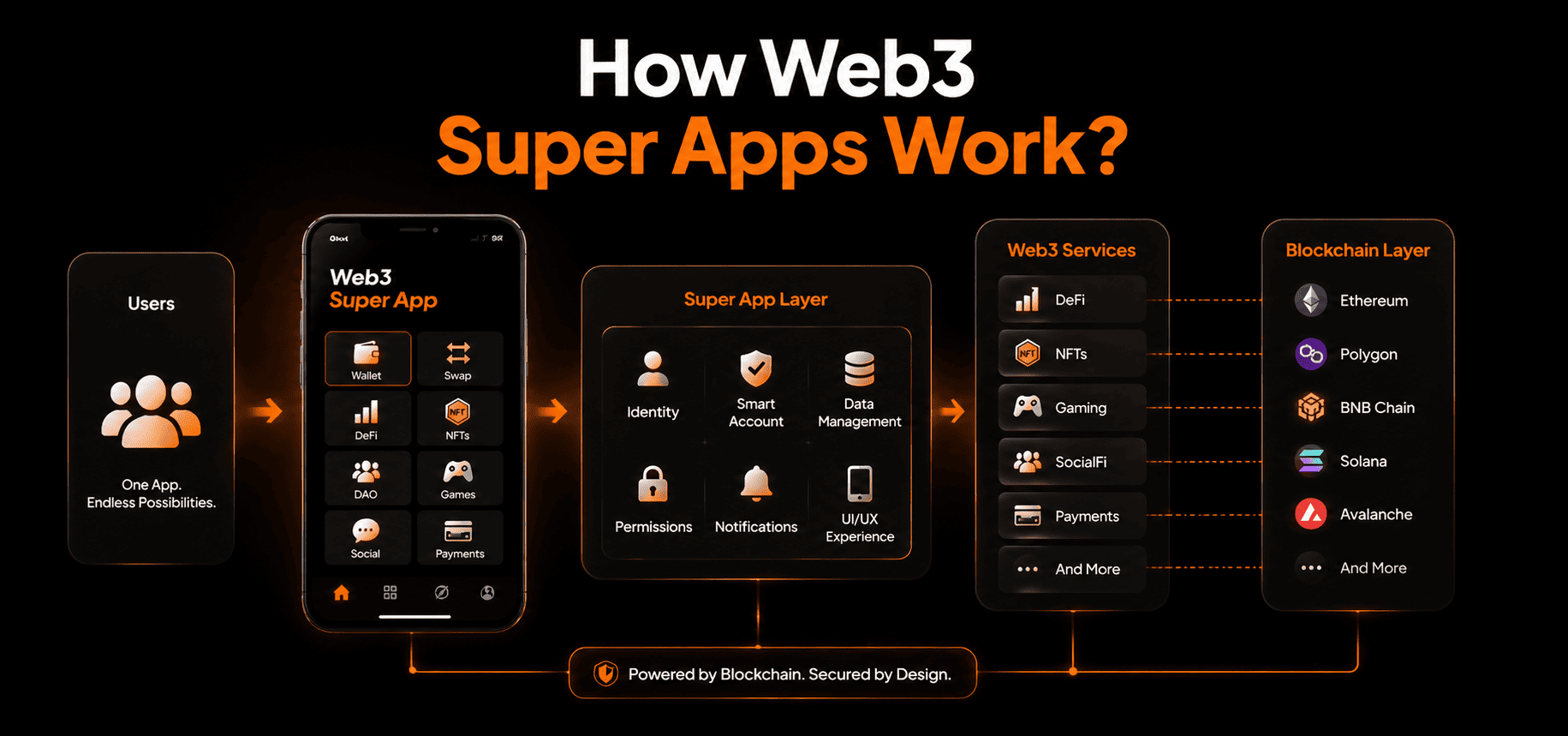
For example, you can play a blockchain game, join a DAO, stake assets, and swap tokens without leaving the app. As of now, there are over 820 million crypto wallets globally, with 24.3 million daily active dApp wallets, highlighting how multi-service blockchain usage is already happening at scale. This is possible through smart contract-based super apps that automate transactions and interactions without the need for middlemen. These systems are powered by scalable smart contract development solutions that ensure transparency, automation, and trust across the ecosystem.
Under the hood, these applications leverage web3 app aggregation systems, which collect data from multiple protocols and display it in a single interface. Think of it as a command center for all chain events.
The real power is modularity. All features are plug-ins. This is why modular web3 application design matters so much. It lets developers add or improve on features without needing to completely rebuild the system.
Key Features of Web3 Super Apps
The defining feature of Web3 super apps is the extent to which they unify various blockchain services. Some of the most important characteristics are:
- Wallet Based Authentication
Users no longer use usernames to access platforms but rather use blockchain wallets which improves security, anonymity and puts the user in direct control of identity management.
- Full Asset Control
Users have full control over digital assets to trade, transfer, stake and use without any platform restrictions and third-party custody.
- Cross Chain Compatibility
Supports many blockchain networks, enabling tokens, data, and apps to be transferred seamlessly between ecosystems without any technical barriers for consumers. Cross-chain interoperability is a key challenge being actively addressed across the industry.
- Composable Ecosystem Flow
DeFi gaming and social features can seamlessly and instantly integrate through composable architecture, with users reusing assets across applications.
Web3 Super App Architecture
The architecture of a Web3 super app is layered to ensure scalability and flexibility.
The bottom layer is the wallet and identification. This governs authentication and asset ownership. DeFi, NFTs, gambling and social smart contracts are at the protocol layer above that. Then you have the middleware layer that brings it all together. It takes care of API management , chain communication , and data indexing. Finally, all the pieces are combined in the interface layer for the user.
The idea of decentralized super app architecture allows these platforms to grow without losing flexibility. Implementing such architectures depends heavily on well-designed blockchain frameworks and production-ready development practices.
This way, new services can be added without the need for a complete redesign of the system. It also enables different protocols to evolve independently while still belonging to the same ecosystem.
Web3 Super Apps vs Traditional Apps
The difference between Web3 super apps and traditional apps is more than just technology. It is about control, ownership, and openness.
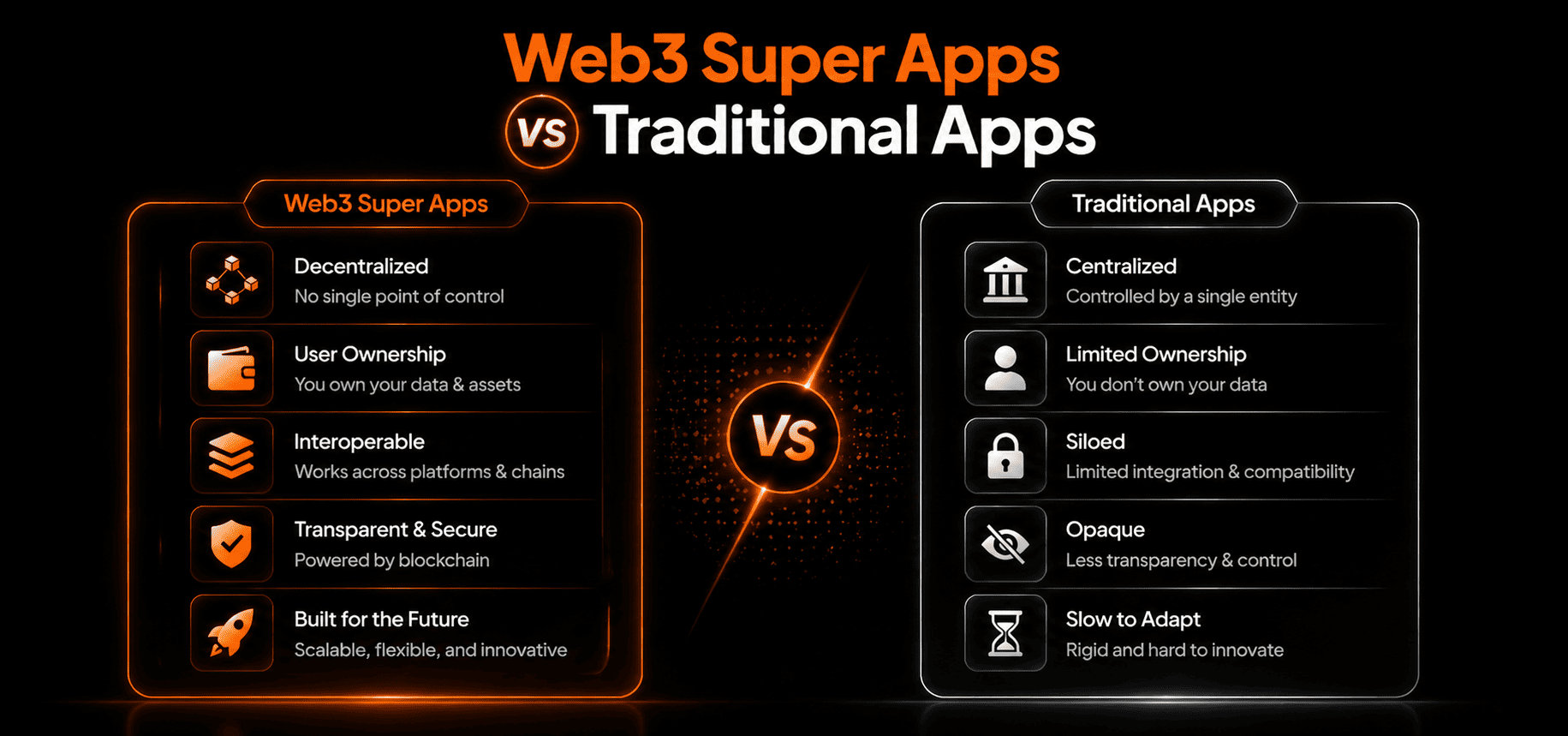
Traditional apps are built to keep users inside a single ecosystem. Web3 super apps are built to connect ecosystems. This is why blockchain based super apps are gaining attention across industries like finance, gaming, and social platforms.
Use Cases of Web3 Super Apps
Web3 super apps are already being used in many sectors and new use cases are emerging fast.
One of the most popular models is the defi gaming social super app, which allows users to trade assets, earn prizes in games and interact socially all in one place. Many of these ecosystems are built with the support of advanced game development services to deliver immersive and interactive user experiences.
Creators benefit from this as well. They can create communities, mint NFTs and accept payments directly, with no need for multiple platforms. Everything is handled in a single ecosystem.
DAOs also use super apps for contributor coordination, treasury administration and governance. All in one interface, no switching between tools.
These examples demonstrate how applications for integration into the web3 ecosystem are making blockchain technology more usable and practical.
Benefits of Web3 Super Apps
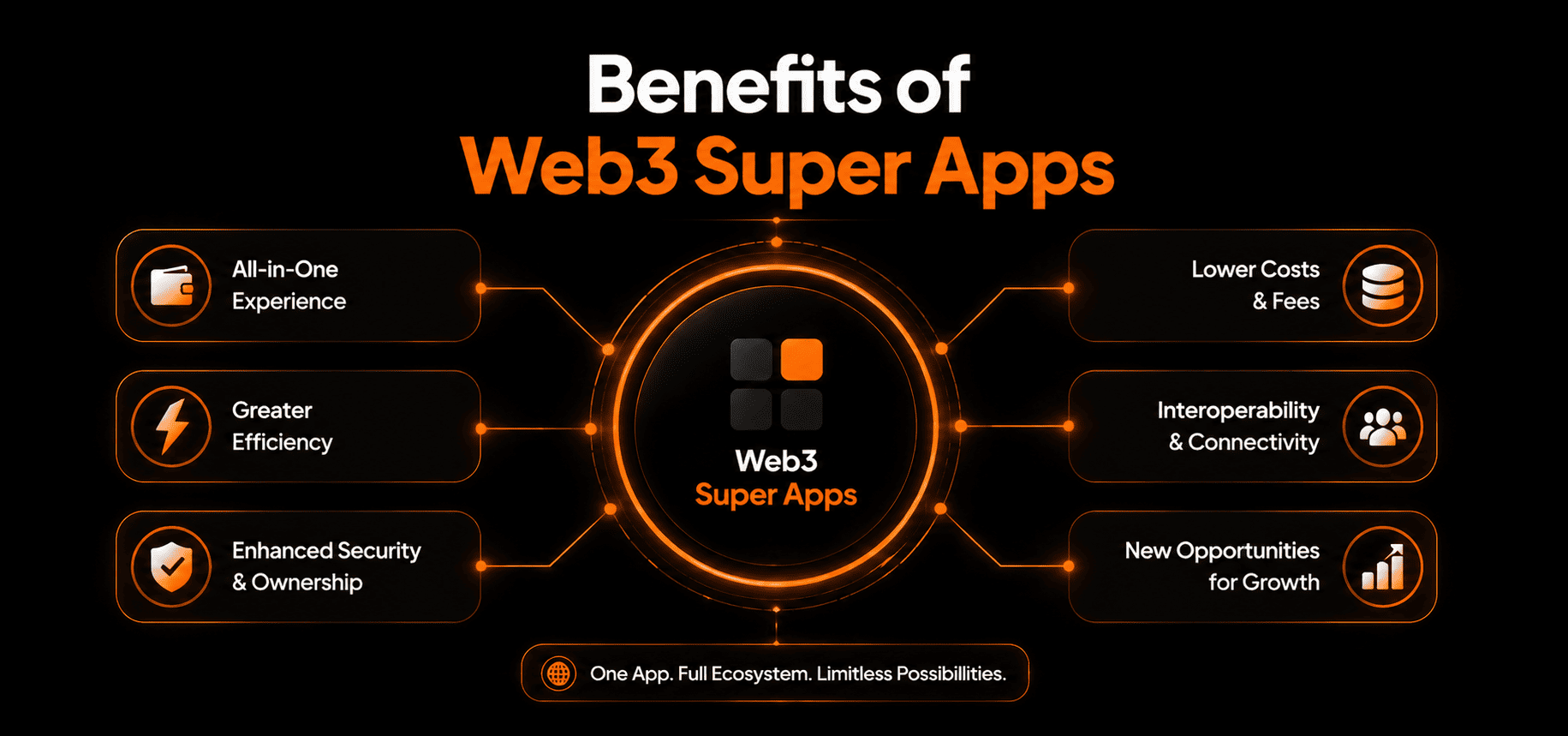
Web3 super apps are changing the way users interact with blockchain ecosystems, providing a unified platform experience that combines various services.
These benefits allow developers to create stronger and more interconnected ecosystems, but also improve user usability over time.
- Simplicity Unified Access
Users interact through a single interface reducing complexity across wallets platforms and logins improving overall adoption and daily usability significantly
- Improved Liquidity Flow
Integrated services enable assets to travel freely across platforms, increasing liquidity and enhancing financial efficiency for customers around the world.
- Faster User Onboarding
Using single sign-on methods makes it easier for new users to sign up quickly without having to deal with multiple accounts or complex setup procedures.
- Seamless Asset Movement
Transfers of digital assets between apps are instant and seamless, so users can do their thing 24/7 across social media and games.
- Ecosystem Retention Growth
Enterprises benefit from higher user retention from interconnected ecosystems, as customers remain active within connected services, rather than frequently leaving platforms.
Challenges of Web3 Super Apps
Web3 super applications are strong, but they still face major challenges.
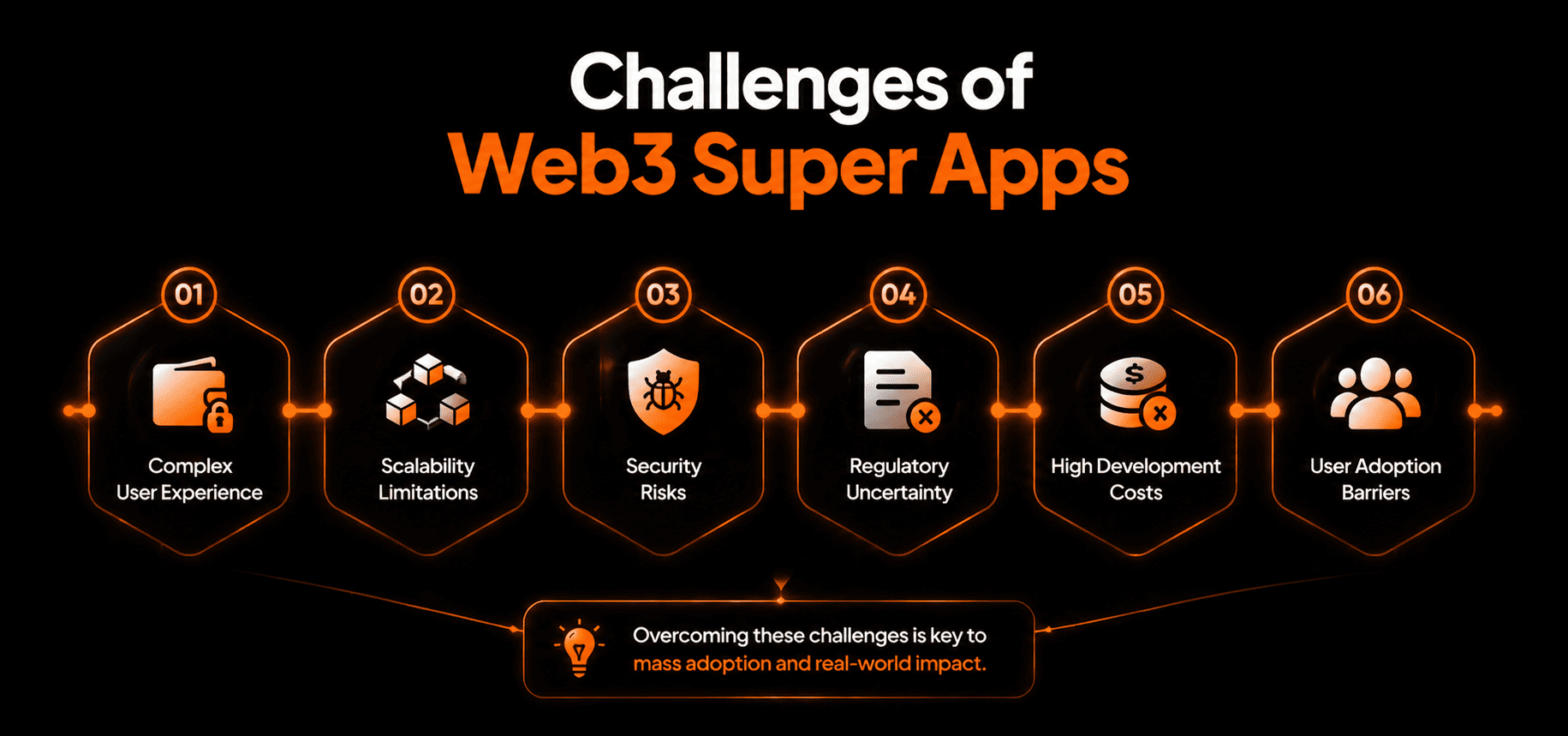
- The biggest concern is security. Different protocols are connected and a weakness in one part could affect the whole system. This is why auditing is essential.
- Another problem is user experience. While it’s getting better, Web3 onboarding remains more difficult than traditional apps.
- Another problem is the scalability, especially when dealing with cross-chain transactions and heavy traffic.
- However, these issues are being solved quickly with the evolution of web3 app aggregators and infrastructure.
How to Build a Web3 Super App
Creating a super app in Web3 takes strategic planning and robust technical infrastructure.
The first step is integrating the wallet. Users need a super app system with strong web3 wallet integration to engage securely with the platform.
Developers should focus on basic functions like DeFi or gaming at first before expanding into other areas.
Then comes architecture. At this stage, teams typically apply Web3 dApp development methodologies that prioritize security and cross-chain compatibility, while relying on modular web3 application design to ensure new services can be added easily without disrupting existing ones.
Security first, always. From the start there has to be monitoring, testing and audits of smart contracts.
Finally, user experience should not be ignored. Developers tracking modular architecture, wallet integration, and ecosystem-level platform design often rely on long-form technical coverage from established Web3 publications, because usability remains one of the key factors in the success of a Web3 super app.
Future of Web3 Super Apps
Web3 super applications are expected to become the default way for people to interact with blockchain technology by 2026.
Among them are probably AI-driven suggestions, automated portfolio management, and more seamless fiat to crypto migrations. The convergence of AI and decentralized systems is already accelerating innovation, which we explored in how AI is assisting and transforming mobile app development.
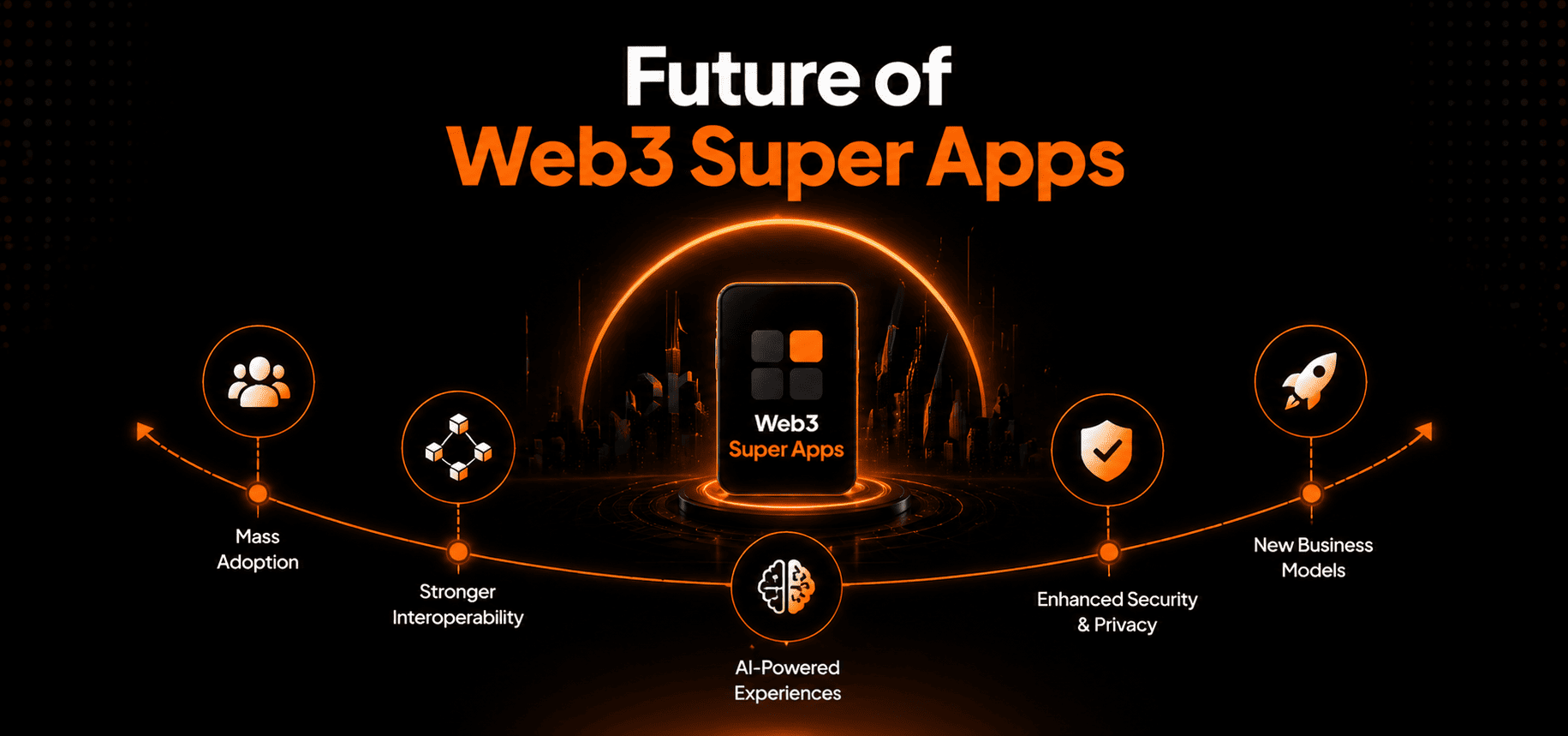
There will also be more real-world integration of digital identities and real-world services like memberships, tickets and payments.
The most popular platforms won’t feel like crypto apps. They’ll just feel like improved versions of the internet.
Apps to integrate the web3 ecosystem are on this path and they are just starting.
Final Thoughts
Super apps are here to stay in web3. They represent a fundamental shift in the design and operation of decentralized systems.
Users get a single experience, not a bunch of tools. Users own everything, not the platforms. That is the real value of super applications built on the blockchain.
If you are working in this area the focus should be simple. Build systems that are intuitive, connected, and feel natural. If you’re planning to develop a scalable super app ecosystem, exploring AI Development Solutions can further enhance personalization and automation within your platform.
Frequently Asked Questions
1 What is a Web3 super app?
A Web3 super app is a decentralized platform that combines several blockchain-based applications into a single ecosystem. Users can manage their identities, assets and interactions like DeFi, NFTs, gaming and social features with one wallet connection.
2 How is a Web3 super app different from a traditional app?
Traditional applications are based on centralized systems, where businesses control user access and data. Web3 super applications leverage smart contracts and blockchain technology to give individuals sovereignty over their data, assets and digital identity.
3 What services can a Web3 super app include?
A Web3 super app could offer services like DeFi trading and staking, NFT marketplaces, blockchain gaming, social networking, payments and DAO governance. The biggest benefit is that these services are linked together, allowing identity and assets to flow freely across the platform.
4 Why are Web3 super apps important?
Web3 super apps focus on addressing fragmentation by consolidating multiple Web3 technologies into one platform. This makes it easier to use and encourages greater adoption of blockchain technology by non technical users.
5 What are examples of Web3 super apps?
Many new platforms are building unified ecosystems that combine social features, gaming and DeFi in a single application. These platforms are focused on integration and usability rather than providing separate stand alone functions.
6 How to build a Web3 super app?
Secure wallet integration and a sturdy identity layer are the first steps in building a Web3 super app. Developers then use modular design to link the key services together with a focus on security, scalability and user experience.
7 Are Web3 super apps secure?
When built on top of well designed infrastructure and certified smart contracts, Web3 super applications can be safe. As the platform expands, users are to be protected through continuous audits, monitoring and appropriate risk management.