Key Takeaways
- Core Process: Building an anime fighting game involves planning, design, development, testing, launch, and continuous post-launch support.
- Cost Factors: Development costs vary based on gameplay complexity, multiplayer features, art quality, target platforms, and ongoing maintenance.
- Must-Have Features: Modern anime fighting games need engaging combat, online multiplayer, customization, progression systems, and live content updates.
- Studio Selection: An experienced development company can improve gameplay quality, technical reliability, and long-term project success.
Introduction
If you plan to build an anime-themed fighting game, choosing the right Anime Fighting Game Development Company is one of your most important decisions. The team you select will shape how the game looks, feels, and performs. It will also influence the quality of the characters, combat mechanics, and online multiplayer experience.
Anime fighting games continue to grow across PC, consoles, and mobile devices. Players expect responsive controls, strong visuals, stable performance, and regular updates. For desktop-first releases, PC game development planning should begin early. Mobile releases also need focused mobile game development optimization.
Whether you are a startup, publisher, or entertainment company, the right partner can make a major difference. A capable studio does more than write code. It sharpens your vision, solves technical challenges, and builds an experience players can enjoy. Learn how our game development services help businesses turn game ideas into market-ready products. This guide explains the process, cost factors, and key points to consider before hiring a studio.
Understanding Anime Fighting Game Development
Anime fighting games combine vivid art, fast combat, memorable characters, and cinematic storytelling. They appeal to casual players, anime fans, and competitive fighting-game communities. Expectations are rising across PC, console, and mobile platforms.
Creating an anime fighter requires more than attractive characters and flashy special moves. Players expect responsive controls, balanced combat, immersive arenas, seamless multiplayer, and frequent updates. Some teams begin with 2D game development to validate combat concepts and visual direction before expanding the production scope.
What Does an Anime Fighting Game Development Company Actually Do?
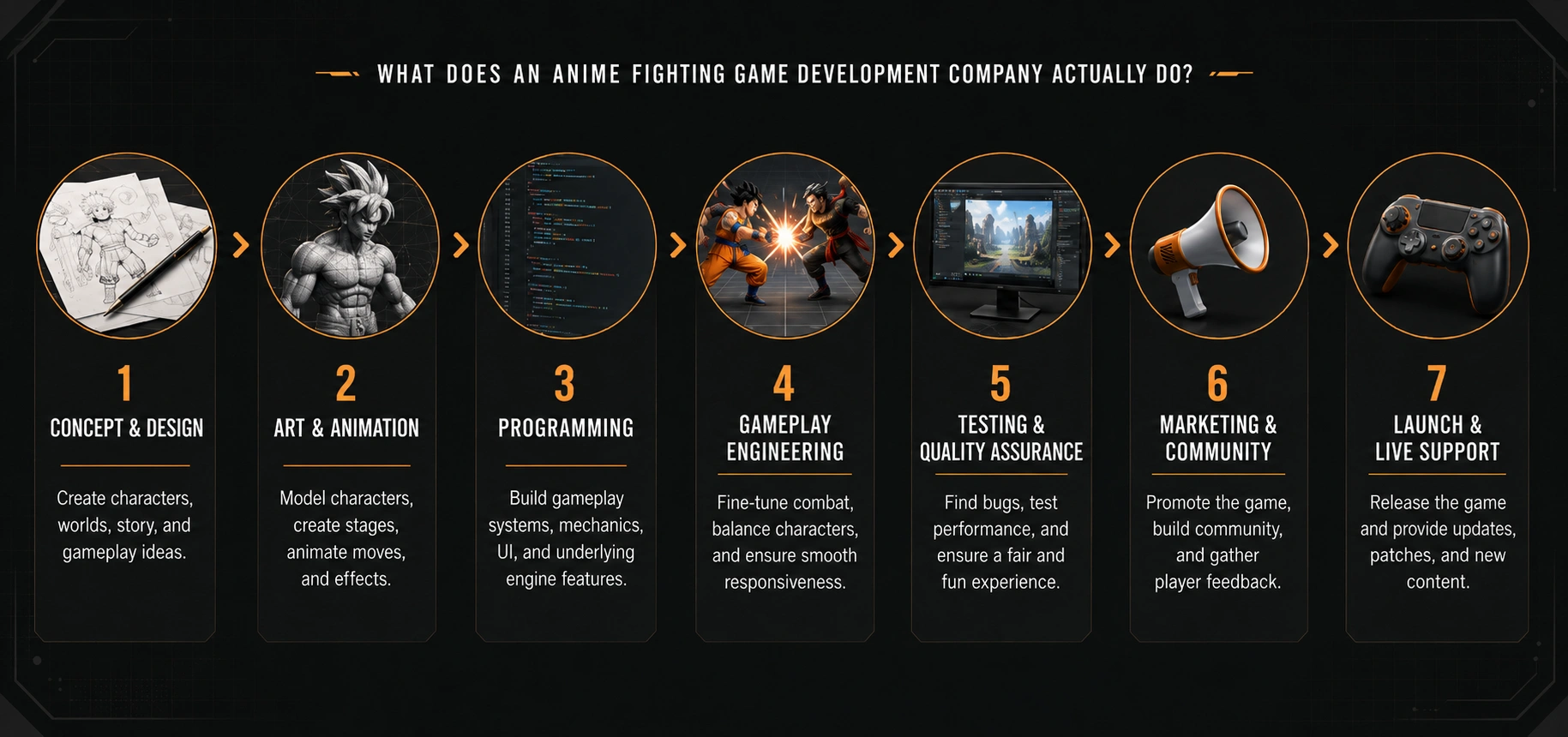
An anime fighting game development company combines creative design, technical development, and quality testing. Each discipline must work together to create a game that feels responsive, looks polished, and performs reliably.
1. Game Design
Game design sets the foundation before production begins. It defines character abilities, combat mechanics, progression systems, controls, game modes, and overall balance.
2. Anime Art and Character Creation
Artists create distinctive anime characters, detailed costumes, visual effects, battle arenas, and interface assets. Explore our 3D character design services for high-quality, game-ready characters.
3. Combat System Development
Developers build responsive battle systems, movement mechanics, combo chains, hit detection, special attacks, and balanced character abilities. The goal is smooth, competitive, and satisfying gameplay.
4. Multiplayer Infrastructure
Engineers build matchmaking, networking, dedicated servers, synchronization, and cross-platform functionality. These systems help players experience stable and responsive online combat.
5. Testing and Balancing
Quality assurance teams test throughout production and after launch. They identify bugs, balance characters, optimize performance, verify multiplayer stability, and improve gameplay.
Ready to Launch Your Anime Fighting Game?
Popular Features Players Expect
Modern players expect more than basic one-on-one battles. They want competitive online modes, meaningful progression, social systems, customization, and regular content updates.
Common features include:
- Story Mode: Cinematic cutscenes, character-driven narratives, branching missions, and boss battles.
- Online PvP: Real-time matchmaking, ranked competition, low-latency gameplay, and cross-region multiplayer support.
- Local Multiplayer: Split-screen battles, couch co-op sessions, tournaments, and friendly matches.
- Character Customization: Alternate outfits, accessories, color variations, emotes, weapons, and unlockable cosmetics. Strong UI UX design services make these systems easier to navigate.
- Ranked Matchmaking: Seasonal rankings, skill-based pairing, competitive leagues, and performance-based rewards.
- Daily Rewards: Login bonuses, in-game currency, experience boosts, exclusive items, and limited-time collectibles.
- Seasonal Events: Themed challenges, special game modes, new characters, and exclusive cosmetic rewards.
- Guild Systems: Guild missions, community events, shared achievements, and member rewards.
- Leaderboards: Tournament rankings, seasonal statistics, and competitive milestones across multiple modes.
- Battle Passes: Tier-based progression, premium rewards, missions, cosmetics, and seasonal content.
- Cosmetic Skins: Anime-inspired outfits, weapon appearances, visual effects, and character animations.
- Replay Mode: Match recordings, highlight creation, performance analysis, and gameplay sharing.
- Voice Chat: Team communication, strategy discussions, party conversations, and improved coordination.
- Training Mode: Combo practice, AI difficulty settings, frame analysis, move tutorials, and skill-building tools.
Anime Fighting Game Development Process
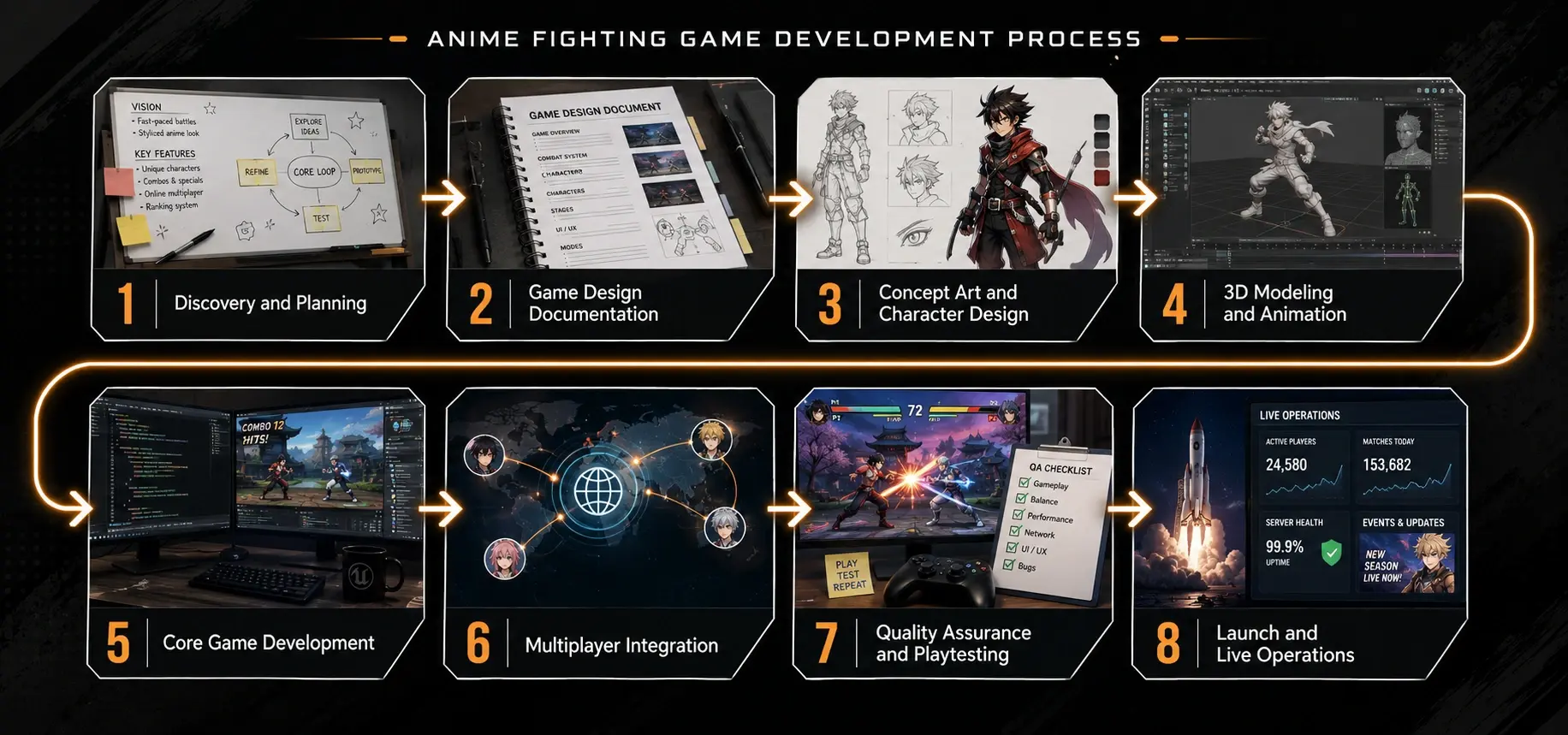
Anime fighting game production involves technical, creative, and testing stages. A structured process reduces risk, improves collaboration, and helps the finished game meet player expectations.
Step 1: Discovery and Planning
The project begins by defining the audience, platforms, gameplay vision, visual direction, budget, schedule, and commercial goals.
Step 2: Game Design Documentation
The team creates a detailed game design document. It covers combat mechanics, characters, progression, controls, maps, monetization, multiplayer features, and user experience.
Step 3: Concept Art and Character Design
Artists establish the game’s anime-inspired identity. See how our 2D concept art services help shape memorable characters and worlds. The team also develops battle arenas, outfits, weapons, effects, and environment concepts.
Step 4: 3D Modeling and Animation
The approved concepts move into modeling, rigging, facial expressions, combat animations, special attacks, and movement transitions. Professional 3D animation services help make every attack feel clear and impactful.
Step 5: Core Game Development
Developers build gameplay systems, backend services, audio integration, visual effects, AI features, and platform optimization. Many teams use Unity game development for flexible cross-platform production. Others choose Unreal game development for high-fidelity combat and visuals. Specialized AI development can also improve opponent behavior and training modes.
Step 6: Multiplayer Integration
Network engineers add dedicated servers, matchmaking, anti-cheat systems, cloud saves, leaderboards, and synchronization. Reliable database development helps protect player accounts, progression, inventory, and ranking data.
Step 7: Quality Assurance and Playtesting
The team finds bugs, balances characters, improves performance, verifies multiplayer stability, strengthens security, and refines the gameplay experience before release.
Step 8: Launch and Live Operations
After launch, developers fix issues, maintain servers, review player feedback, release seasonal content, and improve the game over time.
How Much Does Anime Fighting Game Development Cost?
The anime fighting game development cost depends on project size, combat complexity, art quality, multiplayer features, target platforms, and post-launch requirements. A clear scope makes the initial budget more realistic. For another pricing benchmark, read our guide to anime game development costs.
Estimated Development Cost
| Project Scope |
Estimated Cost |
| Small Indie Anime Fighting Game |
$50,000 to $150,000 |
| Mid-Sized Online Anime Fighting Game |
$150,000 to $500,000 |
| AAA Anime Fighting Game |
$500,000 to $3 million+ |
These figures are approximate. The final investment depends on the feature set, content volume, technology stack, development timeline, and long-term support requirements.
Planning an Anime Fighting Game?
What Can Increase Development Costs?
Many teams focus on production costs but overlook recurring expenses. Planning for these items reduces budget overruns and helps the game operate smoothly after launch.
Common Factors That Increase Development Costs
- Server hosting and cloud infrastructure
- Anti-cheat systems and game security
- Localization for multiple languages
- Community management and moderation
- Live events and seasonal updates
- Customer support services
- DLC and expansion content
- Console certification and compliance
- Marketing and user acquisition
- Analytics and performance tracking
Why Planning These Costs Matters
A recurring-cost budget supports regular updates, server stability, player support, and long-term game quality.
How to Choose the Right Anime Fighting Game Development Company
Choosing the right Anime Fighting Game Development Company is essential for project success. A strong partner can turn your idea into a polished game through technical expertise, artistic capability, and industry experience.
1. Look for Fighting Game Experience
Choose a studio with relevant experience in combat design, animation timing, character balance, multiplayer systems, and player progression.
2. Evaluate Technical Expertise
Confirm that the team understands cloud infrastructure, AI integration, Unity, Unreal Engine, backend development, security, and performance optimization.
3. Review Their Development Process
A structured process should include discovery, milestone planning, regular communication, continuous testing, launch preparation, and post-launch support.
4. Check Their Art and Game Portfolio
Review previous projects for character quality, anime-inspired artwork, environments, visual effects, animation, and technical polish. A relevant game portfolio can show whether the studio has handled comparable production challenges.
5. Ask About Live Game Support
Select a team that can provide updates, bug fixes, server maintenance, new content, balance changes, and long-term technical support.
6. Evaluate Communication and Transparency
Work with a studio that explains technical decisions, provides regular updates, sets realistic deadlines, and reports risks early.
Questions to Ask Before Hiring a Development Studio
The right questions reveal a studio’s experience, technical capability, communication process, and long-term support model.
- Have you developed fighting games before?
- Which game engine would you recommend, and why?
- How do you approach combat balancing?
- Can you build cross-platform multiplayer?
- What is your quality assurance and playtesting process?
- How do you manage post-launch updates?
- Who owns the game’s source code and assets?
- How do you estimate budgets and timelines?
- Which security measures do you use?
- Can your team support long-term live operations?
Use the answers to compare studios, understand their methods, and select a partner with greater confidence.
Why Does the Right Development Partner Matter?
The right partner can separate a successful launch from a project affected by delays, technical problems, or low engagement. Anime fighting games need a specific mix of creative direction, responsive combat, multiplayer networking, and polished visuals.
An experienced studio also creates value after launch. It can release new content, maintain live operations, tune performance, and balance the game as the player community grows. This support reduces development risk and helps the game remain competitive.
Final Thoughts
Selecting an anime fighting game development company is not only about finding the lowest quote. The studio should understand responsive combat, character design, multiplayer infrastructure, game balancing, and post-launch support.
Review the team’s experience, technical expertise, portfolio, communication, and development process. A trustworthy partner can reduce risk and build an experience that attracts players, keeps them engaged, and supports long-term growth.
Frequently Asked Questions
1. What game engine is best for anime fighting game development?
Unity and Unreal Engine are both popular choices. Unity often suits cross-platform projects and faster production. Unreal Engine is strong for high-quality graphics, advanced animation, and console-level performance. The best option depends on your scope, budget, platforms, and technical requirements.
2. How long does it take to develop an anime fighting game?
A small indie game may take 6 to 12 months. A larger multiplayer game with advanced features can require 12 to 24 months or longer. Character count, online systems, content volume, and post-launch planning all affect the timeline.
3. Can an anime fighting game be developed for multiple platforms?
Yes. Experienced studios can develop for PC, PlayStation, Xbox, Nintendo Switch, Android, and iOS. Cross-platform releases require additional optimization, compliance work, and testing.
4. What monetization models work best for anime fighting games?
Common models include premium purchases, cosmetic skins, battle passes, downloadable content, in-game currency, and seasonal events. The right model depends on the audience and long-term business goals.
5. Why is multiplayer optimization important?
Competitive fighting games depend on smooth online play. Low-latency networking, stable matchmaking, anti-cheat systems, and dedicated servers help maintain fair and responsive matches.
6. Can AI improve anime fighting game development?
Yes. AI can support smarter NPC behavior, automated testing, personalized experiences, difficulty adjustment, and gameplay-data analysis. These capabilities can improve engagement and scalability.
7. What makes an anime fighting game different from other fighting games?
Anime fighting games often use cinematic combat, stylized visuals, unique abilities, combo-based mechanics, and story-driven progression. These elements appeal to both anime fans and competitive players.
8. What should I look for in an anime fighting game development company?
Look for fighting-game experience, Unity or Unreal expertise, a strong portfolio, multiplayer capability, transparent communication, and reliable post-launch support.
9. Is post-launch support necessary?
Yes. Regular updates, balance patches, bug fixes, new characters, seasonal events, and community engagement help maintain player interest and improve long-term performance.
10. How can I reduce anime fighting game development costs?
Start with a clear scope and prioritize essential features. Choose an appropriate technology stack and validate the combat loop early. Experienced development partners can reduce unnecessary revisions and keep production within budget.