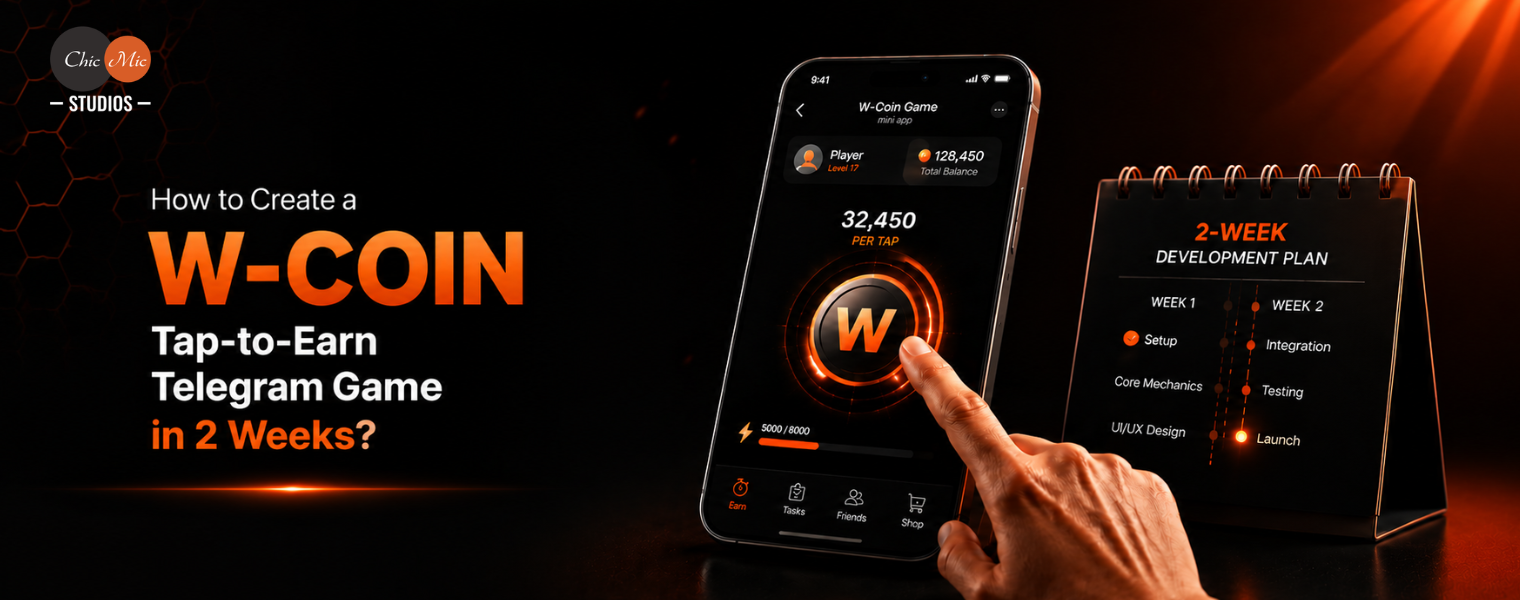
How to Create a W-Coin Tap-to-Earn Telegram Game in 2 Weeks?
Key Takeaways
- Core Value: Tap-to-earn Telegram games use simple gameplay, viral referrals, and reward anticipation to create repeat engagement inside Web3 communities.
- Service Scope: A W-Coin-style game needs a Telegram bot or mini app, backend logic, database design, referral engine, anti-bot protection, and optional blockchain integration.
- Business Gains: Founders can monetize through token launches, premium boosts, energy packs, sponsored tasks, and utility NFTs after validating retention.
- Industry Use: Tap-to-earn models work well for Web3 gaming, Telegram mini apps, crypto communities, and referral-led launch campaigns.
- Future Trends: The next phase will focus on AI anti-bot systems, sustainable tokenomics, hybrid on-chain economies, and deeper social gameplay loops.
How to Create a W-Coin Tap-to-Earn Telegram Game in 2 Weeks?
If you are wondering how to create a W-Coin tap-to-earn Telegram game, this is still a strong time to enter the market. Blockchain gaming, Telegram mini apps, and Web3 communities are growing because users want quick access, simple rewards, and social participation.
The idea is easy to understand. Players tap to earn points. They invite friends to unlock more rewards. They return daily because every small action feels valuable. There is no app download, so onboarding stays fast inside Telegram.
Modern projects often rely on scalable Web3 dApp development to connect wallet access, reward systems, token utilities, and decentralized user actions in one ecosystem.
This blog explains how to build a tap-to-earn Telegram game with proven W-Coin-style mechanics in about two weeks. You will learn how the system works, which features matter first, what the technical architecture includes, and how viral growth loops should be planned from day one.
For teams planning a wider game roadmap, a structured game development process helps align mechanics, technology, testing, and launch strategy before production begins.
What Is a Tap-to-Earn Telegram Game?
A tap-to-earn Telegram game allows players to earn points, tokens, or in-game rewards by tapping a button inside Telegram. There are no long tutorials. There are no complex rules. The experience works because it feels instant.
The core loop is simple. Users tap to earn rewards, spend those rewards on boosts, and return later to earn more. Daily bonuses, leaderboards, energy systems, and referral rewards make the loop more competitive.
These short-session engagement loops are also common in mobile game development, where fast onboarding and repeat play are critical for retention.
This model works especially well in Web3 because users feel that their actions may lead to future value. Points may later become tokens, airdrops, premium access, or community benefits. That expectation keeps players active and encourages sharing.
Reward ownership is also a major part of play-to-earn game development, where in-game activity connects with real digital value.
What Is W-Coin and Why It Went Viral?
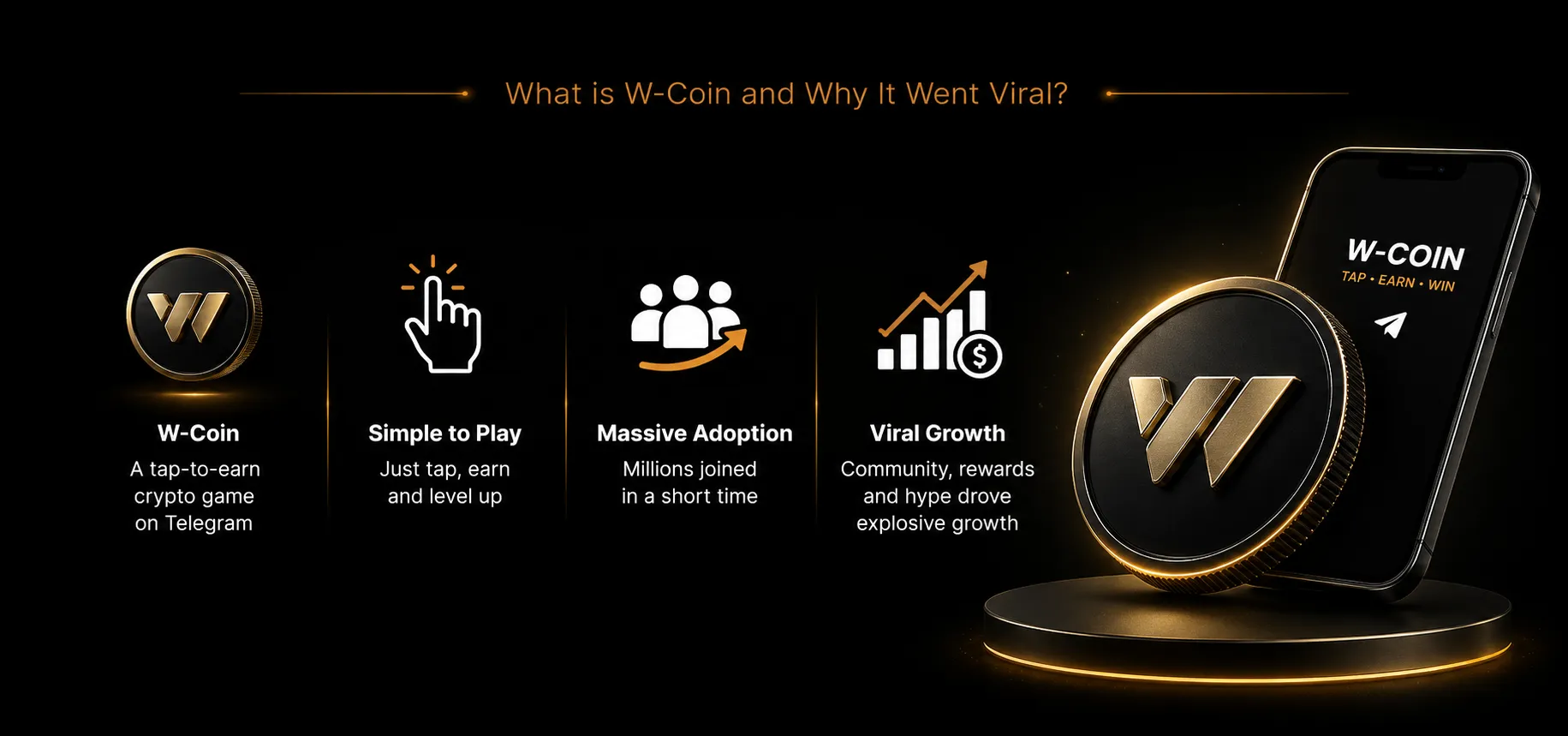
W-Coin became popular because the game was simple enough to understand within seconds. Players tapped to mine coins, invited friends, climbed leaderboards, and stayed active because early participation felt important.
The referral system was the real growth engine. Every user had a reason to invite more people because referrals improved earning speed. This created a viral cycle across Telegram groups, private chats, and community channels.
Similar simplicity can be seen in hyper-casual game development, where one easy mechanic can create strong engagement when timing and feedback are handled well.
W-Coin also used early-adopter psychology. Users felt they were joining before the crowd. The possibility of future rewards, airdrops, and token benefits created urgency. Community discussions then extended the excitement beyond the game screen.
The goal is not to copy W-Coin feature by feature. The better approach is to understand why simplicity, social incentives, and timing worked together so well.
How a Tap-to-Earn Game Actually Works?
A tap-to-earn game looks simple from the outside, but it depends on real-time validation in the background. Every tap, referral, reward, cooldown, and limit must be checked quickly to keep the game fair.
Fast tap processing is usually handled through scalable backend systems. A reliable Node.js development setup can support real-time requests, API communication, and high user activity during viral traffic spikes.
1. Real-Time Validation System
Tap requests are checked instantly. The system validates user limits, logs activity, updates points, and blocks suspicious activity without slowing down genuine players.
2. Dynamic Reward Logic
Energy caps, multipliers, cooldowns, and progression curves control reward value. This keeps early gameplay exciting while protecting long-term sustainability.
3. Referral Amplification Engine
Referral logic calculates inviter and invitee rewards together. It also checks for fake accounts, farming patterns, and repeated abuse.
4. Bot Abuse Prevention
Anomaly detection, rate limits, behavior signals, and tap-pattern analysis help stop automated scripts. Advanced protection can also use AI development methods to identify abnormal user behavior at scale.
Core Architecture of a W-Coin Style Game
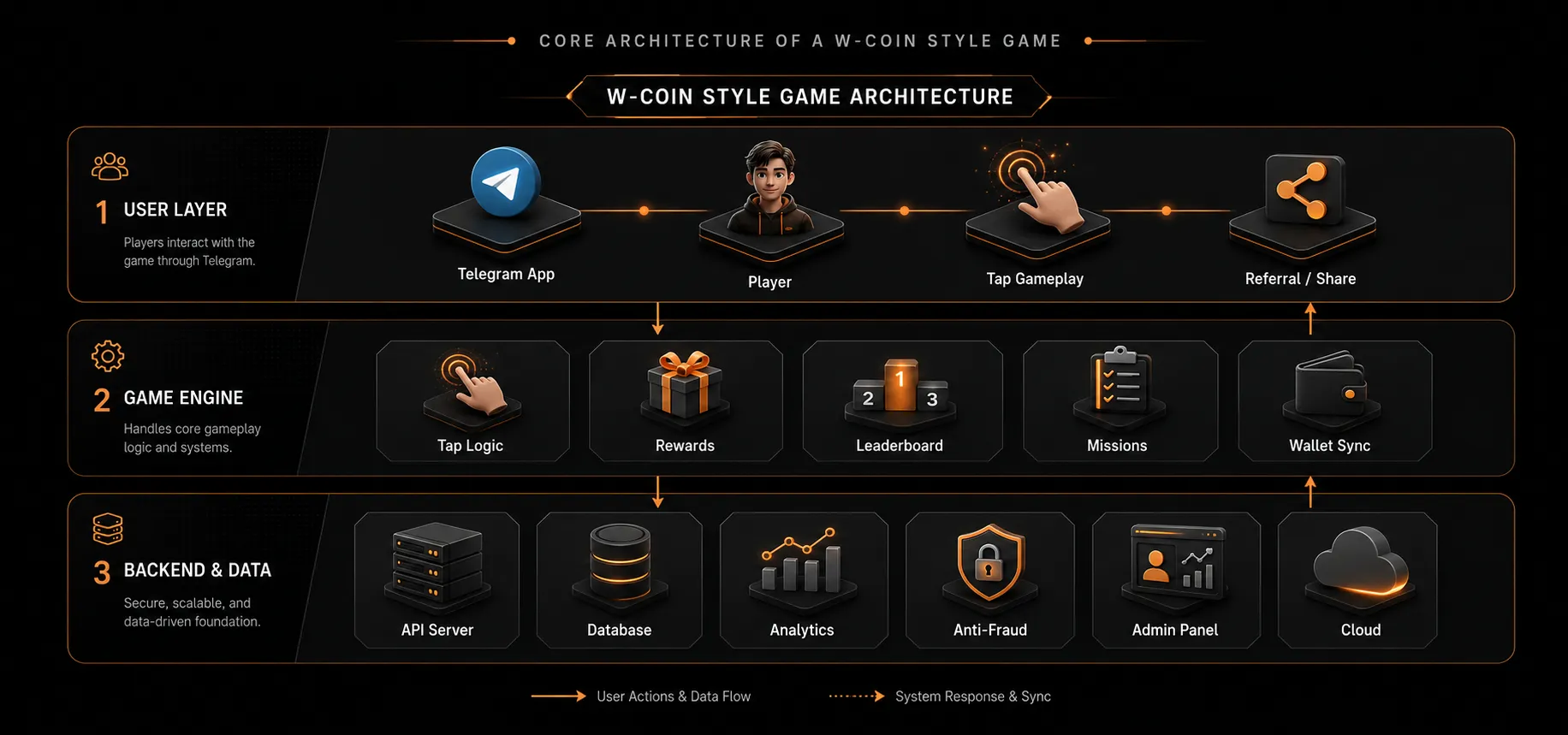
The technical foundation of a W-Coin-style tap-to-earn game is multi-layered. The interface feels light for users, but the system must process taps, referrals, rewards, and limits with accuracy.
Projects with token utility, player ownership, and Web3 rewards often need secure blockchain game development planning to connect gameplay with decentralized economies.
- Telegram Bot / Mini App Layer: Handles navigation, taps, referral screens, profile views, and reward actions inside Telegram.
- Backend Logic Layer: Validates behavior, applies game rules, calculates rewards, and controls anti-abuse checks.
- Database Layer: Stores users, taps, balances, referrals, sessions, and progression records securely.
- Event Tracking System: Tracks every tap, invite, reward, task, and leaderboard change for analytics.
- API Communication Layer: Keeps Telegram interfaces, backend services, dashboards, and optional blockchain modules connected.
A stable database development structure is important because referral balances, tap histories, and reward events must remain accurate during high traffic.
Game Mechanics & Tokenomics Design
Game mechanics and tokenomics decide whether a tap-to-earn project survives beyond the first wave of hype. Tapping should feel rewarding, but the economy must not overpay users too early.
Reward planning becomes stronger when teams combine gameplay balance with coin token development expertise, especially around supply, emissions, conversion rules, and reward limits.
- Energy & Tap Limits: Energy systems prevent over-tapping, reduce inflation, and create natural comeback moments.
- Progressive Reward Curves: Early rewards feel exciting, while later diminishing returns protect the economy.
- Referral Multiplier Design: Referral bonuses should encourage sharing without allowing unlimited farming.
- Token Supply Planning: Supply, emission rate, vesting, and conversion rules must be defined before launch.
- Whale Control Mechanisms: Caps, decay rules, and progression limits stop a small group from controlling rewards.
Step-by-Step Development Process (2-Week MVP)
A two-week MVP works only when the scope is clear. The goal is not to build every advanced feature immediately. The goal is to validate the tap loop, referral system, user flow, and retention signals quickly.
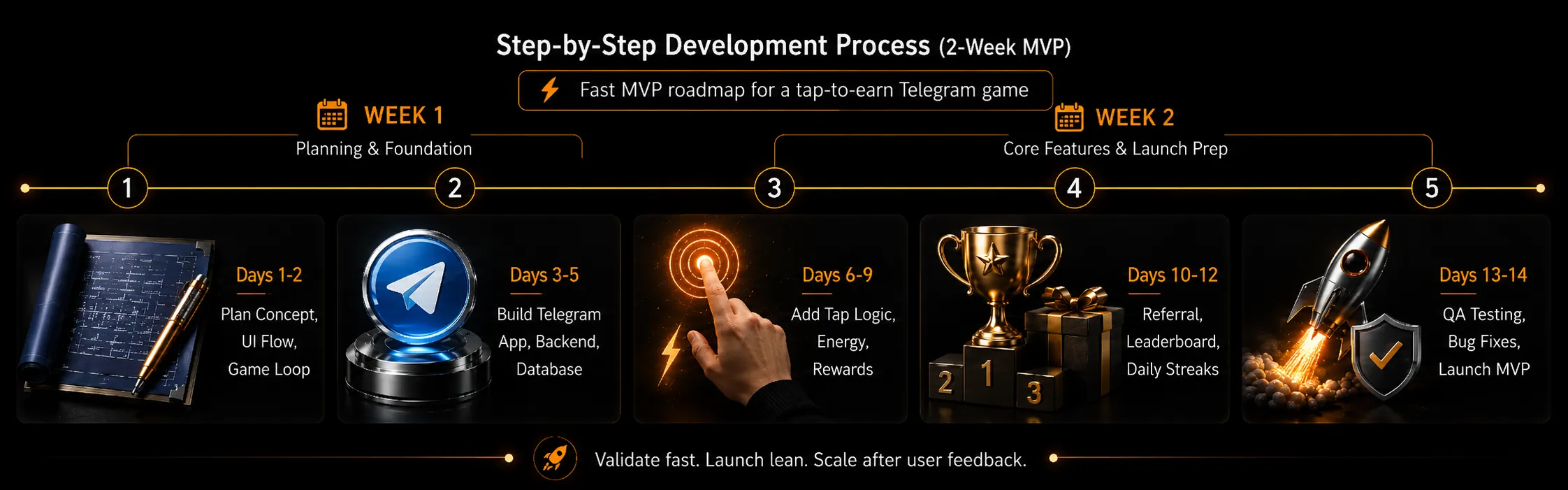
Week 1: Planning & Foundation
Week one focuses on clarity, architecture, and development setup. Decisions made here affect stability, scalability, and launch speed.
- Days 1–2: Finalize system architecture, UI flow, engagement loop, reward logic, referral structure, tap mechanics, and anti-abuse rules.
- Days 3–5: Build the Telegram mini app or bot, backend logic, database, tap records, user profiles, referral tracking, and reward calculations.
Week 2: Core Features & Launch Prep
Week two turns the foundation into a playable MVP. This stage needs testing, balancing, and launch preparation.
- Days 6–9: Implement tap logic, energy rules, reward calculations, progression mechanics, and gameplay balancing.
- Days 10–12: Add referrals, leaderboards, daily streaks, tasks, and basic retention features to encourage viral growth.
- Days 13–14: Test flows, fix bugs, review bot approval requirements, check abuse controls, and release the MVP to early users.
Proper quality assurance helps identify broken reward flows, duplicate referrals, bot issues, UI errors, and performance problems before public launch.
Monetization Strategies for Tap-to-Earn Games
Monetization should come after the core loop is validated. A tap-to-earn game needs daily activity, user trust, and community participation before it starts pushing revenue features.
Wallet-based economies need smooth transaction access, so wallet app development planning becomes important when users can claim, store, transfer, or use token rewards.
1. Token Launch Model
Tokens convert in-game activity into broader ecosystem value. They can support trading, staking, governance, utility access, and long-term reward programs.
2. Premium Boost Sales
Premium boosts increase earning speed, energy recovery, or multiplier strength. They should feel optional and never turn the game into pay-to-win.
3. Energy Pack Monetization
Energy packs let active users play longer while still respecting cooldown balance and reward limits.
4. Sponsored In-Game Tasks
Brands can sponsor simple tasks that reward players without disrupting the game loop. These tasks work best when they feel native to the community.
5. Utility-Based NFTs
NFTs can provide cosmetic upgrades, access perks, or limited gameplay utilities. They should improve engagement rather than create speculation only.
When NFT rewards become part of the game economy, NFT game development experience helps balance asset utility, ownership, and gameplay fairness.
Cost to Build a W-Coin Type Telegram Game
The cost to build a Telegram crypto tap game depends on features, Web3 complexity, scalability, security, and anti-fraud requirements. A simple prototype can be launched quickly, but a production-ready build needs stronger infrastructure.
The user interface should also remain simple. Clean UI/UX design helps players understand taps, energy, rewards, referrals, and wallet actions without confusion.
Estimated Cost Breakdown (W-Coin Style Telegram Game)
| Development Component |
Scope Description |
Estimated Cost (USD) |
Timeline |
| Game Logic & Tap Mechanics |
Core tapping system, rewards, and progression curves |
$3,000 – $6,000 |
1–2 weeks |
| Telegram Bot Development |
Bot flows, commands, UI, and mini app setup |
$4,000 – $8,000 |
2 weeks |
| Backend & Database |
User data, sessions, scaling, security, and event records |
$5,000 – $10,000 |
2–3 weeks |
| Tokenomics Design |
Supply, emissions, referrals, and anti-whale rules |
$2,000 – $5,000 |
1 week |
| Blockchain Integration |
Token deployment, wallet connect, transfers, and on-chain rewards |
$4,000 – $9,000 |
2 weeks |
| Anti-Fraud & Abuse Control |
Bot detection, rate limits, farming prevention, and anomaly checks |
$2,000 – $4,000 |
1 week |
| UI / UX Design |
Telegram-friendly visuals, flow design, and user feedback states |
$1,500 – $3,000 |
1 week |
| Testing & Pre-Launch |
Load testing, bug fixes, reward validation, and launch checks |
$1,500 – $3,000 |
1 week |
Total Estimated Cost: $23,000 – $48,000
Average Build Time: 4–8 weeks for a production-ready version
Growth Strategy to Make It Viral
Virality must be built into the gameplay. A tap-to-earn Telegram game grows faster when every player has a reason to invite friends, compete, and return daily.
A supporting web development layer can help founders add landing pages, campaign dashboards, referral explainers, community pages, and analytics panels around the Telegram experience.
- Referral Rewards: Give users a clear reason to invite friends without allowing unlimited farming.
- Leaderboards: Add public competition so active users feel visible.
- Community Tasks: Reward users for joining channels, completing challenges, or engaging with updates.
- Influencer Push: Use Telegram creators, Web3 communities, and meme pages to create early momentum.
- Airdrop Psychology: Make future rewards feel possible, but avoid unrealistic promises.
If the project includes tokens, smart contracts, and reward settlement, broader blockchain development support helps keep the ecosystem secure and scalable.
Need Help Building a Telegram Tap-to-Earn Game?
If you are serious about how to create a W-Coin tap-to-earn Telegram game, working with an experienced Telegram bot game development team can reduce mistakes and speed up launch.
The right team can build the MVP, design tokenomics, secure the backend, create referral flows, test abuse controls, and prepare the game for scaling. This helps you launch a tap-to-earn product built for long-term growth, not short-lived hype.
For founders exploring tokenized reward models beyond gaming, asset tokenization concepts can also help explain ownership, utility, and digital value design in a broader Web3 ecosystem.
Frequently Asked Questions
1. How long does it take to build a W-Coin-style Telegram tap-to-earn game?
A basic MVP can be built in 10–14 days with core tap mechanics, referrals, and leaderboards. A production-ready version with tokenomics and anti-fraud layers may take 4–8 weeks.
2. Do I need blockchain integration to launch a tap-to-earn Telegram game?
No. You can start with an off-chain point system first. Tokens, wallets, and on-chain rewards can be added later after traction is validated.
3. What makes W-Coin-style games go viral on Telegram?
Virality comes from referral rewards, leaderboard competition, airdrop anticipation, and frictionless onboarding inside Telegram.
4. How do tap-to-earn games prevent bot farming and cheating?
They use behavior tracking, rate limits, device signals, cooldown systems, anomaly detection, and referral checks to block automated abuse.
5. Can I build a Telegram tap-to-earn game without coding experience?
You can test a basic concept with no-code tools, but a scalable game needs backend development, database setup, Telegram integration, and security controls.
6. How do tap-to-earn games make money?
Revenue can come from token launches, premium boosts, energy packs, sponsored tasks, and utility-based NFTs. These models should avoid pay-to-win imbalance.
7. What is the biggest mistake founders make?
The biggest mistake is over-rewarding early users. This can break tokenomics, create inflation, and cause users to leave after the first hype cycle.
8. How important is referral design in Telegram gaming growth?
Referral design is critical. In many tap-to-earn games, referrals become the main user acquisition engine.
9. What backend technologies are commonly used?
Common stacks include Node.js or Python, PostgreSQL or MongoDB, Redis for caching, and cloud hosting such as AWS, GCP, or similar services.
10. Is the tap-to-earn model still profitable in 2026?
Yes, but only with sustainable tokenomics, strong anti-bot controls, and long-term engagement loops. Short-term hype alone is not enough.