Top Blockchain-Based Gaming Companies of 2026
Key Takeaway:
- Core Value: Blockchain gaming provides real ownership, improved gameplay and long-term ecosystem value beyond speculation.
- Service Scope: It includes Web3 game development solutions, NFT platforms, studios, and infrastructure providers.
- Business Impact: Improves game companies’ engagement, retention, monetization, and scalable digital economies.
- Industry Applications: Employing it in mobile gaming ecosystems, play-to-earn systems, NFT games, and metaverse platforms.
- Future Direction: The focus now is on mass adoption, interoperability, invisible blockchain, and AI gaming.
Introduction
The gaming industry of 2026 is a very different beast to the one we knew just a few years ago. What started as an experimental idea around NFTs and early play-to-earn mechanics has now grown into a full-blown ecosystem of studios, infrastructure providers, and digital economies that are beginning to compete with traditional gaming in scale and quality.
If you’re looking at blockchain gaming companies in 2026, you’re no longer looking at a niche anymore. In this fast-evolving market, major studios are creating long-term gaming worlds, not short-term token experiments. The focus has clearly moved to real ownership systems, sustainable economies and high quality gaming that truly enhances, rather than diminishes, the player experience.
In 2026 blockchain gaming, the question is no longer whether the technology works or not. The real question is what companies are using it to create games that people actually want to play.
What is Blockchain Gaming?
Blockchain gaming is a genre of video game that uses blockchain technology to provide players with provably owned in-game assets and a stake in the game economy. These assets can be characters, skins, weapons, land and collectibles that live on decentralized networks instead of being locked inside of centralized systems under the control of a single publisher. ChicMic Studios provides end-to-end Web3 game development solutions to help companies implement blockchain-powered gaming ecosystems seamlessly.
It’s about possession. In traditional games players can spend years building inventories or collecting rare items but they never really own them outside of the game. Blockchain changes this, by allowing assets to exist independently as digital tokens that can be bought, sold, or sometimes used across multiple games in the same ecosystem.
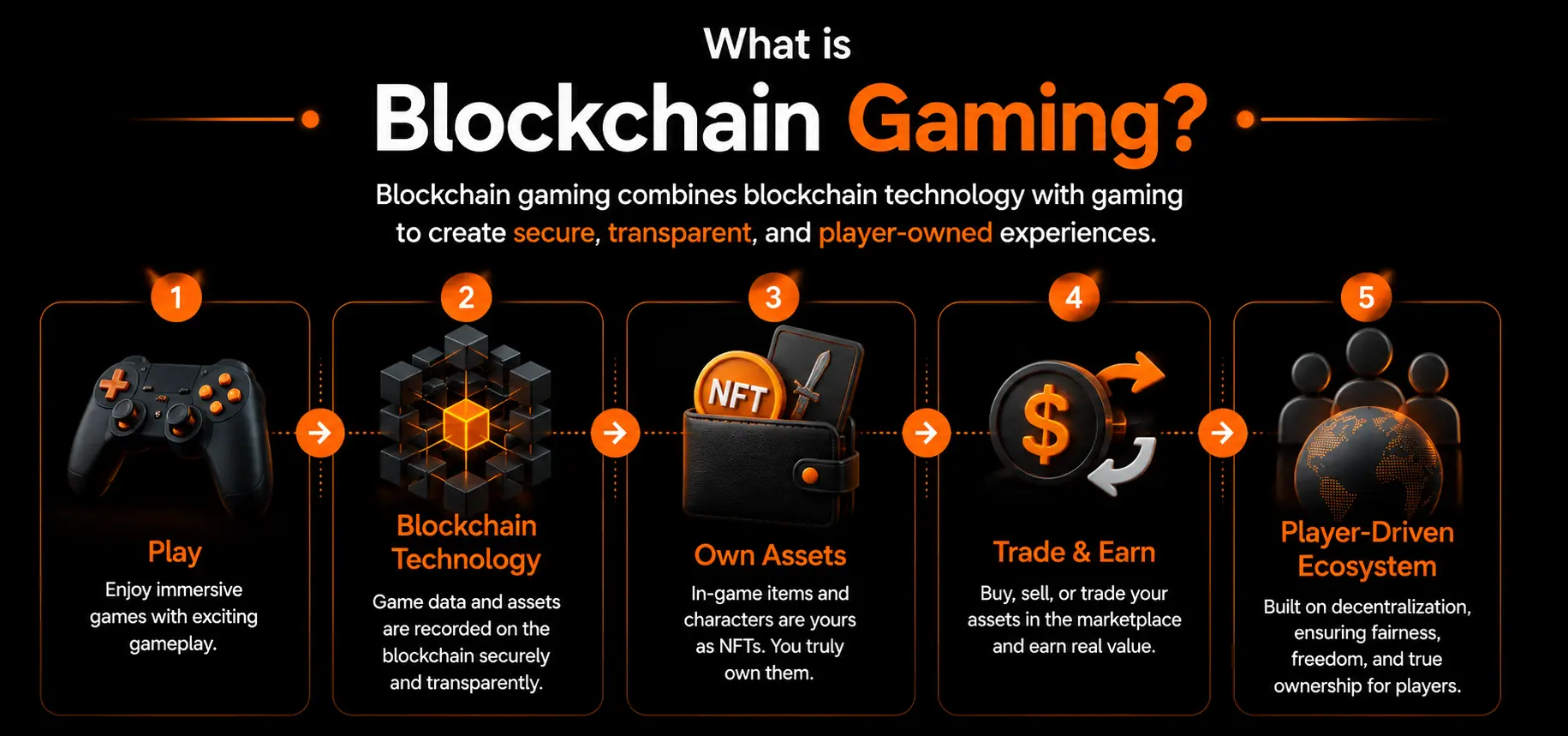
Today’s NFT game development companies are so much focused on keeping gamers oblivious of the intricacies of blockchain. Most systems today are meant to feel seamless rather than force you to deal with wallets and the mechanics of crypto currency. Players simply enjoy the game, while the blockchain layer is running in the background. Developers can integrate NFTs effectively using our NFT marketplace development services, which streamline in-game trading and ownership
This shift toward invisible infrastructure reflects how enterprise systems are evolving, with IBM Blockchain showing how decentralized tech improves transparency and ownership, making blockchain gaming more accessible by removing technical barriers and boosting adoption. Seamless in-game asset ownership is powered by secure crypto wallet development services, allowing players to trade, store, and use NFTs without friction
Market Trends in 2026
Today it is an integral, well-structured part of the global gaming industry. What was once mostly driven by token speculation and hype cycles is being replaced by stronger game design principles, more developed economic systems, and practical innovation. Instead of questioning whether blockchain should be integrated into games or not, studios are trying to figure out how to do it in a way that adds to gameplay, rather than distracts from the player experience. Long-term value development, retention and sustainability are therefore key priorities now. It also enabled Web3-native developers to partner with legacy gaming studios to develop higher-quality games with better user experience and more immersive worlds. According to Statista the global gaming industry is now valued at over $200 billion, reflecting strong growth in digital gaming adoption worldwide.
- Shift from Play-to-Earn to Balanced Gameplay
Current systems place more emphasis on skill, progression and long-term engagement, as opposed to the early play-to-earn gaming companies that focused on monetary rewards.
- Growth of Interconnected Gaming Ecosystems
These blockchain game ecosystems extend player retention and long-term value by transferring assets, identities, and progress between different games. These new blockchain game ecosystems improve retention and long-term value by allowing assets and progress to transfer between multiple titles
- Entry of Traditional Gaming Studios
Many metaverse gaming studios are partnering with big publishers to improve gameplay, storytelling and graphics. By partnering with legacy studios, Web3 developers integrate high-quality Unity game development and metaverse experiences for more immersive gameplay.
- Improved User Experience
Games are more accessible to players from a broader audience, as wallet onboarding is easier, transactions are faster, and the blockchain is hidden in the background.
How Blockchain gaming Companies Were Selected?
This selection of companies is based on their proven contribution to the world of gaming on blockchain, and their tangible impact in the real world, rather than hype or speculative interest.
Each company was assessed on a variety of factors, including goods provided or the active game ecosystems, community participation and user acceptance, innovation of Web3 mechanisms, partnerships with famous gaming or tech companies, and the long-term viability of the models.
The aim is to highlight the best blockchain game developers who are genuinely influencing the industry, rather than displaying early-stage games that are just ideas or token-driven experiments.
Top Blockchain Gaming Companies in 2026
By 2026, a range of forward-thinking studios, infrastructure suppliers, and ecosystem developers will be driving the blockchain gaming scene and changing the way that contemporary games are made and played. Most of the leading companies are now working on scalable ecosystems that accommodate many titles, digital ownership systems, and ongoing player engagement versus one game. This has made the industry more developed today with a great focus on smooth user experiences, sustainable economies, and quality gameplay.
- ChicMic Studios
ChicMic Studios is an emerging game development company that utilizes scalable production systems and practical, design-led development to fuel the growth of Web3 gaming studios. The company creates interactive gaming experiences, thoughtfully incorporating blockchain elements where they enhance gameplay value. What it does well is help companies and start-ups to implement good ideas in a systematic and efficient way.
- Animoca Brands
Animoca Brands is one of the biggest ecosystem developers in the blockchain gaming industry. Rather than focusing on one product, it invests in a large network of studios and platforms. This helps determine the overall course of blockchain gaming companies in 2026. Its ecosystem model powers interconnected digital economies, allowing experiences and assets to flow across multiple games.
- Sky Mavis
Sky Mavis, the developer of Axie Infinity, is still evolving from its play-to-earn roots to a more balanced gaming ecology. Now the focus is on gaming depth, retention and long term sustainability through the Ronin network. It’s a sign of the wider industry moving away from the purely reward-based models and into more engaging gameplay systems.
- Immutable
Immutable is a fundamental infrastructure provider and plays a vital role in the modern blockchain gaming experience. Developers can build scalable games with lower transaction costs and higher speed with technologies like Immutable X and zkEVM. It’s an integral component of blockchain game ecosystems as it supports a growing network of publishers and developers.
- Gala Games
It is an open-world gaming platform with tons of live games of different genres. The node structure combines traditional publication with decentralized ownership, incorporating community participation into its infrastructure model. Its hybrid strategy makes it a standout in the evolving Web3 game market.
- Dapper Labs
Dapper Labs demands to bring blockchain gaming to the masses and they want to do it with simple, easy to use experiences. It’s built on the Flow blockchain and is most known for NBA top shot and related digital ownership items. It’s very good at reducing tech barriers and simplifying experiences on the blockchain.
- Mythical Games
Mythical Games combines blockchain ownership systems with high-quality game production to create polished, mainstream-ready experiences. It is often referenced by the best NFT game development firms because of its focus on production quality and licensed material. Games like NFL Rivals are examples of its strategy of combining Web3 elements with traditional gaming standards.
- The Sandbox
The Sandbox is one of the leading metaverse platforms that allow users to create, buy and sell virtual items and land. It has become a creator-led ecosystem that enables collaboration between players, developers and brands. Its structure illustrates how developers of metaverse gaming are building persistent virtual worlds.
- Illuvium
Illuvium is one of the most forward-thinking blockchain role playing games out there today. It is an ethereum based game combining strategy based gameplay, creature collection and exploration in a visually stunning open environment. It’s a good benchmark for better experiences in the blockchain gaming space.
- Enjin
Enjin, one of the earliest companies to create games on the blockchain, still offers studios tools to build on NFTs. It’s a widely used tool by indie and mid-sized teams in the Web3 game studios ecosystem, allowing developers to create, organize and integrate digital materials into games.
The Evolution of Web3 Game Studios
The creative concepts, improved gameplay focus and more player-driven experiences of a new generation of studios are changing the Web3 gaming landscape. These studios are focusing more on engagement, storylines and long-term retention than past ventures that were primarily based on token systems. This change is aligning blockchain games more with the standards of mainstream gaming and making them feel more native.
- Focus on Gameplay First
These studios favor fun mechanics, gripping loops and long-term player satisfaction over token systems.
- Mobile-First Experiences Rise
Many studios are focused on developing Web3 games with a mobile focus, for accessibility, easier onboarding and more engagement with regular casual gamers around the world.
- AI-Driven Game Design
We are leveraging AI algorithms to create adaptive gameplay, dynamic storytelling and personalized experiences that react to each player’s behavior. ChicMic Studios also leverages AI development to create adaptive gameplay and personalized experiences for blockchain games.
- Global Studio Expansion
With a variety of concepts, hybrid models, and more advanced development skills, the studios in Asia, Latin America, and Europe are shaping Web3 gaming.
For insights on combining AI and blockchain to improve game ecosystems, read How AI and Blockchain are Converging to Power Decentralized AI.
How to Choose a Blockchain Gaming Partner?
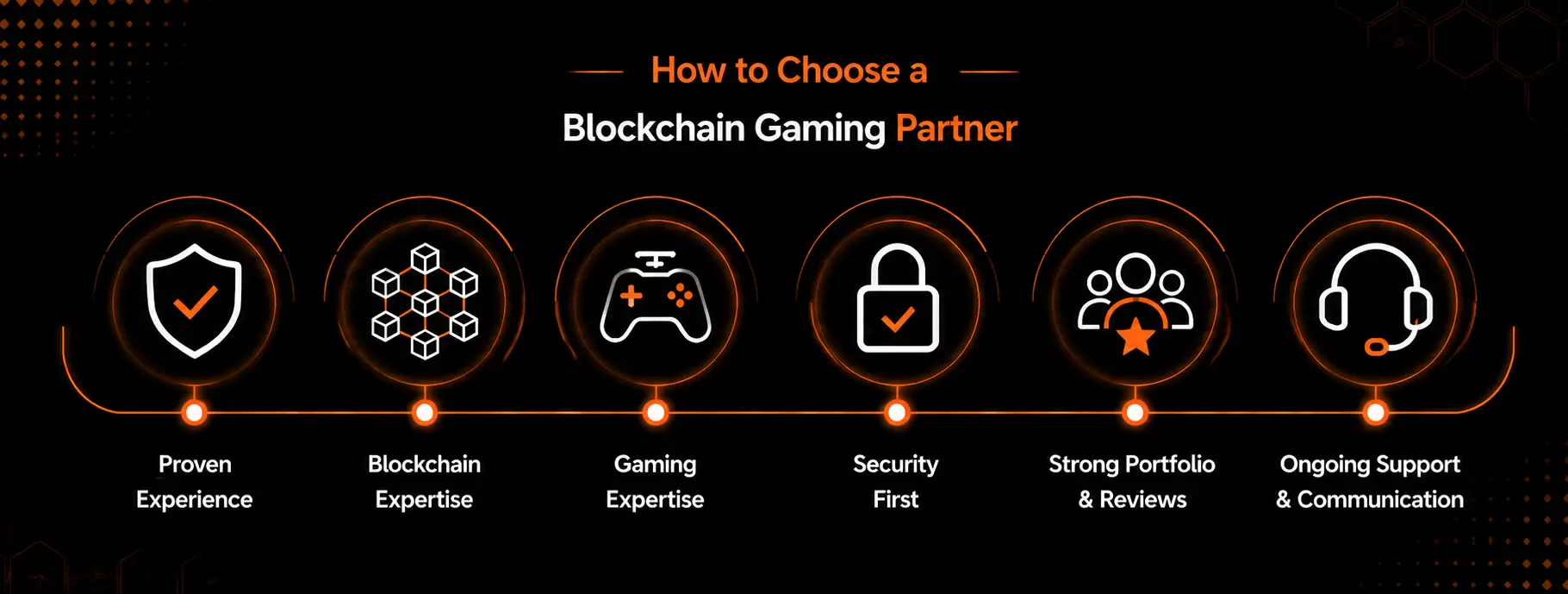
Choosing the right partner for blockchain gaming is more than a technical choice. It requires a combination of long-term strategy, blockchain knowledge, and knowledge of gameplay. A good partner must be able to create compelling games first in order to integrate blockchain in a way that seems natural, scalable and sustainable for both players and businesses.
- Gameplay Comes First
Strong studios always put enjoyable gameplay loops first before integrating blockchain features in order to increase engagement without interfering with the player experience.
- Technical Blockchain Expertise
Partners need to understand L2 solutions, wallet integration, smart contracts, and security standards to ensure scalable and reliable development.
- Sustainable Economy Design
Good studios create in-game economies that are balanced to prevent inflation, ensure fairness and promote sustained player participation and stability of the ecosystem.
- Ecosystem Thinking Approach
Rather than building isolated games, the best partners build scalable ecosystems that allow for ongoing development, updates and cross-game integration.
Conclusion
Blockchain gaming will be history by 2026. Strong infrastructure, professional studios and changing player expectations have helped it evolve into an organized industry.
Companies such as ChicMic Studios, Animoca Brands, Immutable, Mythical Games and Illuvium are leading the way with their focus on sustainability, scalability and high-quality gaming. The new studios are expanding the frontiers of AI systems, interactive narrative, and mobile gaming. This shift is also visible in ecosystem analytics, with DappRadar showing continued growth in blockchain gaming activity and user engagement across platforms.
It won’t be hype but implementation that will decide the future of blockchain gaming. The studios that win, employing blockchain as an invisible layer, are the ones who make games that players really love and want to play again. Explore our blockchain portfolio for examples of successful Web3 and NFT-based game projects delivered by our team.
Frequently Asked Questions
1. What makes a company a top blockchain gaming firm in 2026?
A top blockchain gaming company in 2026 is defined by real game releases, strong player engagement, sustainable in-game economies, and the ability to build scalable blockchain-based ecosystems.
2. How does play-to-earn impact gaming economics?
Play-to-earn introduces real-world value into games, but modern systems now balance rewards with gameplay quality to avoid inflation and ensure long-term sustainability.
3. Do blockchain gaming studios build custom blockchain games?
Yes, most blockchain gaming studios develop custom games that include smart contracts, NFT integration, token economies, and tailored gameplay systems based on project needs.
4. What is the role of blockchain game ecosystems in gaming?
Blockchain game ecosystems connect multiple games under one network, allowing players to carry assets, identities, and progress across different gaming experiences.
5. Are blockchain games still focused on NFTs in 2026?
NFTs are still used, but the focus has shifted from speculation to utility, where in-game assets provide real gameplay value and cross-game functionality.
6. How do I choose the right blockchain gaming partner?
The right partner should prioritize gameplay first, understand blockchain infrastructure, design balanced economies, and build scalable gaming ecosystems instead of standalone projects.