Blockchain Football Games & FIFA 2026: The Future of Web3 Gaming
Key Takeaways
- FIFA World Cup 2026 is accelerating interest in blockchain football games, fan tokens, NFTs, and Web3-powered fan experiences.
- Successful blockchain football games combine engaging gameplay, true asset ownership, and sustainable token economies.
- NFT player cards, virtual stadiums, and digital collectibles allow fans to own and trade meaningful football assets.
- Smart contracts improve transparency by enabling verifiable scarcity, secure ownership, and fair in-game reward systems.
- Football-focused Web3 games must prioritize user experience and mobile accessibility to attract mainstream audiences.
- FIFA 2026 creates new opportunities for brands, clubs, and developers to build innovative gaming and fan engagement ecosystems.
Introduction
The FIFA World Cup 2026 has turned North America into the center of global football energy, with millions of fans, brands, creators, and sports enterprises watching the game evolve beyond the pitch. This electric atmosphere is also accelerating one of the most exciting crossovers in gaming: blockchain football games & FIFA 2026. As football culture collides with Web3 innovation, a new tokenized sports economy is emerging where fans are no longer passive spectators. They can own, trade, upgrade, and monetize digital assets through true in-game asset ownership powered by NFT player cards and soccer mechanics. This shift is opening the door to smarter play-to-earn football games, collectible-driven competitions, and Web3 fan engagement tokens that reward loyalty and participation. At ChicMic Studios, we see this revolution as the next major leap for sports gaming, combining football passion with advanced blockchain game development services.
Why FIFA 2026 Is Driving Demand for Blockchain Games
The World Cup has always been the biggest trigger of football passion, but the 2026 FIFA World Cup is coming in a totally different digital context. The tournament is being played across the United States, Canada and Mexico and is the first edition to feature 48 teams and three host countries, making it the biggest World Cup format ever. It’s not just a sporting event; it’s a global entertainment machine for mobile apps, fantasy platforms, collectibles, social groups and immersive games. FIFA’s official tournament page confirms the sheer scale of the 2026 competition.
Today’s digitally native fan expects more than simply watching a contest and posting reactions. They want access, rewards, identity, ownership and involvement. This is where blockchain football games & FIFA 2026 become a powerful cultural and tech crossover. Engagement tokens give web3 fans the opportunity to participate in exclusive challenges, loyalty perks, scarce content, community voting, and small team-related decisions in digital ecosystems.
The size of the event also provides a huge gateway into the blockchain gaming ecosystem. Football merchandise, fantasy tournaments and virtual stadium experiences offer the potential to engage millions of fans who may never have used Web3. The visibility of both official and unofficial NFT player cards soccer collections is also likely to increase as fans look for digital ways to collect, trade and celebrate football moments during the tournament. Businesses exploring this opportunity can use Web3 dApp development to build wallet-enabled fan platforms, NFT reward systems, and decentralized community experiences.
What Makes a Great Blockchain Football Game
A great blockchain football game is not a regular football game with a token added on the end. The best games in this space are designed from the ground up with ownership, competitiveness, community and sustainable economics as a foundation. This translates into great gaming design, well thought out tokenomics and the experience of skilled blockchain game developers who understand sports culture and Web3 infrastructure.
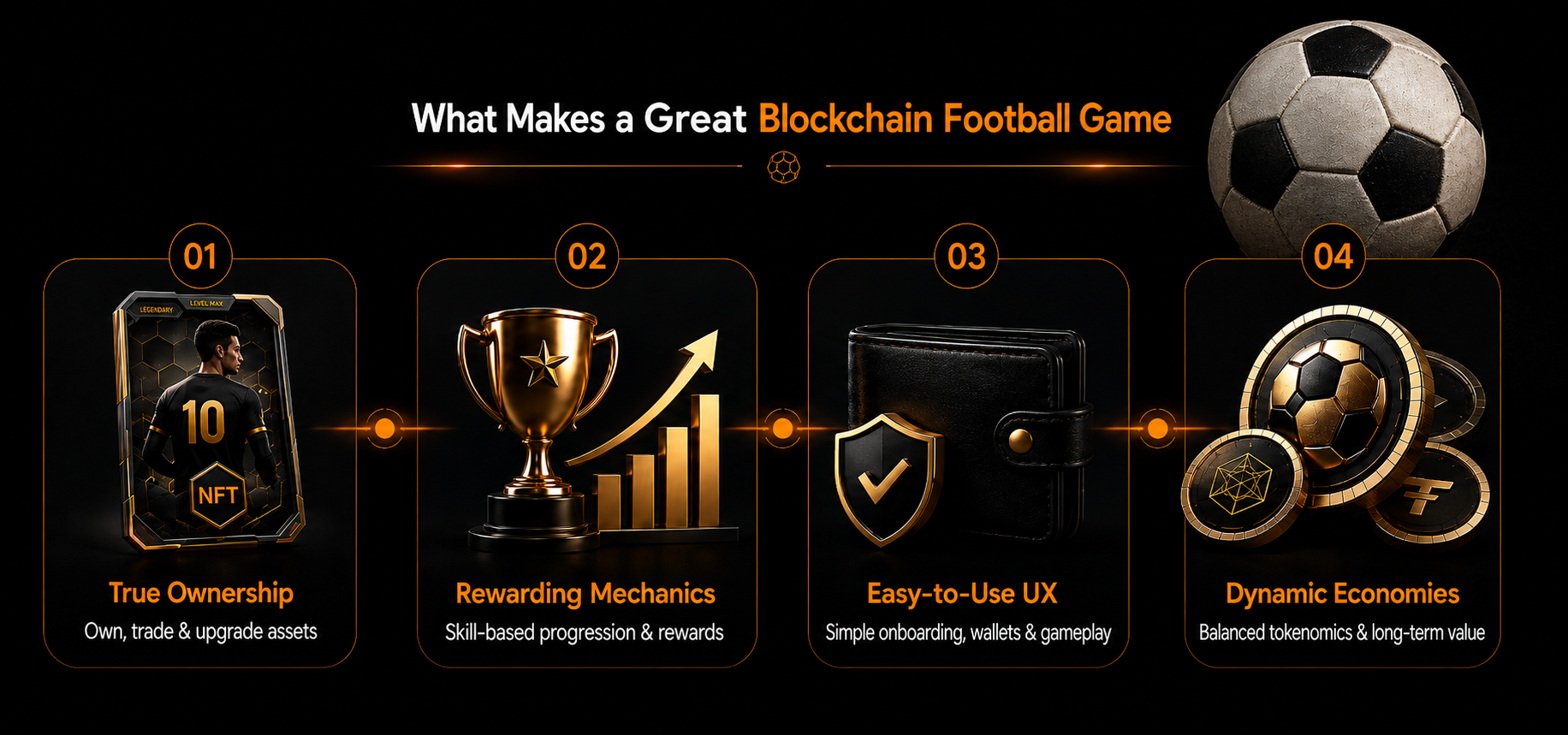
The main components are:
- True Ownership: Players own their in-game assets and can freely buy, sell or exchange NFT player cards soccer in open marketplaces. Players want to feel their cards, athletes, stadiums, kits and upgrades are worth something more than just one playing session.
- Rewarding Mechanics: Deep football gaming reward mechanics beyond simple grind-to-earn. Great systems reward your skill, strategy, tactical decisions, roster construction, tournament performance and long term advancement.
- Easy-to-use UX: Top decentralized gaming platforms hide the technical complexity. The wallets, gas fees, sign-ins and transactions need to be simple enough for the average football fan, not just crypto-native users. A secure crypto wallet development layer can simplify sign-ins, NFT storage, reward claims, and asset transfers for non-crypto users.
- Dynamic Economies: A strong, well-balanced, smart-contract-driven gaming economy is critical. You have to engineer your rewards, asset supply, rarity, upgrades, marketplace fees, token sinks and so on, such that it does not create hyperinflation and builds long term player confidence. This is particularly the case as blockchain gaming matures from the height of speculative frenzy into more utility-driven ecosystems. The trend can also be observed in the wider coverage of blockchain gaming and player-owned digital assets.
Top Blockchain Football Games and Models to Watch in 2026
The 2026 football season is opening the door for a variety of blockchain football games, ranging from fantasy platforms to metaverse stadiums and on-chain management simulations. The models to watch closely are:
- Sorare — The Giant
Sorare remains the number one blockchain fantasy football. Its core Web3 hook is simple yet effective: players collect officially-licensed soccer player NFT cards, create fantasy lineups, and battle based on real-world football performance. This is one of the clearest examples of the play-to-earn football games paradigm where ownership of digital cards, sports knowledge and fantasy strategy collide. If your platform includes card trading, auctions, royalties, or collectible sales, this guide on NFT marketplace development services explains how businesses can structure a complete NFT trading ecosystem.
- GOAL Chain
Football token ecosystems are looking to move beyond one kind of game and draw wider engagement. Goal Chain is capitalizing on Web3 football management, blockchain and metaverse style football engagement mechanisms. These systems are attempting to build an entire tokenized sports economy around fan rewards, prediction-style experiences, governance and football-themed digital assets. More advanced versions will combine gaming, community voting, asset utility and marketplace interaction in a single cycle.
- Metaverse-First Football Clubs
Other emerging games are developing virtual stadium experiences, where clubs, producers or players can own digital stadiums, hold events, sell virtual products and earn cash from in-game matchdays. The appeal of Web3 is not just playing football, but also owning a piece of the football world that surrounds the game. These virtual stadium models can be expanded through metaverse game development to create branded fan zones, matchday events, digital collectibles, and interactive sports communities.
- Manager Simulators
The exciting thing about football management games on blockchain is that they combine tactical intelligence and asset value. You can scout, transfer, train, shape your formations and make decisions in the matches that will directly influence the performance and demand of your on-chain assets.
- The Dark Horse Indie Model
Smaller companies could produce some of the biggest surprises with lean, skill-first games on decentralized gaming platforms. Although these games may not start out with massive licenses, they can win with fast-paced gameplay, fair reward mechanics, interoperable assets and community-led tournaments. Studios building lightweight browser or mobile sports games can also explore mobile game development to reach mainstream football fans with faster onboarding and accessible gameplay.
The Role of Fan Tokens & NFTs in Football Gaming
Fan tokens and NFTs have different functions in blockchain football games. Web3 Fan engagement tokens such as $CHZ, $BAR and $PSG are fungible and offer voting, loyalty benefits, gated access and community participation. In a tokenized sports economy, they give supporters a greater sense of involvement than traditional likes, follows or subscriptions. Clubs can look at fan token market data to see adoption patterns. Platforms like Socios.com show how fan tokens are currently being used in sports engagement.
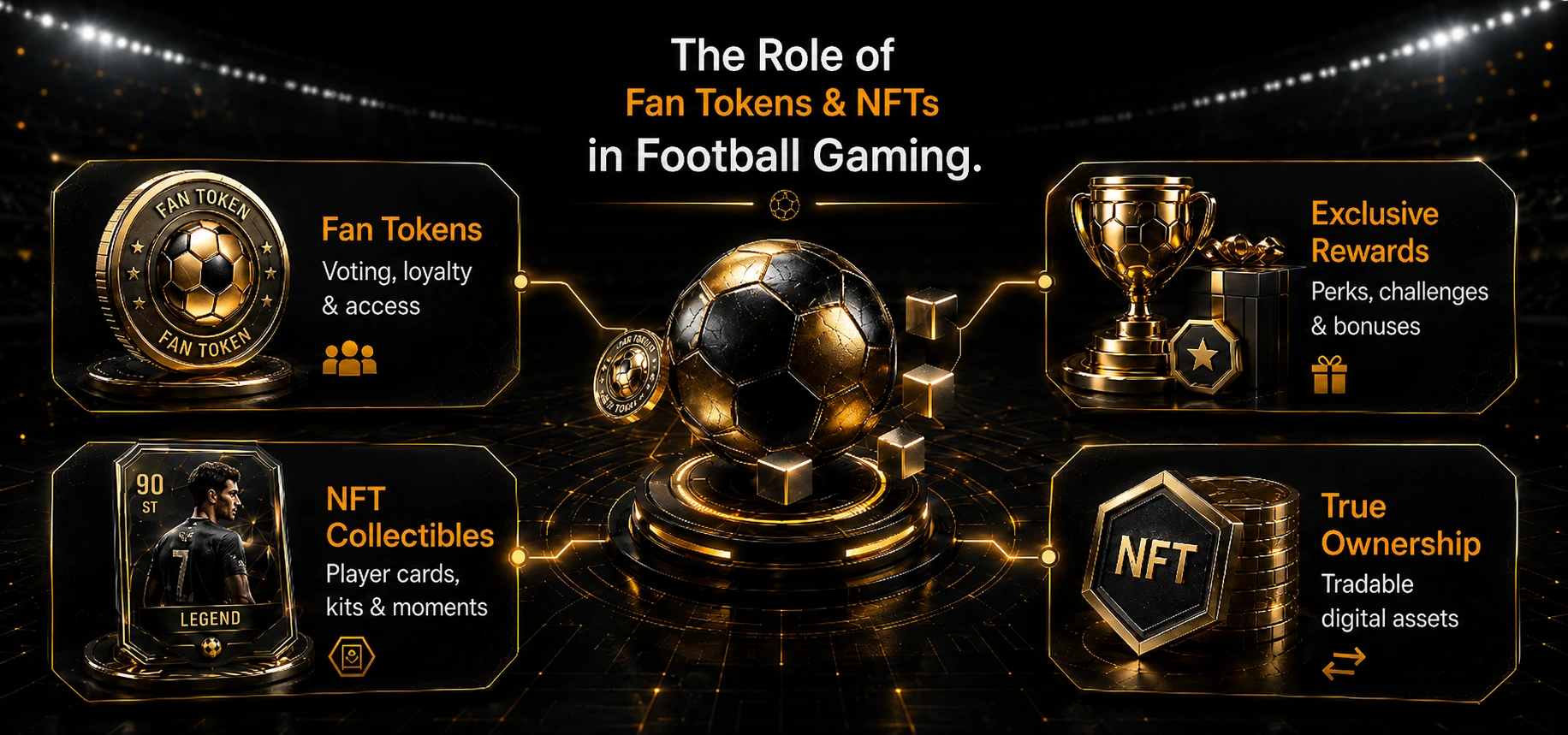
NFTs are scarce digital assets like player cards, uniforms, seats in the stadium, boots, badges, or situations based on the World Cup, especially NFT player cards soccer. The on-chain ownership gives players the ability to check for rarity, prove authenticity, and trade the assets on compatible marketplaces. This is the reason why the NFT game development solutions value scarcity, utility and interoperability highly.
The emotional hook is strong: an NFT linked to a legendary moment in World Cup 2026 might feel more meaningful than a static in-game object. That is the essence of the modern reward mechanics in the football game – awards become ownable memories, tradable assets and long-term identity markers.
How Blockchain Enhances Trust & Fair Play
Many gamers are wary of Web3, but good smart contract-driven games can make football games more transparent. Smart contract development services can help you build trust straight into your game economy.
- Verifiable Scarcity: Limited supply cards, stadiums, players and memorabilia with fixed on-chain supply. Limiting the creation of additional rare items to community consensus or explicitly stated restrictions should protect ownership of in-game assets. Standards like ERC-721 allow for unique, ownable digital assets.
- Transparent Odds: On-chain encoding of pack openings and loot box probability can reduce the “black box” problem and increase trust in the blockchain gaming ecosystem.
- Censorship Resistance: Players in decentralized gaming systems have more control over their assets. Even if the game account is limited, NFTs will not be deleted unilaterally. This gives players real digital sovereignty in the development of modern blockchain games.
Tips for Developers: Building Blockchain Games for Football Fans
Developers need to understand that football fans are players first, and crypto users second. The game is supposed to be exciting, competitive and emotionally connected to football culture, with Web3 enhancing the experience in the background.
Tip 1: Understand the Football Fan First.
The complexity of the crypto is less of a concern than the speed of the game, tactical choices, tournaments, collectibles, and the “club” identity. The web3 should not be the product but a value addition to the blockchain gaming ecosystem.
Tip 2: Design a Balanced Token Economy.
Over-minting, less rewards or limited utility can kill weak tokenized sports economy. Play with smart contract driven gaming mechanics for steady rewards, token sinks, upgrades, staking and marketplace activity.
Tip 3: Prioritize Mobile & UX.
The audience for FIFA 2026 is global and mobile-first. The wallets, gas fees and onboarding should be simple and provide users with a Web2 experience on decentralized gaming sites.
Tip 4: Build for Interoperability.
Playing NFT player cards soccer, kits, avatars and stadium NFTs in fantasy leagues, tournaments, social hubs and virtual stadium experiences add more value — the more you play, the more value they have. ChicMic Studios’ full-stack expertise in 3D game development helps companies build scalable Web3 football ecosystems here.
Enterprise Opportunities Around FIFA 2026 & Web3
FIFA 2026 is a global marketing moment for brands, clubs and sports organizations where football, gaming, loyalty and ownership could fuse.
- Brand Activations in Virtual Spaces: Companies can sponsor tournaments, provide mini-games or develop branded virtual stadium experiences that get fans involved, not just watching commercials.
- Loyalty Programs 2.0: Fan engagement tokens on Web3 will be the next generation of loyalty points, rewarding predictions, purchases, referrals and event attendance across a global tokenized sports economy.
- New revenue streams for the clubs: Soccer player cards, virtual jerseys, digital boots, stadium passes can earn cash in the blockchain gaming ecosystem through primary sales and royalties when licensed as NFTs.
Frequently Asked Questions About Blockchain Football Games
1. What is a blockchain football game?
A blockchain football game allows players to own, trade and use digital assets like player cards, kits, stadiums, and collectibles – in a real way, due to blockchain.
2. How does FIFA 2026 relate to blockchain gaming?
The FIFA 2026 is generating a tremendous football craze, driving demand for NFT memorabilia, fan tokens, fantasy games, and Web3 football communities.
3. Can players earn real rewards from football blockchain games?
Yes, talent, strategy and active participation based games allow players to earn tokens, NFTs, tournament prizes and marketplace value.
4. What are fan tokens and how do they work?
Fan tokens are digital currencies that grant access to prizes, votes, access, and community experiences in the football gaming environment.
5. Are blockchain games better than traditional football video games?
Not necessarily, but they have ownership, marketable assets, clear rarity, and open marketplace utility that traditional games normally don’t.
6. How do NFTs enhance football gaming experiences?
NFTs turn cards, jerseys, boots and stadium passes into rare, ownable and tradable long-term collectibles.
7. Is Web3 gaming secure and regulated?
It can be protected by audited smart contracts, protected wallets, and the compliance token design but the rules are different from region to region.
8. How can developers build blockchain soccer games?
Developers need good gameplay first then add NFTs, tokens, wallets, marketplaces, smart contracts and balanced tokenomics.
9. What are virtual stadium experiences in the metaverse?
These are digital football locations where fans can attend events, purchase collectibles, play games, and interact with branded material.
10. What makes a tokenized sports economy sustainable?
Sustainable economy: limited supply, useful token sinks, fair rewards, high demand, long term gaming value.
Concluding Note
Blockchain Football Games & FIFA 2026 are converging to create an unprecedented moment in gaming and sports history. As fans demand deeper participation, the future will move beyond passive viewing into a tokenized sports economy powered by true in-game asset ownership, NFT collectibles, fan tokens, and immersive digital communities. For developers, brands, and sports organizations, ChicMic Studios’ game development services can help turn football emotion into scalable Web3 innovation. The next generation of football gaming will not just be watched; it will be owned, played, traded, and shaped by fans.