Key Takeaways
-
-
- Game Concept: Big Walk stands out by focusing on communication, exploration, and cooperative gameplay instead of traditional combat mechanics.
- Core Features: A successful cooperative multiplayer game relies on strong networking, engaging teamwork, immersive world design, and meaningful player progression.
- Development Process: Building a multiplayer game requires a structured approach that includes planning, prototyping, development, testing, and continuous post-launch support.
- Development Cost: Development budgets vary based on game scope, multiplayer complexity, art quality, supported platforms, and long-term live-service requirements.
- Business Potential: Cooperative multiplayer games create long-term revenue opportunities through player retention, content updates, cosmetic purchases, and active communities.
Introduction
Multiplayer games have changed a lot over the last few years and games like the Big Walk game are a big part of why people are excited about what’s next. Already attracting attention for being different, even before being formally released. “Big Walk is about collaboration, communication and exploring an unknown world together, rather than dropping players into a new world filled with battle or survival challenges.” It’s a simple idea, but that’s exactly what makes it special.
If you’ve been thinking about making something like this, there’s a lot more to it than just copying the gameplay. To build a game like the Big Walk game you must understand the reason why players are interested in this concept in the first place. In this blog, you will find all the key things you need to know before you start your own cooperative game project. If you’re planning a multiplayer title, explore our game development services to understand how the complete development process works. This includes multiplayer gameplay, world design, etc., development costs and Big Walk pricing expectations.
What Is Big Walk?
The developers of immensely successful Untitled Goose Game are working on an upcoming cooperative multiplayer game called Big Walk. But don’t expect another action-packed multiplayer game. Big Walk is about exploring a strange open environment with your buddies, finding things out as you go, and cooperating to overcome obstacles rather than battling foes or gathering treasure. It’s a welcome change of pace from the fast-paced competitive games that now rule the market. Many studios choose Unity game development to build cooperative multiplayer experiences with smooth cross-platform gameplay.
Rather than guns, the game encourages players to use inventive communication tools within the game to chat, solve environmental puzzles and navigate unfamiliar locales. The fun, spontaneous moments that this approach to teamwork creates mean that every game feels a little different. It’s also a key reason behind the huge number of people already searching and adding the Big Walk game on Steam wishlists before the official release.
Why Games Like Big Walk Are Becoming Popular?
Multiplayer gaming today is about more than just competition. More and more players are looking for experiences where they can unwind, explore and enjoy hanging out with friends rather than constantly chasing victories. This is why cooperative adventure games are so popular. These games create unique moments that players naturally share with others through a combination of creative problem solving, exploration, and team work. This increasing trend in player preferences presents interesting opportunities for creators who want to make multiplayer games that bring something new. For another perspective on social play, read how cross-platform gaming is transforming the industry.
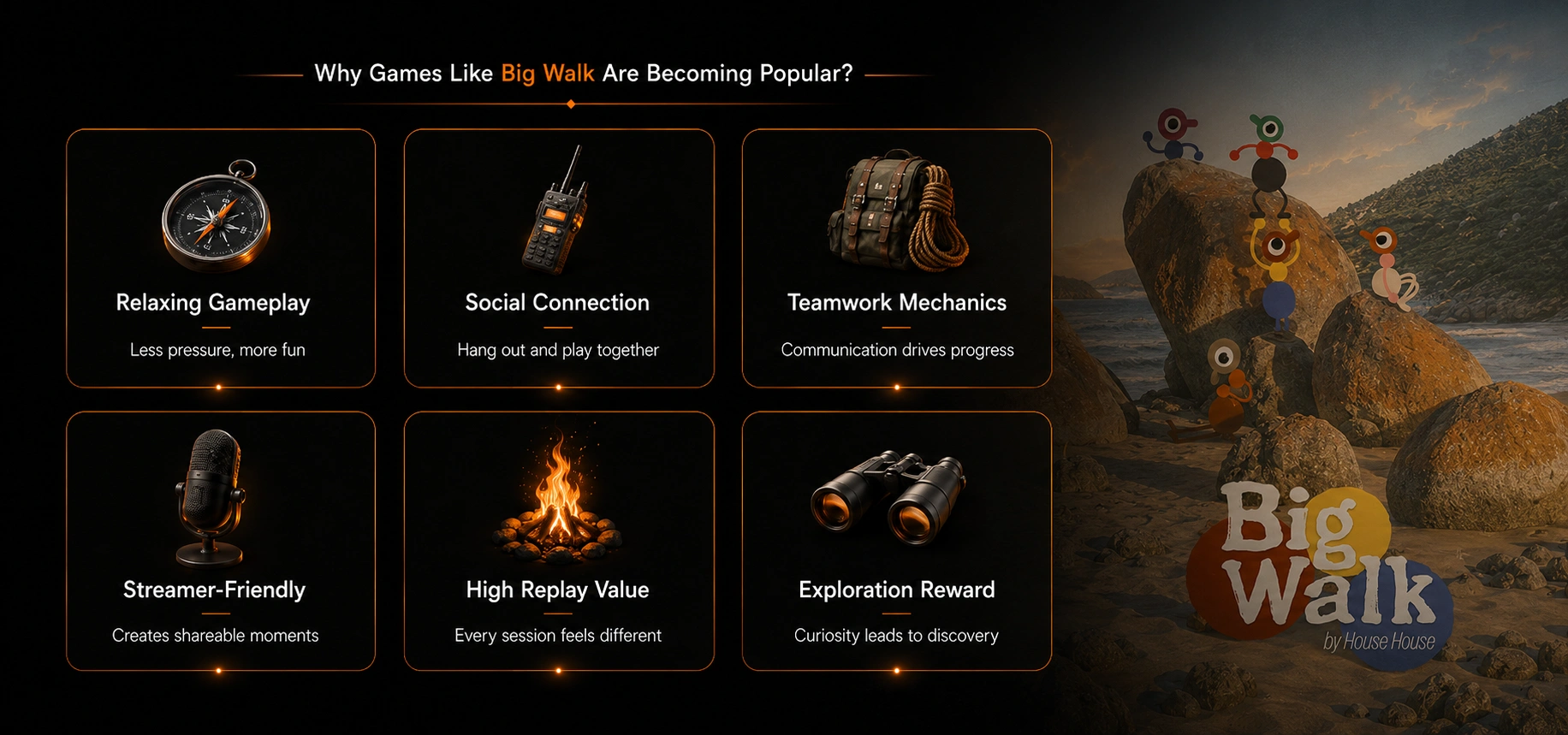
Some of the biggest reasons behind this trend include:
- Less competitive and more relaxing gameplay
- Strong social interaction and teamwork
- Unique cooperative mechanics that encourage communication
- Streamer-friendly moments that drive organic visibility
- High replay value, with every session offering a different experience
- Exploration-driven gameplay that rewards curiosity
Why Does This Genre Have Huge Business Potential?
Co-op multiplayer games are not just popular with players but very profitable as well. Unlike story-driven games that players usually complete and then move on from, social co-op games give players a reason to come back. Regular updates keep the community involved , friends bring friends and content producers showcase the game to larger audiences . This gives developers a lot of opportunities to make money long after the initial launch.
Some of the biggest revenue opportunities include:
- Seasonal events and limited-time content
- Cosmetic skins, outfits, and customization items
- DLCs and expansion packs
- Community events that boost player engagement
- User-generated content and creator ecosystems
- Long-term player retention and higher lifetime value (LTV)
This means that the goal for companies preparing to create a game like Big Walk is not just about making money at launch. With the right content strategy and community support, a well-designed cooperative game can generate revenue and engagement for years to come.
Ready to Launch Your Game Like Big Walk?
What Does It Take to Build a Game Like Big Walk?
Designing a beautiful landscape is not enough to make a game like Big Walk. Everything about the game should encourage discovery, cooperation and deep player connections while being enjoyable enough to entice players to return.
1. Multiplayer Networking
A reliable multiplayer infrastructure means constant connectivity, constant communication, and a smooth cooperative experience across multiple devices. For deeper technical planning, see our multiplayer game development guide.
2. Open-World Exploration
Unique locations, dynamic environments, and secret passages in the game world should encourage players to explore together. Immersive worlds begin with high-quality 3D environment design.
3. Cooperative Gameplay Mechanics
Every task should motivate gamers to work together and interact with one another, so that teamwork is a necessity and not a choice.
4. Dynamic AI and Interactive World
The intelligent AI, the receptive NPCs, and global events make the setting feel alive. Every session can deliver new and unexpected experiences. AI development services can support smarter NPC behavior and adaptive world systems.
5. Character Customization and Progression
Customization options, unlockable cosmetics and progression systems give players a sense of ownership and also help boost long-term engagement and replayability. Memorable player avatars are created through professional 3D character design.
Core Gameplay Elements That Make Big Walk Unique
Big Walk brings a new flavor to cooperative multiplayer gaming by emphasizing conversation, discovery and shared experiences. These are what make the gameplay of the game memorable and make players want to come back to the game.
1. Communication-First Gameplay
Communication is key for players to coordinate actions, share information, work together to overcome obstacles, and move through the game as a cohesive team.
2. Environmental Storytelling
The universe has a story to tell and it does it without long explanations through visual cues, dynamic settings and hidden features that invoke curiosity. Strong visual direction often starts with detailed 3D concept art.
3. Shared Exploration
As players explore the environment together, every adventure becomes more engaging, rewarding players with opportunities for cooperative problem solving, unforgettable moments and secret discoveries.
4. Emergent Gameplay
Every session is unique, dynamic and very replayable due to the unexpected player interactions and unplanned circumstances that create unique gaming moments.
5. Meaningful Social Interaction
The game creates genuine bonds between players through cooperation, communication, and shared experiences that extend beyond the mere achievement of goals, resulting in unforgettable journeys.
Big Walk Game Development Process
Creating a game like Big Walk is not a quick process. Every step from fine-tuning the original concept to providing a polished multiplayer experience is essential in creating a game that gamers truly love.
1. Discovery & Planning
Every successful game begins with a unique vision. Before development starts, teams define the target market, core gameplay, project goals, and technology stack. A strong UI/UX design plan also helps shape clear cooperative interactions from the prototype stage.
2. Game Design & Prototyping
Once the concept is finalized, designers begin to develop the setting, puzzle mechanics, multiplayer mechanics, character development, and user experience of the game. A playable prototype is made to see if the main gameplay is compelling before full development. Many large-scale multiplayer projects also leverage Unreal game development for advanced visuals.
3. Full-Scale Development
This is where the full game comes together. Developers integrate environments, animations, AI behaviors, audio, multiplayer systems, and backend infrastructure. Professional 3D animation services can make movement and cooperative interactions feel more polished.
4. Testing & Quality Assurance
The game goes through extensive testing before launch to catch bugs, improve performance, fine-tune gameplay, and verify multiplayer stability across devices and network conditions. Dedicated quality assurance services help reduce launch risks. Our guide on why playtesting matters explains this stage in more detail.
5. Launch & Post-Release Support
The launch of the game is just the start. It has a long life cycle that is extended for years with frequent updates, seasonal events, bug fixes, new content, and community feedback.
How Much Does It Cost to Build a Game Like Big Walk?
The cost of making a game like Big Walk depends on a lot of factors: how complex it is, whether it’s a multiplayer game, how good the art is, what platforms it runs on, how big the game is overall. This is a realistic budget estimate for 2026.
| Development Scope |
Estimated Cost (USD) |
| Prototype |
$30,000–$80,000 |
| Indie Multiplayer Game |
$150,000–$500,000 |
| Mid-Scale Multiplayer Adventure |
$600,000–$1.5 Million |
| AAA Cooperative Game |
$3 Million–$10 Million+ |
There are a ton of factors that will weigh heavily on your final development budget such as multiplayer infrastructure, size of the globe, AI systems, animations, cross-platform compatibility, live ops, security, ongoing content updates, etc.
Planning a Big Walk-Style Multiplayer Game?
Biggest Challenges During Development
Adding interesting features is only one part of making a cooperative multiplayer game. Moreover, the developers have to debug gameplay and technical problems that directly influence user experience, performance, and long-term success.
1. Network Synchronization
One of the hardest technical problems is to keep all players in sync. A good network infrastructure can provide a smooth multiplayer experience with less lag and connection issues.
2. Player Retention
Launching the game is only the beginning. Rewarding progression mechanics, seasonal events and regular content updates encourage players to come back and keep the community active.
3. Scalability
The backend must handle growing player traffic without affecting server reliability, matchmaking, or gameplay quality. Scalable database development is important for player data, progression, matchmaking records, and live-service systems.
4. Balancing Cooperative Gameplay
It is very important to design tasks which require cooperation and at the same time do not irritate the participants. Well-balanced mechanisms will make every player feel engaged, while also keeping the experience fun and satisfying.
How to Make Your Game Stand Out?
When making a game inspired by Big Walk, you don’t have to recreate the mechanics. You want to figure out what players like and create a unique experience that makes your game different.
You can differentiate your game by:
- Creating unique traversal and movement mechanics
- Designing memorable and interactive environments
- Introducing original cooperative puzzle experiences
- Adding dynamic world events that evolve over time
- Building rich environmental storytelling
- Encouraging player creativity and experimentation
- Supporting community-driven content and player feedback
Gaming is always on the lookout for new experiences. Creative ideas become stronger with professional game design services. What keeps them coming back is a unique gaming identity, compelling mechanics and regular upgrades.
Why Work With an Experienced Game Development Company?
Building a cooperative multiplayer game that works takes more than game design skills. Seamless player experiences are heavily driven by networking, backend infrastructure, AI systems, animations, cloud integration, and live operations. These technical aspects, without the right knowledge, can soon become difficult to deal with for companies that want to build game like Big Walk game.
An experienced game development company combines designers, developers, illustrators and QA specialists who know the whole development cycle. Reviewing a studio’s game portfolio is one of the easiest ways to evaluate its experience. The right team reduces development risks and turns your idea into a finished multiplayer experience by validating your game idea, developing scalable multiplayer technologies, optimizing performance, and providing post-launch support.
Final Thoughts
The buzz around Big Walk makes one thing clear: players are increasingly interested in multiplayer games that foster cooperation, discovery, and shared experiences rather than unending competition. The real opportunity for anyone who wants to make a game like Big Walk is not to replicate what’s already out there, but to build a unique experience that gamers really love. Every decision from choosing the right game engine, creating fun cooperative mechanics, building scalable multiplayer infrastructure and planning post-launch support, impacts the game’s longevity. Development costs can be affected by the scope of the project, but with good planning, the right technology and a talented team of developers, it can all work out. The demand for co-op multiplayer games will only grow in 2026, so it’s the perfect time to turn an engaging idea into a game that will thrive in the market.
Frequently Asked Questions
1. What is the Big Walk game about?
Big Walk is a cooperative multiplayer adventure developed by House House, the creators of Untitled Goose Game. Instead of combat, the game focuses on teamwork, communication, exploration, and solving puzzles with friends in a shared open world.
2. What is the Big Walk game release date?
Big Walk is scheduled to launch on August 4, 2026 for Windows, macOS, PlayStation 5, and Nintendo Switch 2. Teams targeting desktop platforms can also review our PC game development services.
3. Is Big Walk available on Steam?
Yes, Big Walk is available to the wishlist on Steam ahead of its release. The Steam version also supports features like online co-op, cross-platform multiplayer, Steam Cloud, and achievements.
4. How much does it cost to build a game like Big Walk?
The cost depends on your game’s scope, features, and development team. A prototype may cost around $30,000 to $80,000, while a polished multiplayer game can range from $150,000 to several million dollars, depending on its complexity.
5. Which game engine is best for building a game like Big Walk?
Both Unity and Unreal Engine 5 are excellent choices. Unity is often preferred for faster development and flexibility, while Unreal Engine 5 is strong for high-quality visuals, advanced multiplayer systems, and large open-world environments. Compare both in our Unity vs Unreal Engine guide.
6. Can I build a game like Big Walk without creating an exact copy?
Absolutely, the goal should be to take inspiration from Big Walk’s focus on cooperation and exploration while introducing original mechanics, environments, and gameplay ideas. Creating a unique experience is always a better long-term strategy than copying an existing game.
7. Does Big Walk support cross-platform multiplayer?
Yes, Big Walk supports cross-platform play, allowing players on different supported platforms to play together in the same session.
8. How many players can play Big Walk together?
Big Walk supports 2 to 12 players in a single session. The game adjusts certain world elements based on the minimum player count selected by the host, making it enjoyable for both small and larger groups.
9. What are the biggest challenges in multiplayer game development?
Some of the biggest challenges include building reliable networking systems, minimizing latency, maintaining server scalability, balancing cooperative gameplay, optimizing performance, and keeping players engaged with regular content updates after launch.
10. Why should I hire a game development company to build a game like Big Walk?
An experienced game development company can handle multiplayer architecture, backend infrastructure, AI systems, cross-platform integration, performance optimization, and post-launch support. Their expertise helps reduce development risks and speeds up the journey from concept to launch.
Turn Your Game Idea Into a Development Plan