Meccha Chameleon: The Viral Hide‑and‑Seek Game Taking 2026 by Storm
Key Takeaways
- Core Value: Meccha Chameleon is designed around player psychology and social interaction rather than heavy complexity. It creates intuitive, human moments that feel natural to play and easy to share.
- Game Design: The game uses simple mechanics, short matches, and smart camouflage to create depth through perception and timing. This keeps gameplay accessible while still rewarding thoughtful decisions.
- Player Benefits: Players enjoy quick sessions that respect their time and keep frustration low. The design encourages experimentation, replayability, and consistent enjoyment.
- Use Cases: Meccha Chameleon fits casual play, private friend lobbies, and streaming-focused content. Its visual clarity and unpredictable moments make it engaging to both play and watch.
- Future Trends: Steady updates, transparent development, and gradual cross-platform expansion support long-term growth. This approach helps maintain player trust beyond initial hype.
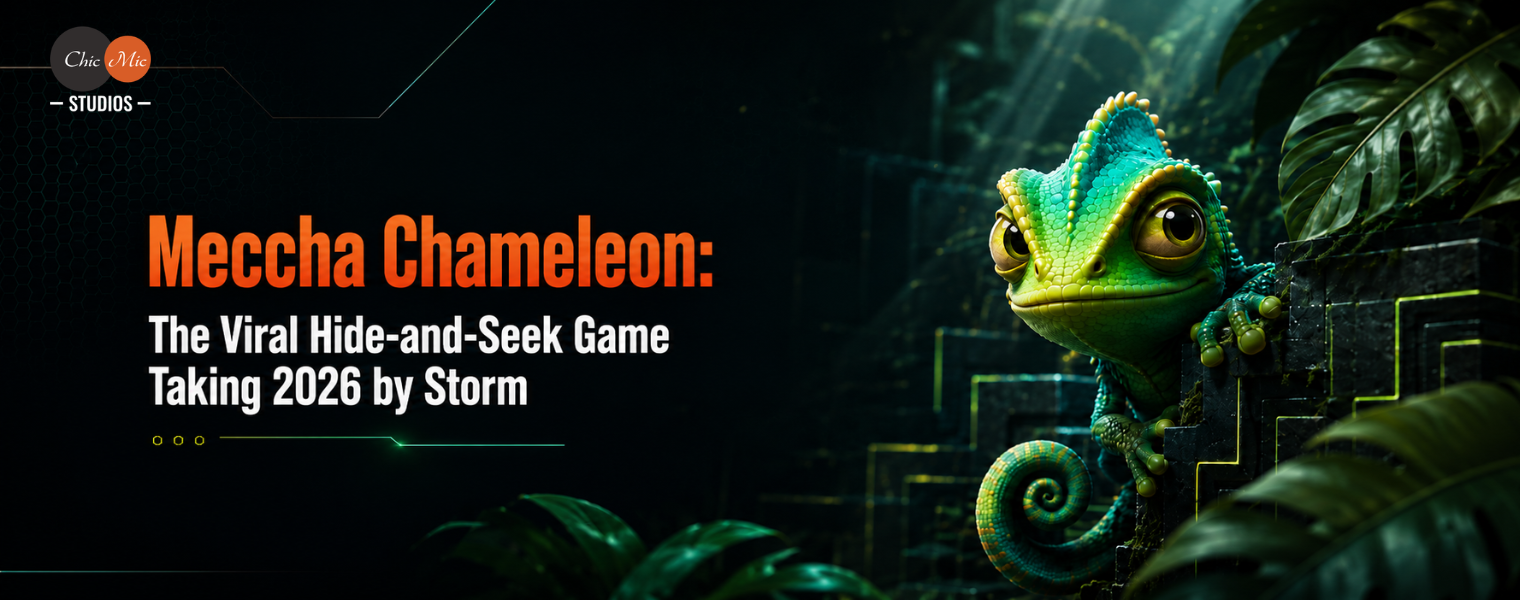
Meccha Chameleon: The Viral Hide-and-Seek Game Taking 2026 by Storm
It is difficult for an indie multiplayer game to break out in 2026. Players are surrounded by blockbuster franchises, aggressive live-service models, and a crowded release calendar. In that context, Meccha Chameleon’s sudden rise feels almost unexpected.
In this Meccha Chameleon game review, we explore how a simple hide-and-seek multiplayer game has evolved into one of the year’s most talked-about Steam indie hits. From private friend lobbies to viral streaming moments, Meccha Chameleon has become popular across Switzerland, Germany, France, the Netherlands, and the wider EU gaming community.
The game does not stand out because of technical extravagance or dramatic storytelling. Meccha Chameleon succeeds because it understands how people want to play, watch, and share games in 2026.
For studios planning similar multiplayer concepts, a structured game development approach helps connect mechanics, art direction, testing, and launch planning from the earliest stage.
What Is Meccha Chameleon?
Meccha Chameleon is a hide-and-seek multiplayer game built around social tension, perception, and deception. Players are assigned two roles: seekers look for anything out of place, while hiders try to blend into the environment. Hide-and-seek mechanics like these are commonly refined through Unity game development workflows because Unity supports fast prototyping, multiplayer testing, and stylized gameplay production.
The game’s unique paint camouflage mechanics allow hiders to take on the colors and textures of the environment. Disguises can be created from walls, floors, signs, and regular objects. Instead of relying on speed alone, seekers must observe small irregularities in their surroundings.
Because the experience depends on readable characters and clean visual cues, 2D game development planning can improve animation clarity, feedback timing, and moment-to-moment readability.
The first thing that stands out is the tone. Meccha Chameleon does not try to feel serious or realistic. It leans into comedy, playful environments, and expressive animations, making losses funny, mistakes memorable, and victories satisfying.
This balance positions Meccha Chameleon well within current party game trends, where shared experiences and accessibility matter more than mechanical mastery. Its wide audience appeal comes from a design approach that prioritizes social interaction over pure competition.
How Meccha Chameleon Gameplay Works
Meccha Chameleon gameplay is based on tension, clarity, and quick decision-making. Because the core loop is intentionally simple, players can focus on timing, psychological pressure, and observation instead of complicated physics. Player-driven tension is also a major focus in mobile game development, where short sessions, fast learning curves, and replayable loops are critical for retention.
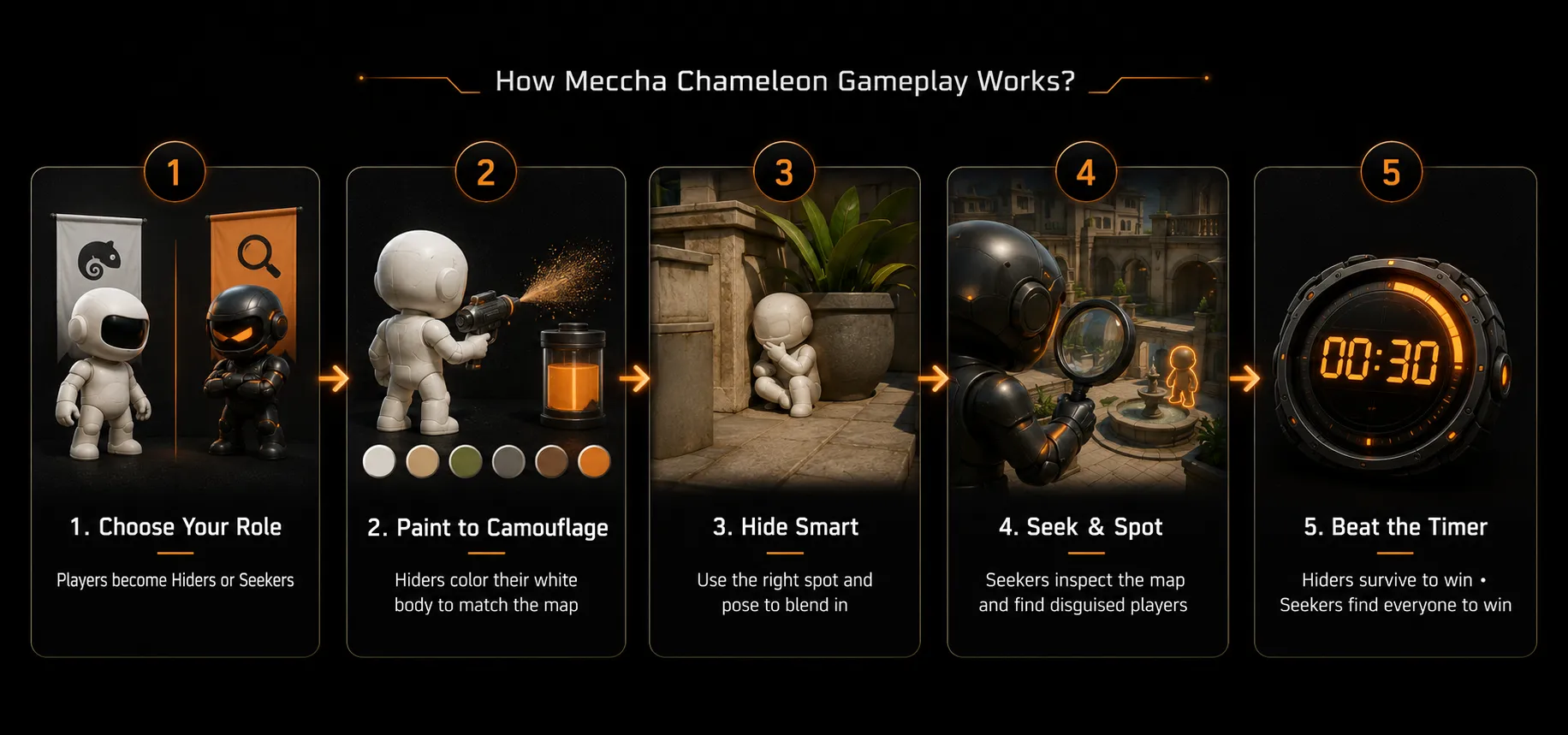
Every round feels fresh because match outcomes are shaped by player behavior rather than fixed systems. This design choice is one of the main reasons the game became one of the most viral online multiplayer games in 2026.
1. Preparation Phase
Hiders are free to explore the map, sample textures, and design disguises while seekers are locked out. This builds suspense and avoids early scouting advantages.
2. Role Shift Begins
The tempo changes immediately when seekers appear and begin scanning their surroundings. Hiders must decide whether to freeze, reposition, or risk giving themselves away.
3. Camouflage Psychology
Paint camouflage mechanics favor perception over invisibility. Hiders are still visible, but they survive when they blend naturally into their environment without attracting attention.
4. Movement Risk Factor
The most important survival skill is patience. Hiders are often exposed by unnecessary movement, making every step a calculated risk.
5. Short Match Design
Short matches encourage experimentation, reduce frustration, and allow players to learn from mistakes without feeling discouraged or punished.
This short-session structure also benefits from strong PC game development practices, especially around controls, performance, matchmaking flow, and Steam-ready optimization.
Planning a Game Like Meccha Chameleon?
Good hiders are not successful because they are perfect. They succeed because they fit the natural rhythm of the map. Perfect color matching matters less than placement, patience, and movement control. These ideas align with modern gaming tips in 2026, where awareness and judgment often matter more than constant action.
Small interface decisions can also affect how quickly players understand disguise tools, which makes UI/UX design important for onboarding, menus, and in-game feedback.
- Blend With Context: Choose hiding places that look like they belong to the surroundings. Believable placement should come before perfect visual matching.
- Avoid Perfect Symmetry: Slightly uneven positioning can make disguises look more natural, while precise alignment may look deliberate during quick visual scanning.
- Control Your Movement: Movement should be purposeful and infrequent because unnecessary repositioning immediately draws attention.
- Think Like Seekers: Strong hiders predict common seeker routes and focus on likely scanning paths instead of hiding only where they feel safest.
- Use Pressure Wisely: Staying still under pressure often works better than reacting, because panicked movement creates visual abnormalities experienced hunters can spot.
Top Strategies for Seekers in Meccha Chameleon
A seeker needs more self-control than speed. Experienced players slow down and notice how environments are meant to appear, while new players often rush and miss obvious clues. Success depends on building a mental image of each map, keeping pressure steady, and working with teammates instead of searching alone.
Games that depend on perception, tension, and repeated player decisions need careful balance. Studios often use structured playtesting and quality assurance to identify confusing map areas, unfair hiding spots, performance bugs, and issues that may affect player trust.
- Learn Map Layout: Strong seekers study expected object placement, color balance, and visual rhythm so even minor anomalies raise suspicion.
- Scan Methodically: Structured scanning helps seekers detect repeated textures, misplaced props, or unusual symmetry that may reveal a camouflaged hider.
- Apply Steady Pressure: Gradual area control forces hiders to make mistakes without giving them enough time to reposition safely.
These subtle balance decisions are exactly why playtesting is crucial in game development, especially for social multiplayer games where player behavior changes every round.
- Control Your Pace: Avoiding tunnel vision helps seekers remain aware, recognize delayed progress, and avoid impatient decisions.
- Communicate Constantly: Teams can coordinate searches more effectively by sharing cleared zones, suspicious locations, and movement patterns.
Maps and Updates: Japan-Themed Map and More
Meccha Chameleon has avoided the usual viral burnout cycle because its maps and updates are handled carefully. The focus is not constant overhaul. Instead, the game relies on balance, refinement, and long-term consistency.
1. Japan-Themed Map
Players quickly began to love the Japan-themed map more than any other location. Narrow alleyways, layered environments, and dense signage create scenarios where camouflage feels strong but still risky. Spaces with this level of visual depth are typically built through advanced 3D environments design pipelines, especially when readability and atmosphere need to work together.
2. Other Environments
Other locations use more structured layouts. Alpine research facilities and industrial zones reward patience and spatial awareness while maintaining a consistent visual identity across maps.
3. Update Philosophy
Content changes are intentionally focused. Stability is valued over frequent resets, seasonal additions bring personality without damaging fairness, and balance changes remain controlled.
For teams evaluating engine choices for similar update-heavy projects, our guide on why Unity is the best game engine explains why many indie studios prefer it for flexible iteration and cross-platform support.
Community and Streaming Popularity
Meccha Chameleon’s success was not an accident. The game is designed to be watched as much as played. Even viewers who have never touched the controller can understand its short rounds, clear goals, and surprising outcomes.
Every match can generate short-form clips. Last-second reveals, seekers missing obvious hiders, and frantic movements that ruin minutes of patience all create shareable highlights. These moments feel real and unscripted, which is exactly what modern audiences enjoy.
Why It Works So Well on Streaming Platforms
- Short Match Cycles: Short rounds keep momentum high, helping streamers reward viewers without long setup times.
- Instant Visual Comedy: Failed disguises and seekers missing obvious hiders create humor even without detailed context.
- Low Explanation Barrier: New viewers quickly understand what is happening, making the game easy to follow without prior knowledge.
- Chat-Driven Reactions: Audiences participate by spotting mistakes early, predicting reveals, and reacting together in real time.
A Community That Sustains Momentum
- Strategy Sharing Culture: Open discussions around map behavior, mind games, and hiding strategies help players improve and keep interest alive.
- Custom Lobby Creativity: Private matches and experimental setups encourage social play beyond standard matchmaking.
- Developer Transparency: Open communication about updates and balancing keeps the community engaged long term.
- Shared Ownership Feeling: Players feel like contributors to the game’s direction rather than passive consumers.
This player-first design also reflects broader game development trends, where community feedback, replayability, and post-launch trust are shaping successful multiplayer titles.
Launch Your Own Hide and Seek Game
Is Meccha Chameleon Cross Platform?
Meccha Chameleon is still in the early stages of platform expansion, but cross-platform compatibility is clearly a long-term goal rather than an afterthought. This approach reflects how cross-platform app development is planned today, with stability, performance, and user experience considered before aggressive expansion.
For now, the developers are focusing on community health, stability, and balance over rapid growth. That slower approach has resonated with players in countries such as Switzerland, Germany, France, and the Netherlands, where reliability and data security are as important as accessibility.
1. Current Platform Support
PC players currently make up the largest share of active players on Steam. The targeted launch has allowed the developers to fine-tune matchmaking, performance optimization, and map balance without splitting the community across devices too early.
2. Console Cross-Play Progress
The team has already addressed early cross-play testing and is exploring console versions. By recognizing challenges such as performance parity, input fairness, and certification requirements, the rollout appears practical rather than rushed.
3. Regulatory Considerations
For European players, compliance is not optional. Meccha Chameleon reflects strong attention to data privacy expectations and cautious planning around future ownership or cosmetic systems.
4. Why Transparency Matters
Being open about platform plans builds confidence. Players in the European Union want to know what is confirmed, what is experimental, and which timelines are still flexible.
For a wider view of platform strategy, our guide on how cross-platform gaming is transforming the industry explains why multiplayer projects must balance reach with fairness, stability, and community health.
Why Meccha Chameleon Is Taking 2026 by Storm
Meccha Chameleon succeeds because it taps into current party game trends and how people actually play in 2026. It respects player time with short, replayable sessions where progression feels natural instead of forced. Losses are light and amusing, encouraging players to experiment, take risks, and try again.
As an indie hit on Steam, Meccha Chameleon proves that strong design and community trust can compete with spectacle and overproduction. It is not chasing trends blindly. It takes a simple social idea, executes it clearly, and supports it with confidence.
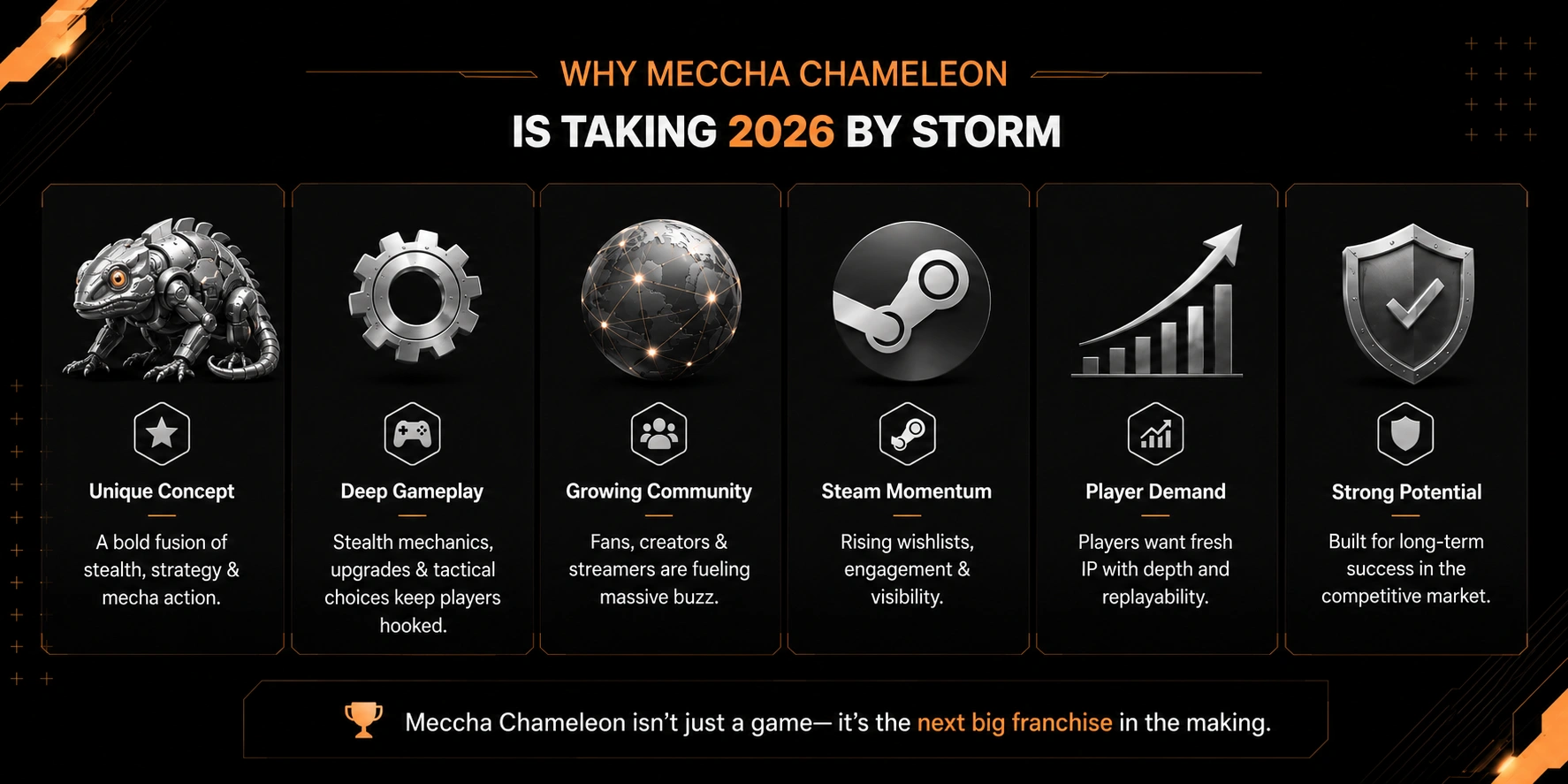
The game’s focus on fun, accessibility, and social interaction has helped it stand out in a year filled with bloated releases and aggressive monetization. Player experience plays a major role here, and our guide on the importance of user experience in games explains why clarity, feedback, and emotional flow can decide whether players keep coming back.
Final Thoughts
In conclusion, this Meccha Chameleon game review points to one simple answer: the game feels human. It is built around player psychology, organic community growth, and how fun spreads online in 2026.
Instead of relying on complexity, Meccha Chameleon emphasizes simplicity, clarity, and social connection. That people-first philosophy is not just trending; it is genuinely working in a crowded multiplayer space.
Frequently Asked Questions
1. What type of game is Meccha Chameleon?
Meccha Chameleon is a hide-and-seek multiplayer game centered on camouflage, perception, and social interaction. Its short matches and playful tone make it accessible while still encouraging smart, observational play.
2. How do you play Meccha Chameleon?
Players are divided into hiders and seekers at the start of each round. Hiders use paint camouflage to blend into the environment, while seekers rely on careful observation to spot visual inconsistencies.
3. Is Meccha Chameleon beginner friendly?
Yes. The game is easy to pick up because it uses simple mechanics and clear objectives. At the same time, repeated play reveals deeper strategy through positioning, timing, and psychological decision-making.
4. Are there tips for hiders?
Good hiders focus on blending naturally into their surroundings rather than perfect color matching. Patience and controlled movement are often more effective than frequent repositioning.
5. Are there tips for seekers?
Successful seekers move methodically and learn how each map is meant to look. Applying steady pressure often causes hiders to make revealing mistakes.
6. Does Meccha Chameleon support cross-platform gaming?
The game is currently supported on PC with a stable player base. Cross-platform expansion is planned through 2026 with a focus on balance, performance, and fair player experience.
7. What maps are currently available?
Available maps include a Japan-themed urban environment, Alpine-inspired facilities, and industrial zones. Each map is designed to support camouflage gameplay while maintaining visual clarity.
8. Why is Meccha Chameleon so popular in 2026?
The game resonates because it blends social fun, streamer-friendly design, and short replayable sessions. Strong community involvement helps maintain momentum beyond the initial hype.
Hire ChicMic Studios for End-to-End Game Development