Unity Mobile Game Development Cost in 2026: Genre-Wise Pricing and Timeline
Key Takeaways
- Core Value: Unity remains a cost-effective and scalable game engine for projects of different sizes and complexity levels.
- Cost Drivers: Development costs depend on the game genre, features, art style, backend systems, platforms, and team structure.
- Business Benefits: Clear planning and realistic budgeting can reduce risks, control costs, and improve long-term returns.
- Game Genres: Unity supports casual, hypercasual, multiplayer, RPG, strategy, simulation, casino, and card games.
- Long-Term Growth: Scalability, post-launch updates, and future feature expansion should be included in the initial budget.
Introduction
One of the first questions companies ask when planning a mobile game is, “What is the Unity mobile game development cost?” There is no fixed answer because every game is built differently. A multiplayer role-playing game with live events and real-time interactions requires more work than a simple puzzle game. The final budget depends on the genre, features, art style, team, platforms, and content volume.
Unity remains one of the most reliable and affordable game engines in 2026. Businesses evaluating development options can explore our Unity game development services. Unity powers thousands of popular Android and iOS games. It is widely used by startups, game studios, and established organizations.
This guide explains Unity game development costs by genre. It also covers realistic timelines, major pricing factors, hidden expenses, team options, and practical budgeting strategies.
Why Does Unity Continue to Be the Top Choice for Mobile Games?
Unity remains a popular game engine because it balances performance, flexibility, and development speed. Developers can create one core project and release it across multiple platforms. They do not need to build completely separate versions for iOS and Android. This reduces duplicate work and simplifies long-term maintenance.
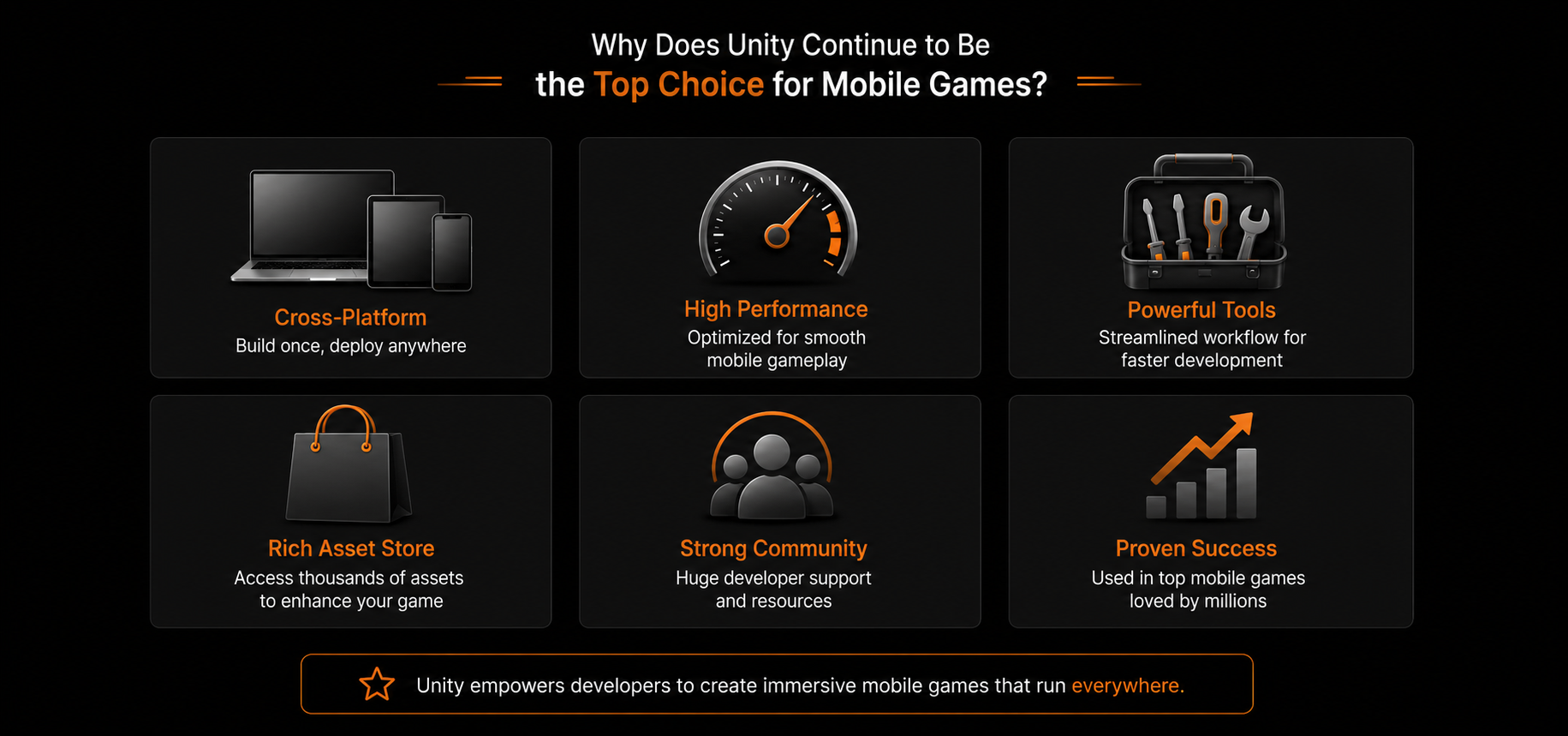
Unity also supports fast prototyping and scalable production. Its ecosystem includes tools and plugins for 2D, 3D, analytics, advertising, cloud services, and multiplayer systems. Teams planning a broader mobile game development project can use Unity for both initial releases and future expansion.
Whether you are building a casual title or an immersive adventure, 2D game development and 3D game development both benefit from Unity’s flexible ecosystem. The engine also makes it easier to add analytics, in-app advertisements, cloud saves, and multiplayer services.
For more background on its core advantages, read why Unity is considered one of the best game engines for modern development.
What Determines Unity Mobile Game Development Cost?
The Unity mobile game development cost depends on more than visual quality. The final budget is shaped by the game genre, platform requirements, gameplay complexity, art production, backend infrastructure, and testing needs.
1. Game Genre
Genre is one of the biggest cost factors. Different genres require different mechanics, content volumes, AI systems, multiplayer features, and development effort.
2. Platform Requirements
A cross-platform launch usually costs more than a single-platform release. It requires additional testing, optimization, and store compliance. Separate Android app development and iOS app development requirements can also affect integrations and release planning.
3. Game Design Complexity
Games with complex mechanics, progression systems, multiple levels, and interactive features require more planning and balancing. They also need more development and quality-control time.
4. Art Style
The volume of artwork, animation, and visual effects directly affects production cost. Detailed 3D graphics usually require more resources than a simple 2D style. Projects with cinematic scenes may also need dedicated 3D animation services.
5. Backend Infrastructure
Online features such as player accounts, cloud saves, leaderboards, multiplayer support, and in-app purchases require backend systems. These systems add development and maintenance costs.
6. Testing and Quality Assurance
A mobile game must be tested across devices, operating systems, screen sizes, and gameplay situations. A dedicated quality assurance process helps identify bugs and performance issues before launch. This reduces the risk of costly post-release fixes.
Unity Mobile Game Development Cost by Game Genre
The easiest way to estimate a budget is to start with the type of game you want to build. The following figures provide a realistic overview of Unity mobile game development costs and timelines in 2026.
| Game Genre |
Description |
Estimated Cost (USD) |
Timeline |
| Casual Games |
Puzzle, match-three, endless runner, idle, and arcade games with simple mechanics. |
$15,000–$50,000 |
2–4 Months |
| Hypercasual Games |
Minimal mechanics designed for rapid development, testing, and market launch. |
$10,000–$30,000 |
1–3 Months |
| Multiplayer Games |
Networking, matchmaking, player synchronization, authentication, and secure backend infrastructure. |
$60,000–$180,000 |
6–10 Months |
| RPG & Adventure Games |
Expansive worlds, quests, combat systems, character progression, inventories, and storytelling. |
$100,000–$300,000+ |
8–14 Months |
| Strategy Games |
AI-driven gameplay, resource management, balancing systems, and optional multiplayer features. |
$70,000–$200,000 |
6–12 Months |
| Simulation Games |
Farming, city-building, business, and life simulations with connected gameplay systems. |
$80,000–$250,000 |
7–12 Months |
| Casino & Card Games |
Poker, rummy, blackjack, and casino games with payments, tournaments, and compliance requirements. |
$25,000–$90,000 |
3–6 Months |
Note: These estimates are approximate. The final cost can vary based on gameplay complexity, visual style, platform support, multiplayer features, backend infrastructure, and post-launch requirements.
How Do Features Impact Unity Mobile Game Development Cost?
Two games in the same genre can have very different budgets. Features often affect the cost as much as the core gameplay. A game with multiplayer, cloud storage, and in-app purchases costs more than a basic offline title.
Features that commonly increase development costs include:
- Multiplayer matchmaking and real-time synchronization
- Cloud-based progress storage and player accounts
- Subscriptions and in-app purchases
- Live events and seasonal content
- Leaderboards and achievements
- AI-powered NPCs and opponents
- Text and voice messaging
- Cross-platform play
- VR and AR experiences
- Cinematic sequences and custom animations
Each feature adds design, development, testing, and maintenance work. Early prioritization helps control costs and keeps the project aligned with launch goals.
Unity Mobile Game Development Timeline in 2026
The development timeline depends on the game’s complexity, features, and overall scope. Larger teams can accelerate some tasks, but every project still follows a structured production process.
| Development Stage |
Estimated Timeline |
What Happens During This Stage |
| Discovery & Planning |
2–4 Weeks |
The team defines the concept, audience, mechanics, monetization strategy, technical requirements, and roadmap. |
| Game Design & Prototyping |
3–6 Weeks |
A playable prototype validates the core gameplay, controls, user experience, and concept. |
| Full Development |
2–8 Months |
Developers build mechanics while artists create characters, environments, animation, UI/UX design, and other assets. |
| Testing & Optimization |
3–6 Weeks |
The team fixes bugs, improves performance, balances gameplay, and checks store compliance. |
| Launch & Post-Release Support |
Ongoing |
After launch, the team monitors performance, fixes issues, releases updates, and adds content. |
Every project follows these core stages, but the total timeline varies. Multiplayer and content-heavy games take longer than casual or hypercasual titles. Teams should also plan around common mobile game development challenges before production begins.
Hidden Costs Businesses Often Overlook
When calculating Unity mobile game development cost, businesses often focus only on the initial build. Recurring expenses can significantly affect the total investment. Planning for them early helps prevent budget surprises.
1. App Store Fees
You need developer accounts and store fees to publish a game on Google Play and the Apple App Store. These costs are relatively small but necessary.
2. Backend and Cloud Services
Player accounts, cloud saves, matchmaking, leaderboards, and real-time multiplayer require cloud infrastructure. Service costs usually increase as the player base grows.
3. Game Analytics
Analytics tools track retention, session length, level completion, and in-app purchases. Combining analytics with machine learning can provide deeper insights into player behavior and long-term engagement.
4. Marketing and User Acquisition
A strong game still needs promotion. The marketing budget may include paid advertising, influencer partnerships, social media, App Store Optimization, and community engagement.
5. Post-Launch Content Updates
Successful games continue to evolve after launch. New levels, characters, seasonal events, and gameplay improvements help retain players. Ongoing costs should be included in the long-term product plan.
Is Unity Worth the Investment in 2026?
For most businesses, the answer is yes. Unity is reliable, flexible, and suitable for projects ranging from simple casual games to large multiplayer experiences. Its cross-platform capabilities reduce duplicate work and simplify maintenance.
Unity also supports long-term growth. Teams can add new content, multiplayer features, and platform expansions without rebuilding the product from scratch. Reviewing a studio’s game portfolio can help you evaluate its experience across genres and project sizes.
Businesses that need end-to-end production can also compare broader game development services before selecting a technical partner.
Freelancers vs Agencies vs In-House Teams: Which Option Costs More?
The team model affects the budget, timeline, management effort, and final quality. The right option depends on the project’s size, complexity, and long-term goals.
| Team Type |
Estimated Cost |
Overview |
Best For |
| Freelancers |
Low |
Lower upfront cost, but the client manages communication, timelines, and quality. |
MVPs, prototypes, and small games |
| Game Development Agencies |
Medium to High |
An experienced team and a structured process provide stronger quality control and faster delivery. |
Startups and businesses seeking end-to-end development |
| In-House Team |
High |
Full control and long-term ownership, with substantial hiring and operational expenses. |
Companies maintaining multiple games |
Freelancers usually have the lowest upfront cost. Agencies often provide better long-term value through organized execution and specialized expertise. In-house teams cost the most but may suit organizations with continuous development needs.
For a deeper comparison, review the practical reasons to outsource mobile game development.
Average Unity Mobile Game Development Cost by Team Type
The cost of hiring a Unity team depends on its size, expertise, location, and project complexity. The following ranges provide a planning benchmark for 2026.
| Team Type |
Estimated Cost Range |
| Freelancers |
$10,000–$80,000+ |
| Small Game Studio |
$30,000–$150,000+ |
| Full-Service Development Agency |
$50,000–$300,000+ |
| In-House Team |
$100,000–$500,000+ annually |
These are not fixed prices. A polished multiplayer game built by freelancers may cost more than a simple casual game built by an agency. Scope and technical complexity remain the main cost drivers.
Questions to Ask Before Estimating Your Budget
Before requesting quotes or hiring a development team, answer these questions:
- What genre am I building?
- Is the game 2D or 3D?
- Will it support multiplayer?
- Do I need Android, iOS, or both?
- Will the game include live events or seasonal content?
- How many levels or playable areas are required?
- What monetization model will I use?
- Will I need backend infrastructure?
- How often will I release post-launch updates?
Clear requirements lead to more accurate cost estimates.
Conclusion
There is no single answer to the question of Unity mobile game development cost. Every game has different objectives, features, and complexity. A multiplayer RPG or simulation game can cost much more than a simple hypercasual title.
The budget is shaped by the genre, art style, gameplay mechanics, backend infrastructure, monetization plan, testing needs, and post-launch support. Start with a clear concept and prioritize features that improve the player experience. It is often more cost-effective to launch a strong core game and expand it through updates.
With a realistic roadmap and an experienced team, Unity is a strong platform for building scalable and engaging mobile games.
Frequently Asked Questions
1. How much does Unity mobile game development cost in 2026?
Unity mobile game development typically costs between $10,000 and more than $300,000. The final price depends on the genre, features, visual quality, multiplayer functionality, platforms, and overall complexity.
2. What factors affect Unity mobile game development cost the most?
The main factors are the game genre, feature set, 2D or 3D art style, multiplayer capabilities, backend development, third-party integrations, testing, and post-launch support.
3. How long does it take to develop a Unity mobile game?
A simple mobile game may take 1–3 months. A medium-complexity game may require 4–8 months. Large multiplayer or RPG projects can take 8–14 months or longer.
4. Is Unity a good choice for both Android and iOS games?
Yes. Unity allows teams to build one core project for Android and iOS. This is usually faster and more cost-efficient than maintaining two separate codebases.
5. Can I reduce development costs without compromising quality?
Yes. Start with an MVP, prioritize essential features, reuse reliable Unity assets where appropriate, and complete technical planning before full development.
6. Does game development end after launch?
No. Successful mobile games need updates, bug fixes, performance improvements, new content, seasonal events, and feature enhancements to retain players.