Top 10 2D & 3D Game Development Companies in 2026 for Custom Game Projects
Key Takeaways
- 2D or 3D: The right development approach depends on gameplay, visual style, platform, audience, and project scope.
- Custom Development: Custom games give businesses greater control over mechanics, artwork, monetization, platforms, and the overall player experience.
- Company Selection: Relevant portfolio experience, technical capabilities, communication, scalability, and post-launch support should be compared before hiring a studio.
- Development Cost: Budget varies based on game complexity, art production, platforms, multiplayer features, technology, and development time.
- Long-Term Support: Testing, optimization, bug fixing, updates, and technical maintenance remain important after the game goes live.
Introduction
Selecting 2D or 3D is just one part of creating a personalized game. If you are planning a 2D title, exploring 2D game development services can help define the right production approach. That choice can impact the gameplay, art style, development, performance, platform requirements, schedule, and overall budget. Understanding the difference between 2D and 3D game development early on helps with the design and management of a new title for businesses. Choosing the right development partner is a crucial factor in successfully transforming a gaming idea into a marketable product. In this blog, we’ll explore the differences between 2D vs 3D development, the components of a custom game project, what to look for in a game development company, and ten 2D & 3D game development companies to consider in 2026.
2D or 3D: Which Game Style Fits Your Idea?
A puzzle game doesn’t demand the same strategy as an open-world role-playing game. The same goes for a multiplayer shooter and a simple mobile arcade. First decide what format fits best the type of experience you want to create. 3D allows more movement, more exploration and more worlds to immerse yourself in, 2D could keep your focus and visual uniqueness.
| Factor |
2D Game Development |
3D Game Development |
| Best suited for |
Platformers, puzzles, card games, arcade and strategy titles |
RPGs, shooters, racing, sports, simulations and open-world games |
| Gameplay |
Focused gameplay with limited depth or movement |
Exploration, movement, interaction and spatial gameplay |
| Visual style |
Sprites, illustrations, 2D animation and stylized artwork |
3D models, environments, lighting, animation and visual effects |
| Development scope |
Often suitable for smaller or more focused projects |
Better suited to projects with larger worlds and more complex systems |
| Performance |
Generally easier to optimize across a wide range of devices |
Requires more optimization as environments, assets and effects become more detailed |
| Asset requirements |
2D artwork, sprites, backgrounds and animations |
Characters, environments, props, textures, animations and effects |
| Common platforms |
Mobile, web, PC and consoles |
PC, consoles, mobile, VR/AR and other immersive platforms |
| Best fit when |
Gameplay, accessibility and visual style are the main priorities |
Depth, exploration, realism or immersion are central to the experience |
A project does not have to stay completely 2D or 3D either. Some games use 3D characters and environments but keep menus, maps, icons, or other interface elements in 2D. The format should support the game you have in mind, not make the project more complicated than it needs to be. For mobile-focused projects, mobile game development can also influence how the game is designed and optimized.
When Does Custom Game Development Make Sense?
Pre-built templates and ready-made assets let teams test ideas more rapidly, but they can become constrictive once the project needs unique mechanics, visuals, or business logic. Custom development gives you more control over the look, play and behavior of the game, because the dev team gets to build the core systems around your target audience and gameplay goals, instead of forcing the idea into an already-existing template. A dedicated game development team can then build those systems around the project’s actual requirements. This flexibility allows for custom multiplayer systems, progression mechanics, social features, branded environments, unique monetization strategies or platform-specific experiences. That level of control can often make custom development a more sensible choice long-term for companies developing games based on a specific theme.
What Should a Custom Game Development Project Include?
A custom game is more than just programming and artwork. There are so many teams and disciplines that have to come together, from game concept and graphics to testing, audio, backend dev and post-launch support. A typical project may include:
- Game Design: Core mechanics, gameplay loops, levels, progression, and game modes.
- Game Art: Characters, environments, props, concept art, VFX, and animations. Strong game art helps keep the visual direction consistent across the project.
- Programming: Gameplay systems, controls, physics, interactions, and technical features.
- UI/UX: Menus, HUDs, onboarding, inventories, settings, and other player-facing interfaces. Good UI/UX design keeps these elements clear and easy to use.
- Audio: Sound effects, music, voice elements, and interactive audio.
- Multiplayer: Networking, matchmaking, lobbies, synchronization, and backend systems where required.
- QA and Optimization: Bug detection, compatibility testing, performance improvements, and final polishing.
- Post-Launch Support: Updates, maintenance, new content, and technical improvements after release.
Defining these requirements early gives the development team a clearer scope, helps control costs, and reduces the risk of unexpected work later.
What Should a Game Development Company Handle?
A good game development company should handle the key stages of production, from the initial idea and development of the game to testing, release and ongoing support. What services will be offered depends on the features, platform and type of game. Core game development services can include:
- Game Design: Gameplay mechanics, levels, progression, game modes, and player journeys.
- 2D Game Development: 2D mechanics, characters, environments, animation, and interactive elements.
- 3D Game Development: 3D gameplay, characters, environments, physics, lighting, and animation.
- Game Art: Concept art, character design, environments, props, VFX, and animation.
- Multiplayer Development: Matchmaking, networking, lobbies, synchronization, and multiplayer infrastructure.
- UI/UX Design: Menus, HUDs, inventories, onboarding, and in-game interfaces.
- QA and Testing: Functional, compatibility, performance, device, and multiplayer testing.
- Post-Launch Support: Bug fixes, optimization, updates, new content, and ongoing maintenance.
The exact service mix should match the game’s requirements, target platforms, and scope. A longer service list does not automatically mean a better development partner.
Have a 2D or 3D Game Idea That Needs the Right Development Team?
How Should You Evaluate a Game Development Company?
A solid portfolio is a great place to start when evaluating development partners, but there are other things to consider. Reviewing a studio’s game portfolio can also give you a better idea of the projects it has actually delivered. Find out if the company has worked on projects like yours, if it understands the technology you need, whether it follows a defined development process, and if it has the people to do the project from design to testing to launch.
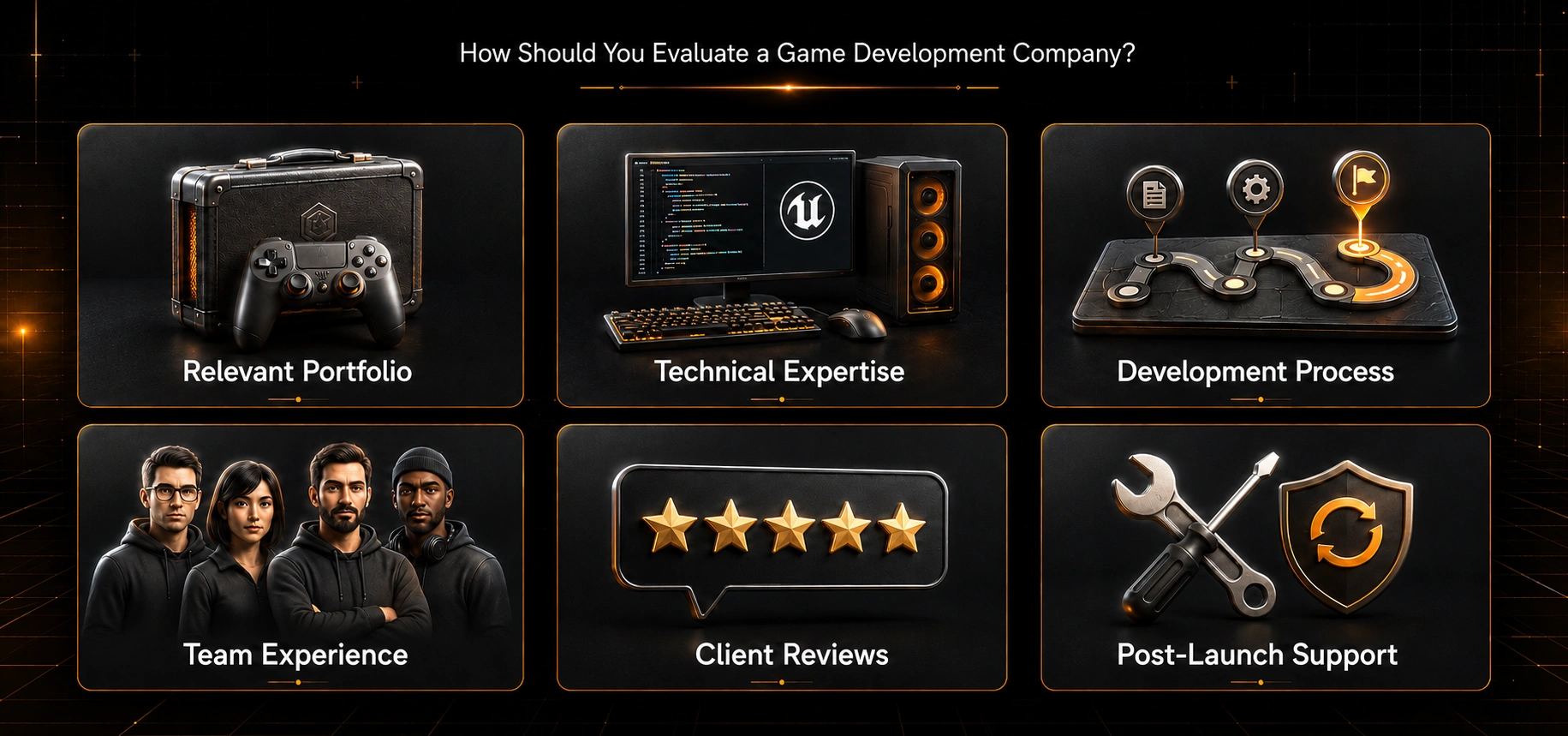
Before making a decision, compare:
- Relevant game development experience
- 2D and 3D capabilities
- Game engine expertise
- Art and animation quality
- Multiplayer experience
- QA and testing processes
- Development methodology
- Communication practices
- Team availability
- Post-launch support
- Ownership and licensing terms
- Ability to scale the team
The best choice is not necessarily the company with the biggest portfolio or the longest service list. Focus on the studio that fits your game’s requirements, budget, timeline, and long-term goals.
Top 10 2D & 3D Game Development Companies in 2026
The right studio for your game depends on its genre, platform, technical requirements, budget, and scope. The following companies offer a range of capabilities across multiplayer, 2D, 3D, game art, and custom game production. Our selection considers 2D and 3D development capabilities, portfolio relevance, platform expertise, technical services, scalability, and post-launch support.
1. ChicMic Studios
ChicMic Studios offers game development across mobile, web, PC, and cross platforms, with capabilities covering both 2D and 3D game production. Its wider development portfolio also makes it a viable option for businesses seeking help with specific gameplay, game art, multiplayer and platform-specific development.
Best for: Custom 2D/3D games, mobile games, multiplayer projects, and full-cycle development.
2. Juego Studios
Juego Studios combines game development with game art and immersive technology services across multiple platforms. Its experience with 2D and 3D production, AR/VR, interactive experiences, and game development makes it suitable for projects where both technical implementation and visual quality are important.
Best for: 2D/3D games, AR/VR experiences, game art, and visually rich projects.
3. NipsApp Game Studios
NipsApp Game Studios focuses on 3D production & game development across different platforms and genres. Its capabilities in areas such as multiplayer, simulation, shooters, and immersive experiences make it worth considering for technically demanding custom game projects.
Best for: 3D games, multiplayer projects, simulations, and technically complex experiences.
4. Kevuru Games
Kevuru Games offers game development and game art services for various gaming platforms. Its production capabilities include 2D and 3D visuals, animation, and game development, which may make it a good choice for projects with significant visual production needs.
Best for: Game art, 2D/3D production, animation, and content-heavy games.
5. Game-Ace
Game-Ace is working on interactive experiences such as AR/VR, multiplayer projects, 3D art, and game development. Its technological and visual skills can be used for companies wanting to develop feature-rich custom games.
Best for: Multiplayer games, AR/VR, 3D games, and immersive experiences.
6. Whimsy Games
Whimsy Games is an art production and game development studio serving a wide variety of gaming projects. Thanks to its work in gameplay creation, visual assets, and interactive experiences, it’s worth considering for unique projects with particular creative needs.
Best for: Custom games, game art, casual games, and visually focused projects.
7. SDLC Corp
SDLC Corp provides game development services including mobile, multiplayer, blockchain and other gaming solutions. Its capabilities may be of interest to businesses seeking a studio that can combine game production with more general technical requirements.
Best for: Mobile games, multiplayer projects, blockchain games, and technology-driven gaming solutions.
8. Red Apple Technologies
Red Apple Technologies is a developer of digital solutions, mobile apps and video games. Its flexibility in game development for different platforms and genres makes it an additional option for companies to develop unique games.
Best for: Mobile games, casual games, and cross-platform digital products.
9. Keywords Studios
Keywords Studios offers a broad range of game development and production services. It has a global reach and a variety of skills. It could be suited for larger projects that demand specialized teams across development, art, testing, and other production areas.
Best for: Large-scale projects, co-development, game production, art, and QA.
10. Room 8 Group
Room 8 Group provides game development, co-development, art, and other production services. With its experience in supporting gaming projects at all stages, it is a good option for companies that need extra development capacity or have specific production expertise.
Best for: Co-development, game art, production support, and larger game projects.
What Does the Custom Game Development Process Look Like?
A custom game goes through several phases from initial design to launch and ongoing support. Every stage impacts the visuals, the technology, the gameplay, and the overall player experience.
1. Concept and Discovery
Before production officially kicks off, the team defines the game’s genre, target audience, key mechanics, target platform, art direction, budget, and overall scope.
2. Game Design
From the original concept, designers create gameplay systems, levels, progression, controls, characters, game modes and other elements players experience during gameplay.
3. Prototype
The team will build an early playable version to test out the key mechanics, controls and basic gameplay before investing heavily in full production.
4. Production
Game developers and artists create the game’s gameplay systems, characters, environments, animations, user interface, audio, multiplayer features, and backend components. Projects with detailed characters may also require dedicated 3D character design.
5. Testing and Optimization
Before release, the game is tested on various target platforms and devices for bugs, performance difficulties, compatibility problems, and playability concerns.
6. Launch
The finished game is ready to go live, including platform specs, store submissions, deployment, analytics, final testing and all the required launch-day checks.
7. Post-Launch
After the product is released, the development team can deal with updates, bug patches, new content, performance improvements, compatibility fixes, and enhancements based on user feedback. A structured process can help teams manage development costs, timelines, milestones, responsibilities and scope changes without throwing the project off its path to launch.
2D & 3D Game Development Cost and Timeline
The cost of making a game can vary greatly from project to project. A small 2D mobile game might only require a handful of developers and a short development cycle, whereas a 3D multiplayer game can need artists, programmers, designers, backend developers and QA teams for much longer.
| Project Type |
Estimated Cost |
Typical Timeline |
| Basic 2D Game |
$15,000–$40,000 |
2–4 months |
| Mid-Level 2D Game |
$40,000–$80,000 |
4–6 months |
| Basic 3D Game |
$40,000–$100,000 |
4–8 months |
| Advanced 3D Game |
$100,000–$250,000+ |
8–14+ months |
| Large Multiplayer 3D Game |
$250,000+ |
12+ months |
These are just ranges to get you started. The actual quote will vary depending on game mechanics, art style, number of platforms, multiplayer elements, backend requirements, testing and post-launch support. Some parts of production may be running at the same time, and the schedule may change for the same reasons.
Want an Accurate Cost and Timeline for Your Custom Game?
What Should You Ask Before Hiring a Game Development Company?
A few direct questions can tell you more than a polished sales presentation. Ask about past projects, technical expertise, team structure, communication, ownership, testing, and post-launch support before making your decision.
- Have you built a game similar to mine?
- Which platforms and game engines do you specialize in?
- Who will work on my project?
- Can you handle both development and game art?
- How do you test performance across devices?
- How do you manage changes to the project scope?
- Who owns the source code and final assets?
- What support is available after launch?
- How often will I receive development updates?
- Can the team scale if the project grows?
The answers should show whether the studio understands your project, works transparently, and can provide support you need after launch.
Why Post-Launch Support Matters for Custom Games
Launching the game does not mean the work is finished. There will be more bugs, some devices will have performance issues and some features will need to be adjusted to player feedback when real players start using it. Regular updates can also help keep the game working as platforms and operating systems change. Post-launch support provides bug fixes, performance improvements, security patches, new functionality, additional content, compatibility updates and ongoing maintenance. This is even more important for multiplayer games and for titles that depend on regular content releases. Get a support plan in place early, to help you deal with future upgrades and to ensure that small problems don’t turn into big ones.
Conclusion
When choosing between 2D and 3D game development companies, it’s more important to select a studio that understands your game, target audience and goals, than to select one with the longest service list. Make sure your gameplay, target platform, visual style, features, budget and timetable are all evident before comparing studios based on relevant portfolios, technical skills, communication, development process, pricing and post-launch support. The perfect partner will be able to take your concept beyond good visuals and create a game that is functional, reliable and has the flexibility to grow with your audience.
Frequently Asked Questions
1. How much does it cost to develop a 2D or 3D game in 2026?
The cost depends on the game’s complexity, art style, platforms, gameplay mechanics, multiplayer requirements, team size, and development timeline. A simple 2D game can cost far less than a feature-rich 3D or multiplayer title.
2. Is 2D game development cheaper than 3D game development?
Generally, yes, but not always. A 2D project may require fewer resources for modeling and animation, while a complex 2D game with extensive content or advanced systems can still become expensive. The actual budget depends on the project’s scope.
3. Should I choose Unity or Unreal Engine for my custom game?
It depends on the type of game you are building. Unity can be a strong choice for a wide range of 2D, 3D, mobile, and cross-platform projects, while Unreal Engine is often considered for projects that require high-end 3D visuals and advanced rendering. The development team’s expertise should also factor into the decision.
4. Can a game development company build both 2D and 3D games?
Yes, many game development studios offer both 2D and 3D development, along with supporting services such as game design, animation, UI/UX, multiplayer development, QA, and post-launch support.
5. How long does it take to develop a custom 2D or 3D game?
A simple game may take a few months, while a larger 3D or multiplayer project can take a year or longer. The timeline depends on the number of features, art requirements, platforms, gameplay complexity, team size, and testing requirements.
6. Is multiplayer worth adding to a custom game in 2026?
Multiplayer can be valuable when it naturally fits the game’s concept and target audience. Current industry data shows that online multiplayer and cross-play remain important engagement strategies, but adding multiplayer also increases development, backend, testing, and maintenance requirements.
7. Are AI tools being used in 2D and 3D game development in 2026?
Yes, development teams are increasingly using AI for areas such as coding assistance, narrative work, production workflows, and decision-making. However, AI tools do not replace the need for experienced designers, developers, artists, and QA teams.
8. What should I check before hiring a 2D and 3D game development company?
Look at relevant portfolio experience, engine expertise, game art capabilities, development methodology, communication, QA processes, team availability, pricing, intellectual-property ownership, and post-launch support. Most importantly, check whether the studio has built projects similar to yours.
9. Can a game development company support my game after launch?
Yes, post-launch services can include bug fixing, performance optimization, compatibility updates, new features, content updates, security improvements, LiveOps, and technical maintenance. This becomes especially important for multiplayer and regularly updated games.
10. What game development trends should businesses consider in 2026?
Businesses should pay attention to focused game scopes, faster prototyping, cross-platform and cross-play experiences, AI-assisted development workflows, data-driven player engagement, and diversified monetization. The current industry direction favors sustainable projects rather than automatically pursuing larger and more expensive games.
Ready to Turn Your 2D or 3D Game Concept Into a Scalable Product?