ChicMic Studios, a stablecoin development company, helps financial institutions build compliant stablecoin issuance, regulated settlement, and cross-border payment infrastructure designed for evolving regulatory frameworks and modern digital finance requirements.
 Based on 2000+ Reviews on


 Experienced Team
Quality Work
Affordable Services
Experienced Team
Quality Work
Affordable Services

















Happy Clients
Teams of Experts
Years of Experience
Certified Experts in AI, ML, and Blockchain
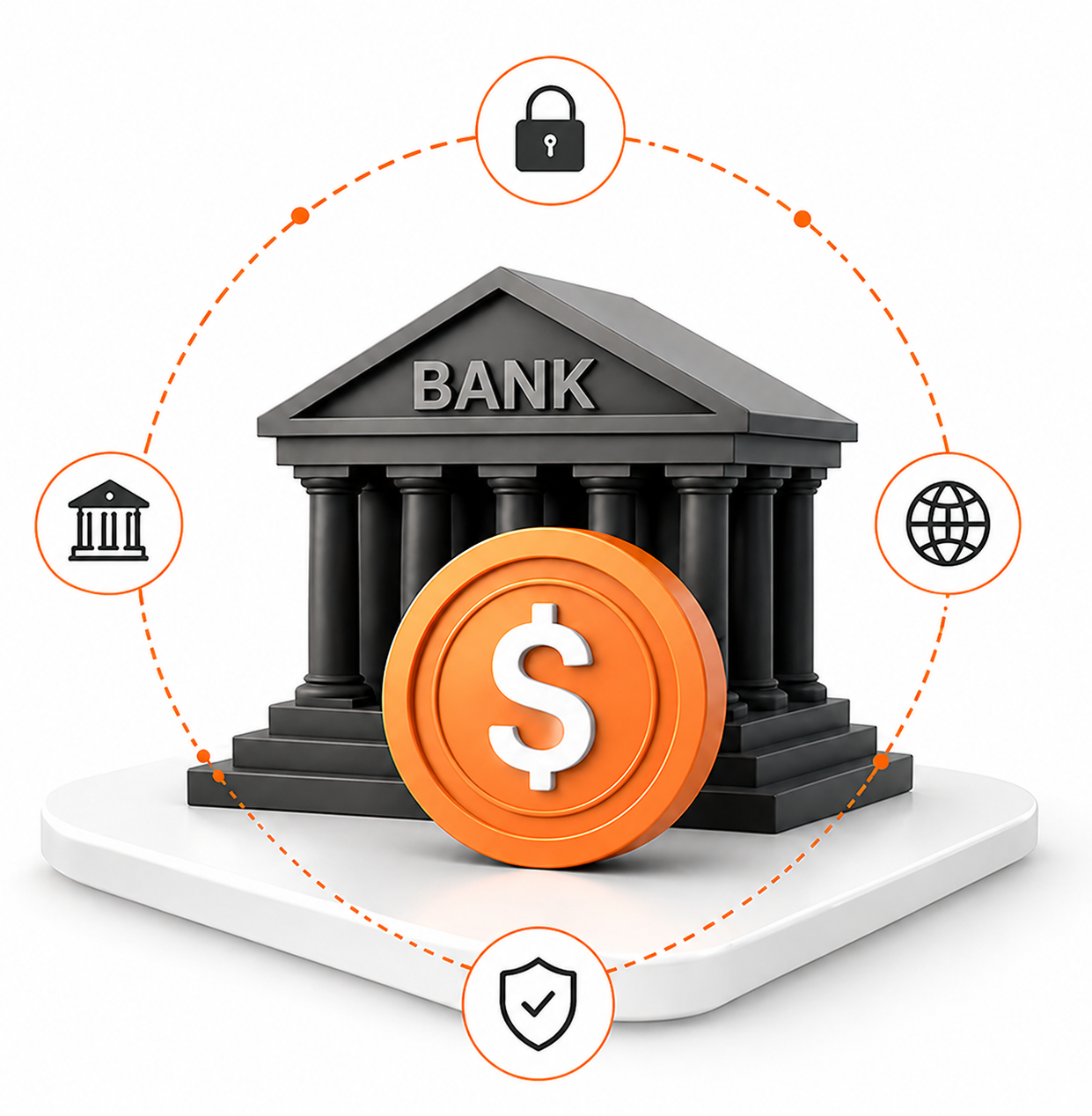
Imagine a Dubai business sending AED-backed value to Riyadh in seconds, with low cost, automated compliance, and a clear audit trail. Banking stablecoin development produces fiat-backed digital tokens on secure blockchain rails, pegged 1:1 to currencies such as AED, SAR, BHD, QAR, KWD or USD. Banks combine issuance, custody, wallets, treasury controls and compliance procedures by blockchain development for financial organizations.
The bank-issued stablecoins will be permissioned, with identity-verified wallets, transaction screening, full reserve backing, and par redeemability. They are programmable fiat infrastructure for regulated payments, cross-border settlement and digital treasury activities.
| Area |
Bank-Issued Stablecoins
|
Public Stablecoins
|
|---|---|---|
|
Regulation
|
Central bank or financial authority regulated
|
Varies by issuer and jurisdiction
|
|
Wallets
|
Identity-verified
|
Often pseudonymous
|
|
Reserves
|
Bank-grade custody
|
Commercial paper or money market funds
|
|
Compliance
|
Embedded into token rules
|
Often handled through off-chain
checks
|
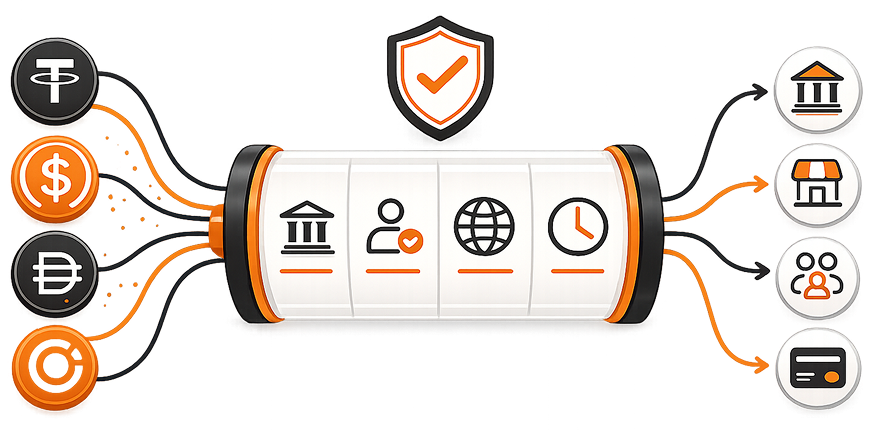
Correspondent banking is still plagued by sluggish settlement, trapped Nostro/Vostro liquidity and expensive intermediaries. Stablecoin technology allows banks to transfer regulated assets in a faster, more transparent and more capital-efficient method.

Move from T+2 or SWIFT GPI timelines to sub 5 second finality. Reduce correspondent banking dependence and free liquidity in high volume corridors like UAE-India.

Token logic for KYC, AML, wallet permissions and jurisdiction rules. Every wallet is identity-verified. Every transaction is inspected. Every transfer is policy-enforced.

Fiat can be held in regulated interest-bearing custodial accounts. Banks leverage stablecoin development solutions to turn remittance corridors into revenue-generating infrastructure.

Provide regulators and audit teams with real-time insight on token supply and fiat reserves. Banks may back, redeem and be compliant with all issued tokens in full.

Use audited smart contracts to automate issuance, redemption, reconciliation and reserve reporting. Reduce manual Nostro account management, correspondent statement checks and settlement exceptions.

Launch stablecoin-powered remittance products across underserved or expensive payment corridors. Near-zero marginal transaction costs help banks offer competitive pricing while protecting institutional margins.
ChicMic Studios develops regulated stablecoin infrastructure for banks, remittance providers, fintechs and financial institutions across the MENA area and the US region. Our stablecoin development services allow institutions to deploy secure, reserve-backed digital payment systems without the need to overhaul their existing banking stack.

Design and deploy fully reserved stablecoins tied 1:1 to fiat currencies, including digital Dirham, Riyal or custom institutional settlement tokens. With our fiat-backed stablecoin development, whitelisted smart contracts have native freeze, clawback, and compliance measures embedded into the token layer.

A white-labeled issuance and management dashboard for banks and regulated financial institutions. Pre-built for VARA, FSRA and SAMA regulatory workflows, manage, burn, reconcile and monitor tokens from a secure admin interface.

Build the on-chain and off-ramp infrastructure between your stablecoin and existing payment switches. Our cross-border payment infrastructure provides ISO 20022 compliant messaging, Temenos and Finastra integration, and automatic FX swap execution upon settlement.

Development of smart contracts for issuance, redemption, transfer limitations and automatic compliance features with formal verification. Every smart contract development and security audit process is done before a single token is launched. For a simpler breakdown, read our guide on smart contracts in blockchain.

Embed identity verification, wallet allowlisting, transaction screening and jurisdictional transfer limits into the token itself. Compliance is built in and integrated into every transaction, not a retrofit applied later manually.

Create real-time dashboards showing 1:1 reserve backing with automatic reconciliation of custody accounts and on-chain token supply. Specifically designed for reporting needs of central banks, internal audit and regulatory assessment.

Yield creation by transparently connecting reserve assets to whitelisted, regulated DeFi protocols. Our institutional yield DeFi staking is permissioned counterparties only with full audit trails for central bank control.

Deploy REST APIs and host-to-host connectivity between the Stablecoin layer and legacy core banking platforms. Your current payment processes, customer portals, mobile applications and branch systems are all unaffected.
Stablecoin platforms for banks need proven frameworks for permissioned access, regulatory restrictions, high throughput, reserve transparency, and secure interoperability across payment channels.

ERC-3643 allows for permissioned assets, identity checks and transfer limitations directly within the smart contract. It enables Ethereum-based asset tokenization and controlled fiat-backed stablecoin issuance. For institutions comparing regulated token models, read more on real-world asset tokenization.

Hyperledger Fabric allows private and institutional blockchain networks. Participants, validator roles, data visibility, transaction authorization and network-level KYC/AML are governed by banks.

Avalanche Subnets allow banks to run segregated blockchains with their own validators. They have specialized compliance standards, fast throughput, sub-second finality, and jurisdiction-specific validator requirements.

Polygon zkEVM provides Ethereum-compatible, low-cost, high-throughput transactions. It offers retail remittances, SME payments, merchant settlement and a crypto payment gateway for banking. To understand why scaling layers matter, read our guide on Layer 2 scaling and blockchain performance

Chainlink CCIP bridges stablecoin networks between multiple chains. It allows auditable token transfers between retail, interbank and treasury settlement settings without liquidity silos.

Solana enables high-throughput stablecoin payments with fast finality and low fees, making it suitable for remittances, merchant settlement, and treasury transfers. It supports stablecoin payment infrastructure under heavy transaction volume.
Stablecoin infrastructure can power a range of banking activities such as remittance corridors, interbank settlement, treasury automation and programmable payments.



Jobs-Completed
Total Earned
Flexible engagements from hourly to full-time.


Business requirements analysis and blockchain architecture definition.

System design including smart contracts, tokenomics, and security framework.

Build and test secure smart contracts for decentralized workflows.

Frontend and API integration with blockchain backend systems.

Rigorous testing and third-party smart contract audits before launch.

Mainnet deployment with ongoing maintenance and optimization.
Book your call to discuss your project!

We align your vision with our commitment to excellence, offering unmatched digital solutions tailored to your needs.

We create customized approaches to meet the unique demands of each project.

Effective communication and strategic management drive the success of our developments.

We focus on perfection from start to finish, ensuring flawless results.

Our skilled team brings years of industry know-how to every project.
These are not just kind words - they're the lived experiences of companies who've trusted us to build what matters, and deliver without compromise.

Working with their team was a seamless experience. They understood our requirements perfectly and delivered a high-quality solution on time.

The level of technical expertise they bring to the table is unmatched. They are highly professional and focused on delivering results.
 Based on 8 verified reviews
ChicMic Studios delivered 80% of the core verification script and backend system, improving the accuracy of email verification results and ensuring cleaner and more reliable data for the client. The team was friendly, organized, understanding, and helpful. This led to a smooth collaboration.
ChicMic Studios has successfully launched the game, meeting the client's expectations. The team is responsive and patient, adheres to a go-to-market schedule and feedback cycle, and communicates via email and WhatsApp. Their flexibility has impressed the client, resulting in a positive engagement.
ChicMic Studios delivered a high-quality output in a short time frame. Furthermore, the team was proactive and transparent in their communication via virtual meetings. Moreover, the client loved to work with them. Overall, the team's quality results and reasonable price stood out.
The quality of ChicMic’s work was excellent - without them, the client wouldn’t have gotten the app live. The app achieved very positive feedback and over 1 million views until the client decommissioned it. The team fulfilled every requirement and was very prompt in correcting issues when needed.
ChicMic’s ability to work in and out of the original scope made for a beneficial engagement. The team was consistently reasonable and reliable, and they worked diligently to accomplish and deliver effective product development solutions.
The client is pleased with the delivered websites, describing them as phenomenal. ChicMic works efficiently - they deliver tasks on time and always address requests promptly. Moreover, they communicate clearly and consistently despite working in different time zones. They're also very knowledgeable.
ChicMic has been completing deliverables for the app's improvement. Moreover, the client has seen a significant increase in their app's membership subscriptions, thanks to the team's work. Furthermore, the team has been dedicated to the client's success and has been committed to serving customers.
Thanks to the new solutions, the client's marketing campaigns became more effective, resulting in a 30% increase in leads and a 20% boost in conversions. ChicMic fully understood the requirements, enabling them to deliver quality outputs that aligned with the client's goals.
Lovely work during this long time project and good communication through out! I do recommend this freelancer! Thank you so much for this cooperation!
Very professional team. Deliverables on time and within budget. Prompt and responsive - issues addressed within a 24-hour window in almost all cases (this is super-important to me)
Excellent job! Absolutely recommend them. Always professionals and their attention to detail is incredible. Great experience!!
Vendor understood the requirements well and managed to provide robust application. They were also relatively flexible and well committed to completing the assignment fully

 July 1, 2026
Key Takeaways: Core Value: Browser-based games like Messenger Abeto offer instant access and simple gameplay, enabling natural learning…
June 26, 2026

Key Takeaways Mature Regulatory Framework: The UAE offers one of the world’s most mature crypto regulatory frameworks, with…
June 18, 2026

Key Takeaways AI fitness agents transform traditional fitness apps into intelligent personal trainers that adapt workouts based on…
May 18, 2026
Key Takeaways: Core Value: Game engines impact how teams build, scale and manage interactive products over time. Development…

We specialize in mobile app development, web development, game development, blockchain & NFTs, IT consulting, and custom digital solutions according to your business needs.
With a proven track record of over a decade, we cater to companies across multiple industries, including healthcare, e-commerce, finance, education, gaming, and more.
We develop native apps for iOS and Android, cross-platform apps using frameworks like Flutter and React Native, as well as hybrid apps tailored to meet your specific business goals.
Yes! We offer ongoing support, updates, and performance monitoring to ensure your app runs smoothly after launch.
Yes, we can build a Minimum Viable Product (MVP) to help you test your idea and gather user feedback before scaling.
We use Swift and Objective-C for iOS, Kotlin and Java for Android, and Flutter or React Native for cross-platform apps.
Yes, we can integrate a wide range of APIs, including payment gateways, maps, social media, and analytics tools.
We offer custom web design, full-stack development, e-commerce solutions, CMS development, web app creation, and ongoing maintenance services tailored to your needs.
Android app development involves creating mobile applications specifically designed to run on Android devices, using programming languages like Java or Kotlin.
Yes, we can develop apps with multi-language support and localization to cater to diverse audiences.
We provide iOS app development services for various industries, including healthcare, e-commerce, finance, education, real estate, entertainment, and more.
Yes, we specialize in creating seamless, high-performance apps optimized for both iPhone and iPad devices to provide an engaging user experience.
AI development services involve creating and implementing artificial intelligence solutions tailored to meet specific business needs, including machine learning, natural language processing, and data analytics.
We develop a variety of games, including mobile games, PC games, console games, and browser-based games across multiple genres, such as action, puzzle, strategy, and simulation.
Yes, we offer guidance on game monetization strategies, including in-app purchase, ads, and subscriptions models to help maximize your game’s revenue potential.
Yes, with .NET Core and .NET 5/6, you can develop cross-platform applications that work seamlessly on Windows, macOS, and Linux.
Dot NET applications are highly scalable, making them suitable for businesses of all sizes, from startups to enterprises. We design solutions that grow with your business needs.
AI chatbots use artificial intelligence and natural language processing (NLP) to understand and respond to user inquiries. They learn from interactions, enabling them to provide personalized and contextually relevant responses.
AI chatbots provide 24/7 support, handle multiple inquiries simultaneously, and deliver instant responses, improving customer satisfaction and reducing wait times.
Generative AI refers to advanced algorithms capable of creating content such as text, images, videos, and more. It uses techniques like machine learning and deep learning to learn patterns from large datasets and generate outputs that mimic human creativity.
We develop models like GPT (for text generation), DALL-E and StyleGAN (for image creation), VQ-VAE (for multimedia content generation), and transformer models for advanced natural language processing.
Machine Learning is a subset of artificial intelligence that allows systems to learn from data and improve their performance over time without being explicitly programmed. It works by using algorithms to analyze patterns and make predictions based on input data.
We utilize industry-standard game engines and tools, such as Unity, Unreal Engine, and Godot, to develop high-quality 2D games.
A Web3 decentralized application (dApp) operates on a blockchain network, allowing for peer-to-peer interactions without intermediaries. These applications utilize smart contracts to ensure transparency and security.
Ethereum blockchain development refers to the process of creating decentralized applications (DApps), smart contracts, and other solutions using the Ethereum platform and its underlying technology.
Unity is versatile and can be used to create various types of games, including action, adventure, simulation, puzzle, and AR/VR games.
Unity 2D & 3D game development in India refers to the process of creating engaging games using the Unity engine for various platforms like Android, iOS, PC, and consoles. Unity is a powerful tool that offers a wide range of features for design, animation, real-time rendering, and C# programming, making it a top choice for Indian game developers.
Roblox game development involves creating interacting and engaging games on the Roblox platform using LUA programming and Roblox Studio tools.
Roblox offers a vast user base, easy accessibility, multiplayer capabilities, and a supportive community, making it a n excellent platform for reaching a diverse audience.
Our process involves understanding your vision, creating a detailed plan, developing the game, conducting playtesting, and providing ongoing support after launch.
Blockchain game development involves creating games that utilize blockchain technology for decentralized gameplay, secure technology, and unique asset ownership. Features like NFTs and smart contracts enhance player experiences and create transparent, tamper-proof systems.
We provide ongoing updates, features enhancements, and scalability options to ensure your game remains competitive and relevant in the market.
Cocos games development involves creating games using the Cocos framework, which provides tools and libraries for building 2D and 3D games across various platforms.
Cocos is known for its lightweight design, ease of use, and efficient performance, making it a great choice for 2D game development, particularly for mobile and casual games.
The timeline for Unity 2D & 3D game development in India depends on the project’s complexity, features, and team size. A basic 2D game may take 1–2 months, while a complex 3D game could require 3–6+ months. Development duration also varies based on asset quality, gameplay mechanics, and testing requirements.
Our process includes initial consultation, concept development, design and prototyping, development, testing, and finally, launch and post-launch support.
You can contact us to discuss your game idea and requirements. Our team will guide you through the process and help you turn your vision into reality.
Absolutely! We can design unique characters, environments, and animations tailored to your game’s theme and vision.
Three.js game development creates interactive 2D and 3D games for modern web browsers using Three.js, JavaScript, WebGL, and HTML5. It enables browser-based gaming without requiring traditional game installations. With the right Three.js game development company it enables handling design, development, 3D assets, testing, optimization, and deployment.
Three.js can be used for puzzle, strategy, sports, arcade, educational, board, casino, and battle arena games. It also supports multiplayer experiences, simulations, and custom browser game development.
Yes, Three.js is well suited for browser-based games requiring interactive 2D and 3D graphics. It is particularly useful for web game development because games can be delivered directly through modern browsers without traditional installations.
Yes, Three.js supports AR/VR integrations, allowing us to create immersive experiences compatible with devices like Oculus Rift, HTC Vive, and AR-enabled smartphones.
Our QA process involves a combination of manual and automated testing, thorough documentation, and adherence to industry best practices. We also implement continuous testing throughout the development lifecycle to catch issues early and ensure consistent quality.
Quality Assurance is a proactive process that focuses on preventing defects and ensuring quality standards are met throughout the development lifecycle. In contrast, testing is a reactive process that involves executing the software to identify any existing defects or issues.
Implementing QA practices helps to identify and resolve issues early, reducing the likelihood of major defects in the final product. This leads to improved software quality, increased customer satisfaction, and ultimately, a more efficient development process with lower costs.
Yes, we can integrate our QA services into your existing development projects, providing support for continuous testing and quality improvement throughout the project’s lifecycle.
We follow a rigorous quality assurance process that includes extensive testing for performance, functionality, and compatibility to ensure a polished final product.
Yes, we provide post-launch support to help with any issues that may arise and ensure your game runs smoothly.
We can help you implement various monetization strategies, such as in-app purchases, ads, or premium pricing models, tailored to fit your game’s design and target audience.
We develop 3D games for a variety of platforms, including PC, consoles, mobile devices, and AR/VR systems.
We focus on creating high-quality 3D assets, including characters, environments, and props, using advanced modeling and texturing techniques to ensure realism and visual appeal.
Our expertise includes a range of genres, such as action, adventure, simulation, racing, and strategy games.
Yes. we offer localization services to adapt your game for various languages and cultures, ensuring a wider reach and appeal in global markets.
Yes, we can assist with app store submission, optimization, and marketing strategies to ensure your game’s successful launch and visibility.
Our process includes concept development, design, programming, testing, and post-launch support, ensuring each phase is executed with attention to detail and quality.
We rigorously test our PC games across various hardware setups, resolutions, and operating systems to catch compatibility issues early. Our QA team focuses on performance tuning, bug fixing, and user experience optimization to make sure each release runs smoothly.
Yes, we offer localization services to adapt your game for different languages and cultures, enhancing accessibility and market reach.
Hyper-casual games are simple, easy-to-understand games that focus on short, engaging gameplay sessions. They often feature minimalistic designs and straightforward mechanics that appeal to a wide audience.
Absolutely! We prioritize user engagement by incorporating mechanics that keep players motivated and invested in the games.
The development time can vary depending on the complexity of the game, but hyper-casual games are generally developed within a few weeks to a few months.
Some challenges include standing out in a saturated market, maintaining player engagement over time, and ensuring the game remains fun while being simple to play.
We utilize leading game engines like Unity and Cocos Creator, which enable us to create visually appealing and high-performing hyper-casual games.
Blockchain integration enables features like secure asset ownership, player-to-player trading, decentralized economies, transparency, and enhanced gameplay through tokenization and smart contracts.
We support a range of blockchain platforms, including Ethereum, Binance Smart Chain, Solana, Polygon, and others, based on the project’s specific needs and scalability requirements.
NFTs (Non-Fungible Tokens are unique digital assets that represent in-game items like characters, weapons, or skins. Players can own, trade, or sell these items securely on blockchain networks.
Metaverse game development refers to creating immersive virtual environments where players can interact, socialize, and engage in various gaming activities. It combines elements of gaming, augmented reality (AR), and virtual reality (VR) to provide a unique experience.
We provide a comprehensive range of services, including game design, development, 3D modeling, character design, UI/UX design, blockchain integration, and post-launch support.
Yes, we specialize in creating educational and training games that leverage the Metaverse’s immersive capabilities to enhance learning experiences in various fields.
We implement robust security measures, including secure blockchain integration and data protection protocols, to safeguard user data and assets within the game.
NFT game development involves creating games that integrate non-fungible tokens (NFTs) as in-game assets, allowing players to own, trade, or sell these digital items securely using blockchain technology.
Unlike traditional games, NFT games provide players with true ownership of in-game assets, which can be traded or sold on the blockchain marketplace. This adds value to gameplay and creates opportunities for monetization.
Yes, we can incorporate a play-to-earn model that allows players to earn rewards or cryptocurrency through gameplay, enhancing engagement and attracting a wider audience.
NFT game development offers benefits like increased player engagement and attracting a wider audience.
Blockchain technology ensures secure asset ownership, transparency in rewards distribution, and a decentralized structure that supports player-driven economies.
P2E mechanics can be integrated into a wide range of genres, including RPGs, strategy games, simulation games, racing games, and more.
Metaverse development involves creating immersive virtual environments where users can interact, work, socialize, and conduct transactions. Businesses can benefit by expanding digital engagement, enhancing customer experiences, and creating new revenue streams through virtual assets, services, and e-commerce.
Industries like healthcare, real estate, education, gaming, e-commerce, entertainment, and corporate training can use metaverse solutions to enhance operations, customer interactions, and employee engagement.
The metaverse fosters deeper interactions through immersive 3D experiences, virtual events, gamification, and social connectivity, helping brands build stronger relationships with customers and employees while unlocking new monetization opportunities.
A metaverse platform typically includes 3D virtual spaces, avatars, blockchain-based digital assets, VR/AR integration, interactive experiences, and real-time communication tools.
Unlike traditional applications that rely on centralized servers, Web3 dApps are built on decentralized networks, providing enhanced security, user control over data, and resistance to censorship.
Essential features include a user-friendly interface, seamless integration with wallets, smart contract functionality, decentralized storage, and robust security measures.
Yes, we provide end-to-end services, including ideation, design, development, testing, deployment, and ongoing support for your dApp.
NFT apps create immersive and interactive experiences through gamification, rewards, and exclusive content, helping brands deepen connections with their audience and build loyal communities.
Absolutely! We collaborate closely to design and develop NFTs that reflect your brand’s values, aesthetics, and goals, ensuring they resonate with your target audience.
Smart contracts are the backbone of NFT apps. They automate processes like minting, ownership transfer, royalties, and payments, ensuring transparency and security in transactions.
Our smart contract solutions can automate royalty distribution, ensuring creators and stakeholders receive their share of earnings instantly and transparently with every sale or resale.
Our focus on customization, security, and user experience sets us apart. We work closely with clients to understand their unique needs and develop tailored solutions that prioritize user engagement and security.
Yes, our wallet apps can be designed to integrate with DeFi protocols, enabling users to participate in lending, borrowing, and yield farming directly from their wallets.
Yes, we can design and implement loyalty programs or rewards systems that incentivize user engagement and promote customer retention.
Yes, our wallet solutions can support cross-border transactions, allowing users to send and receive funds globally, enhancing convenience and accessibility.
Projects can range from decentralized finance (DeFi) applications and NFT marketplaces to supply chain solutions and identity verification systems.
Smart contracts are self-executing contracts with the terms directly written into code. They automate processes, enhance transparency, and ensure trust in transactions on the Ethereum blockchain.
Ethereum’s decentralized and immutable nature allows all transactions to be recorded on a public ledger that anyone can verify. This transparency builds trust among stakeholders by ensuring that all actions are accountable and traceable. Businesses can use Ethereum to create verifiable records of transactions, agreements, and processes, minimizing the risk of fraud and increasing overall trust.
We offer smart contract development, NFT marketplace creation, DeFi solutions, token development, decentralized app (DApp) development, and custom wallet development on Solana.
Yes, we offer comprehensive development services, including project planning, design, development, deployment, and ongoing support for Solana-based applications.
Absolutely. We specialize in integrating Solana blockchain solutions with existing platforms, ensuring seamless interoperability and functionality.
Definitely. Solana’s high throughput, scalability, and advanced architecture are designed to handle enterprise-grade applications efficiently.
Asset tokenization is the process of converting ownership rights of real-world or digital assets into blockchain-based tokens. These tokens represent a fractional or complete ownership of the asset and can be traded, transferred, or stored digitally.
Virtually any asset can be tokenized, including real estate, fine art, commodities, precious metals, financial instruments (bonds, stocks), intellectual property, and even agricultural assets.
Benefits include fractional ownership, enhanced liquidity, cost efficiency, global accessibility, improved transparency, and faster transaction processes via blockchain technology.
Yes, blockchain technology ensures security through decentralized systems, cryptographic validation, and immutable transaction records. Smart contracts also automate processes while enforcing compliance rules.
Coin development involves creating a new cryptocurrency or digital coin, which includes designing the underlying technology, defining its purpose, and implementing it on a blockchain network.
Developing your own cryptocurrency can provide various advantages, including increased brand visibility, access to new markets, enhanced payment options, and potential revenue generation through token sales or transaction fees.
Key technical requirements include selecting a consensus mechanism, designing the blockchain architecture, defining tokenomics, and implementing smart contracts, along with ensuring security protocols.
Tokenomics refers to the economic model of a cryptocurrency, including supply, distribution, and incentives. A well-defined tokenomics strategy is crucial for ensuring the project’s sustainability and attracting investors.
We begin with a detailed consultation to understand your vision and requirements. This is followed by concept art, 3D modeling, texturing, rigging (if needed), and final delivery of your character assets. We provide regular updates and feedback opportunities throughout the process.
Yes, absolutely! We include a set number of revisions within our service, allowing you to provide feedback and ensure the final character perfectly meets your expectations.
Upon completion, you will have the full usage rights for your 3D character. We will provide all details about licensing during our consultation.
Yes, our studio has the capacity and expertise to handle multiple characters and full cast designs for various projects. We can work with you to create a cohesive look and feel for your entire set of characters.
3D environment design involves creating immersive digital landscapes for games, simulations, virtual reality, and other interactive experiences.
Yes, we tailor our designs to match various artistic styles, from hyper-realistic to low-poly and stylized aesthetics.
We use high-quality textures, advanced lighting techniques, and realistic development leverage 3D environments to create engaging digital spaces.
Yes, we can create highly detailed 3D replicas of real-world locations using reference images, photogrammetry, or LiDAR scans.
Yes, our team is skilled in various art styles, from realistic and stylized to cartoon and anime, ensuring that your project’s aesthetics match your vision.
The timeline depends on the complexity and scope of the project. Simple designs may take a few days, while more intricate concepts may require weeks of refinement.
Yes, we often start with 2D sketches and illustrations before translating them into 3D models for a more refined and polished look.
Simply contact us with your project details, and our team will guide you through the process, from concept development to final delivery.
We work closely with clients to understand technical specifications, style guidelines, and platform requirements. Our iterative process ensures each prop integrates smoothly into your environment.
We design a wide range of 3D props, including furniture, weapons, vehicles, architectural elements, and interactive game assets. Our expertise covers both realistic and stylized designs to match your project’s aesthetic.
Absolutely! We can design props optimized for virtual and augmented reality applications, ensuring they meet performance standards for immersive experiences.
All 3D props we create are delivered with a commercial license, allowing you to use them in your projects without restrictions. Specific terms can be discussed during the project.
Yes, we create lightweight, performance-optimized animations for mobile platforms without compromising visual quality.
Yes, we create storyboard-driven pre-visualization sequences, helping clients plan out shots and animation flows before full production.
Yes, we create seamless animation loops for idle, running, combat, and interactive in-game sequences.
Yes, we optimize animations for game engines like Unity and Unreal Engine, ensuring seamless compatibility and performance.
HTML5 game development refers to creating games that use HTML5 technology, allowing them to run in web browsers without the need for plugins, providing a seamless experience across devices.
HTML5 games are cross-platform compatible, easily accessible, and can be played on various devices, including desktops, tablets, and smartphones, without requiring additional downloads.
Yes, we can incorporate various monetization strategies, including in-game purchases, ads, and premium features, to help you generate revenue from your game.
A real estate app is a digital platform that connects buyers, sellers, renters, and brokers, streamlining property transactions and enhancing user experience. It helps businesses expand their market reach, improve engagement, and facilitate seamless property searches and transactions.
We rigorously test our games on various browsers and devices to ensure consistent performance and user experience, addressing any compatibility issues that may arise.
It simplifies the property search process with filters, virtual tours, and geolocation-based listings while enabling direct communication with brokers, secure transactions, and instant notifications about property updates.
Yes, our solutions allow seamless integration of your current property listings, ensuring real-time updates and data synchronization across all platforms.
Yes, many real estate apps incorporate AR/VR technology to offer immersive virtual tours, allowing you to explore properties remotely.
We develop games for various platforms, including iOS, Android, Windows, Mac, and web browsers, ensuring accessibility for a wide audience.
A taxi app streamlines operations, reduces dependency on manual dispatch, enhances customer satisfaction, and increases revenue through automated ride matching, cashless transactions, and real-time tracking.
Yes, our taxi app solutions are fully customizable, allowing you to tailor features, branding, payment integrations, and additional functionalities to align with your business model.
Our pricing structure depends on the scope and complexity of the project. We provide detailed quotes after discussing your specific needs and requirements.
Passengers can enter their pickup and drop-off locations, view fare estimates, choose a ride type, and confirm the booking. The nearest driver is then assigned, and passengers can track their ride in real time.
Drivers need to submit their personal details, vehicle information, and required documents for verification. Once approved, they can start accepting ride requests.
Clover App Development involves creating custom applications for the Clover POS platform to enhance its functionality, improve operational efficiency and address specific business needs.
Businesses of all sizes, including restaurants, retail stores, service providers, and e-commerce platforms, can leverage Clover app development to streamline operations, improve customer engagement, and drive growth.
Yes, custom Clover apps can integrate seamlessly with third-party software such as CRMs, accounting tools, and e-commerce platforms, to create a unified business system.
Yes, all our apps comply with industry regulations and standards, including PCI compliance, to safeguard your business and customer information.
ChicMic Studios delivers full-cycle development services across mobile apps, web apps, games, UI/UX design, and blockchain solutions. The team supports businesses of all sizes, from early-stage startups to global enterprises.
Headquartered in Mohali, India, ChicMic Studios has worked with clients in over 20 countries. More than 3,000 projects have been successfully delivered for companies around the world.
The studio includes 200+ experts in development, design, project management, and QA. Many team members bring over 5 to 10 years of hands-on experience in their respective fields.
Yes, the team handles everything—from ideation and design to deployment and long-term support. Whether it’s a mobile game, SaaS platform, or blockchain solution, ChicMic Studios covers the entire product journey.
A fitness app is a mobile application designed to help users track their workouts, monitor health metrics, and manage their fitness goals.
A unique blend of creativity, agility, and technical depth helps ChicMic Studios stand apart. Clients appreciate the transparent communication, startup-friendly approach, and scalable development support.
Key features include activity tracking, workout customization, nutrition planning, social sharing, progress visualization, and integration with wearable devices.
Features like gamification, social sharing, personalized content, and regular updates can help maintain user interest and encourage daily use.
Regular updates are recommended to fix bugs, enhance features, and respond to user feedback, typically occurring every few months.
We specialize in various healthcare applications, including patient management systems, telemedicine platforms, pharmacy apps, lab management systems, and mental health applications.
Healthcare apps enhance patient care by providing easy access to medical records, enabling telehealth services, facilitating appointment scheduling, and offering medication reminders, leading to better health outcomes.
We develop healthcare apps for various platforms, including iOS, Android, and web applications, ensuring a wide reach and accessibility for users.
We adhere to industry standards, including HIPAA and GDPR, by implementing necessary security measures and conducting regular audits to ensure compliance throughout the development process.
Key features include user profiles, chat functionality, matching algorithms, geolocation, privacy settings, and payment integration for premium services.
It’s recommended to develop for both iOS and Android to reach a broader audience. A web version can also be beneficial for accessibility.
Popular technology stacks include Node.js or Ruby on Rails for the backend, and React Native or Flutter for cross-platform mobile development.
Algorithms can range from basic location-based matching to advanced compatibility algorithms that consider personality traits, interests, and user behavior.
LiDAR is widely used in industries such as real estate, construction, autonomous vehicles, smart cities, forestry, environmental monitoring, and geospatial mapping.
LiDAR provides highly accurate and detailed spatial data, often surpassing traditional photogrammetry and radar-based methods, especially in complex environments.
We specialize in LiDAR-based mobile apps, indoor and outdoor mapping, 3D modeling, AR/VR applications, smart home integrations, and autonomous system enhancements.
Absolutely! We design custom LiDAR solutions based on industry-specific requirements and operational goals.
Node.js is versatile and can be used to develop various applications, including real-time chat applications, APIs, streaming services, single-page applications (SPAs), and e-commerce platforms.
Yes, we can seamlessly integrate various third-party services and APIs into your Node.js application, enhancing its functionality and providing a more comprehensive solution.
Yes, we provide comprehensive documentation and training to help you understand how to manage and maintain your Node.js application effectively.
We design applications with scalability in mind, utilizing cloud services, microservices architecture, and load balancing to accommodate growing user demands and traffic.
We specialize in both SQL and NoSQL database systems, including MySQL, PostgreSQL, MongoDB, and others. Our team can help you choose the best solution based on your project’s specific needs.
Yes, we offer comprehensive database migration services, ensuring a smooth transition from your current system to a new one while maintaining data integrity and minimizing downtime.
We prioritize data security by implementing best practices, including encryption, access controls, and regular security audits, to safeguard your sensitive information.
Our database designs are built with scalability in mind, utilizing effective indexing, partitioning, and sharding techniques to accommodate future growth and increased data loads.
Python is known for its simplicity, flexibility, and powerful frameworks like Django and Flask. It enables rapid development, scalability, and enhanced security, making it ideal for web applications.
Python is preferred for its readability, extensive libraries, and strong community support. Compared to languages like PHP and JavaScript, Python offers better scalability and integration with AI, ML, and data science applications.
We primarily use Django and Flask, but we also work with FastAPI, Pyramid, and Tornado depending on the project’s requirements.
Yes, we specialize in API integrations, including payment gateways, cloud services, social media APIs, and other third-party tools.
We provide end-to-end Java development, including custom software solutions, web and mobile applications, enterprise-grade systems, API development, and cloud-based applications.
Yes, we handle everything from project planning, design, and development to deployment and ongoing maintenance.
We work with frameworks like Spring Boot, Hibernate, Struts, and JavaServer Faces (JSF) to develop robust and scalable applications.
Yes, we specialize in API integration, enabling seamless connectivity with various third-party services, databases, and platforms.
We tailor our DevOps services to meet the unique needs of each client by assessing their specific goals, existing workflows, and technology stack. Our approach ensures that the solutions we provide align with your business objectives and enhance overall performance.
Absolutely! Our team specializes in assessing your current applications and infrastructure, then developing a tailored migration plan to transition them into a DevOps environment. We focus on minimizing downtime and ensuring a smooth transition.
We use various key performance indicators (KPIs) such as deployment frequency, change lead time, mean time to recovery (MTTR), and customer satisfaction to assess the effectiveness of our DevOps initiatives. These metrics help us continuously improve our processes and deliver better results.
Implementing DevOps can lead to a significant return on investment (ROI) through increased efficiency, faster time to market, improved product quality, and reduced operational costs. The specific ROI will depend on your organization’s unique circumstances and how effectively DevOps practices are adopted.
GoLang’s lightweight nature, fast performance, and built-in support for concurrency make it an excellent choice for developing microservices. It allows for efficient communication between services and simplifies deployment processes.
Yes, our team can help migrate your existing applications to GoLand, ensuring a smooth transition while optimizing performance and scalability.
Absolutely! We can seamlessly integrate your GoLang applications with cloud services such as AWS, Azure, and Google Cloud Platform to enhance scalability and availability.
Yes, our team specialized in developing RESTful APIs using GoLang, ensuring they are efficient, secure, and easy to consume for frontend applications.
2D character design involves creating flat, two-dimensional characters for various applications, such as video games, animations, comics, and illustrations. It includes conceptualizing the character’s appearance, personality, and style.
Our character design process typically includes initial brainstorming, sketching, concept art creation, color development, and final rendering. We collaborate closely with clients at each stage to ensure the designs align with their vision.
We specialize in various art styles, including realism, cartoonish, anime, pixel art, and more. Clients can choose a style that best fits their project’s needs and audience.
The timeline for character design varies depending on the complexity of the project and the number of characters involved. Typically, it can take anywhere from a few days to several weeks. We provide a detailed timeline during the initial consultation.
We begin with detailed discussions to understand your requirements, followed by sketches and iterations based on feedback. The process ensures the final artwork aligns with your creative goals.
Yes, our 2D concept art serves as a foundation for both 2D and 3D projects, providing detailed designs for characters, environments, and props used in animation, games, and films.
We can create everything from rough sketches to highly detailed, fully rendered illustrations, depending on the project’s needs.
Yes, we provide front, side, and back views, as well as pose sheets, ensuring a complete reference for animation or 3D modeling.
We create 2D environments for various projects, including video games, animations, illustrations for digital and print media, and marketing materials.
Our team is skilled in a range of styles, from realistic landscapes to stylized, cartoonish settings, allowing us to adapt to your project’s specific aesthetic.
We collaborate closely with clients to understand the gameplay mechanics and narrative, allowing us to create environments that support and enhance the overall experience
Absolutely! We create detailed backgrounds for animations that complement the storyline and characters, enhancing the overall visual appeal.
Our unique blend of creativity, technical expertise, and personalized service sets us apart. We focus on understanding your vision deeply and transforming it into engaging animated content that resonates with your audience.
Absolutely! We specialize in creating short, attention-grabbing animations specifically designed for social media platforms to help you engage and grow your audience.
Yes, storyboarding is a key part of our animation process. It helps us visualize the flow of the animation and make necessary adjustments before production begins.
We take the time to understand your brand values, target audience, and visual preferences. This allows us to create animations that are consistent with your overall branding and messaging.
We develop a comprehensive design system that includes guidelines for typography, color schemes, iconography, and other visual elements. This helps maintain consistency across all aspects of your product while aligning with your brand identity.
Yes, we ensure mobile-first design strategies, prioritizing mobile users in our design process/ this approach ensures that your product performs optimally across all devices, providing a seamless experience for users on smartphones and tablets.
Our commitment to user-centered design, collaborative approach, attention to detail, and focus on measurable outcomes set us apart. We tailor our services to meet your unique needs and strive for excellence in every project.
We stay updated on the latest design trends and best practices through continuous research and professional development. Our team applies relevant trends to create modern, engaging designs while ensuring they align with your brand and user needs.
Absolutely. We work with clients from the ground up—refining the concept, designing user flows, building wireframes, and developing the full app. Whether you have a rough sketch or just a vision, we can turn it into a market-ready product.
Definitely. Our team specializes in cross-platform frameworks like Flutter and React Native, allowing you to launch on both platforms faster and more cost-effectively.
You stay in the loop throughout. We offer milestone-based updates, weekly demos, and direct access to a dedicated project manager for smooth collaboration.
Yes. We build robust backends, admin dashboards, and handle API integrations—ensuring your mobile app is fully functional, secure, and scalable.
We offer everything from bug fixes and version updates to feature enhancements and performance monitoring. Ongoing support plans can be tailored to your needs.
We specialize in custom web development tailored to your business goals. Every website is built from scratch with clean code, scalable architecture, and full design flexibility—no generic templates unless specifically requested.
We serve a wide range of industries, including healthcare, e-commerce, real estate, education, logistics, entertainment, and more.
Yes, we can integrate various APIs, payment gateways, CRMs, and other third-party tools to enhance your website’s functionality.
Yes, all our websites are responsive and optimized for a seamless experience across desktop, tablet, and mobile devices.
Yes, we offer UI/UX audits and redesign services for existing websites and apps. Our team identifies usability issues, enhances visual appeal, and optimizes user flows to improve engagement and performance.
Yes, we offer end-to-end solutions, including web development, to bring your design concepts to life.
Absolutely! We prioritize understanding your brand to deliver designs that reflect its essence and resonate with your target audience.
Project timelines vary based on complexity and scope. Typically, small projects take a few weeks, while larger solutions may require several months.
Yes, we offer comprehensive post-launch support, including, updates, troubleshooting, and maintenance to ensure long-term success.
Yes, we design interfaces that comply with accessibility standards, ensuring usability for all users, including those with disabilities.
Yes, we can connect your Android app to existing web systems, APIs, or databases to ensure seamless data exchange, user authentication, and real-time syncing across platforms.
We test apps across a wide range of Android versions and devices using both real hardware and emulators. This ensures smooth functionality, UI consistency, and optimal performance regardless of device or OS.
Yes, our team includes expert designers who focus on creating intuitive and visually appealing interfaces for Android apps.
Yes, our team adheres to Apple’s Human Interface Guidelines to ensure a seamless, native experience that meets the expectations of iOS users and complies with App Store standards.
Absolutely. We guide you through the entire App Store submission process, including preparing assets, managing compliance, and responding to Apple’s review feedback if needed.
Yes, we design and develop apps that are fully optimized for both iPhone and iPad, ensuring proper layout, responsiveness, and performance across all supported Apple devices.
Yes, we offer end-to-end solutions, including UI/UX design, to ensure your app is visually appealing and user-friendly.
Yes, we can integrate various third-party APIs, such as payment gateways, social media platforms, and analytics tools, to enhance functionality.
Absolutely. We handle the entire pipeline, including data collection, cleaning, labeling, preprocessing, and model training to ensure your AI solution is accurate and production-ready.
We offer monitoring and maintenance services to track model performance, retrain with new data, and adjust algorithms as needed—keeping the AI system adaptive and relevant.
AI can enhance operational efficiency, improve decision-making, automate repetitive tasks, provide personalized customer experiences, and uncover new growth opportunities.
AI development services can benefit various industries, including healthcare, finance, retail, manufacturing, agriculture, and more, by optimizing processes and improving service delivery.
We specialize in developing various types of ML models, including supervised learning, unsupervised learning, reinforcement learning, and deep learning models, tailored to meet the specific needs of your business.
React Native offers benefits like faster development cycles, cost efficiency, and a seamless user experience across multiple platforms. Its component-based architecture allows for easier updates and scalability, making it an excellent choice for startups and enterprises alike.
Absolutely! We design apps with scalability in mind, allowing for easy addition of features, user load management, and platform expansions as your business evolves.
Yes, React Native supports smooth animations and interactive UI components, allowing us to create visually appealing and engaging app experiences.
React Native is ideal for most app types, including e-commerce, social networking, real estate, health & fitness, and more. However for apps requiring highly complex animations or intensive hardware integrations, we can help assess whether React Native is the best option or recommend alternatives.
Flutter is an open-source framework by Google for building natively compiled applications for mobile, web, and desktop from a single codebase. It reduces development time, lowers costs, and provides a high-quality, consistent user experience across platforms.
Flutter allows for faster development, native-like performance, and beautiful, customizable designs. Its single codebase also makes it cost-effective and easy to maintain, making it an excellent choice for businesses aiming for scalability and efficiency.
The timeline depends on the complexity and features of your app. A simple app may take a few weeks, while a more complex project could take several months. We provide a detailed timeline after understanding your project requirements.
Absolutely. Our skilled designers craft unique and user-friendly UI/UX designs that align with your brand and provide an exceptional user experience.
AR (Augmented Reality) enhances the real world with digital overlays, while VR (Virtual Reality) creates fully immersive virtual environments. Both technologies can improve user engagement, streamline operations, and offer innovative solutions across industries like healthcare, real estate, education, and gaming.
Yes, AR/VR apps can sync with IoT devices to enable remote control, monitoring, and real-time data visualization, enhancing operational efficiency and user convenience.
Yes, AR/VR apps can be designed with accessibility features like voice commands, gesture-based navigation, and customizable user interfaces to ensure inclusivity.
AR/VR can enhance live events by offering interactive booths, virtual product demos, or real-time AR overlays for navigation and information, creating memorable experiences for attendees.
IoT app development involves creating software applications that enable communication between devices and the internet, facilitating data collection, processing, and remote control for various applications across different industries.
Industries such as healthcare, agriculture, manufacturing, logistics, smart homes, retail, and transportation can all leverage IoT applications to enhance efficiency, improve customer experiences, and optimize operations.
We develop IoT applications for various platforms, including mobile devices, web applications, and dedicated IoT hardware, depending on your business needs and requirements.
Absolutely! Our IoT app development services focus on creating customized solutions tailored to the specific requirements of your business. We work closely with clients to understand their unique challenges and objectives, allowing us to develop applications that integrate seamlessly with existing systems and processes, enhancing functionality and user experience.
ReactJS is versatile and can be used to build a variety of applications, including e-commerce platforms, social media sites, dashboards, and content management systems. Our expertise enables us to tailor ReactJS applications for specific industries such as healthcare, real estate, food delivery, and more.
Absolutely! We can seamlessly integrate ReactJS applications with various back-end technologies, databases, and third-party services to create comprehensive solutions that meet your business needs.
Security is a top priority in our development process. We implement best practices such as data encryption, secure authentication, and regular security audits to safeguard your application against potential vulnerabilities.
Yes, we specialize in developing custom ReactJS applications tailored to meet your unique business requirements. Our team works closely with you to understand your goals and deliver a solution that aligns with your vision
With Angular, we can develop a wide range of applications, including:
Yes, Angular is perfect for building responsive and mobile-friendly applications. Its flexibility and integration with frameworks like Angular Material or Bootstrap allow us to create seamless user experiences across devices.
Angular offers a complete framework with a rich feature set, making it ideal for large-scale applications. In contrast, React and Vue.js are libraries that focus more on the UI. Angular’s built-in tools and structure make it a strong choice for enterprise-level solutions.
Yes, we can seamlessly integrate third-party tools, APIs, and services into your Django application, ensuring smooth functionality and compatibility with your existing systems.
Yes, we ensure compliance with industry-specific regulations such as HIPAA for healthcare and GDPR for data protection by integrating robust security and privacy measures into our solutions.
Yes, Django is an excellent choice for e-commerce platforms, offering scalability, security, and the ability to handle complex product catalogs and payment integrations.
Django is a high-level Python web framework that promotes rapid development and clean, pragmatic design. It’s ideal for building secure, scalable, and maintainable web applications due to features like its ORM, built-in admin interface, and extensive libraries.
Yes, PHP is capable of supporting large-scale applications. With frameworks like Laravel and Symfony, our development team can create scalable and maintainable applications designed to handle high traffic and extensive data processing.
We optimize PHP applications for performance through techniques such as code optimization, caching, and database query optimization. Regular performance monitoring also helps identify and address any potential issues.
We specialize in several PHP frameworks, including Laravel, Symfony, CodeIgniter, and Zend. Each framework offers unique features, and we choose the most suitable one based on your project’s specific requirements.
Highlight the latest trends and technologies in PHP development, such as incorporating AI, chatbots, or responsive design, to enhance user experience and functionality.
Ruby on Rails is a powerful web application framework that emphasizes simplicity and productivity. It enables rapid development and offers a wide range of built-in tools and libraries, making it an excellent choice for projects requiring quick iteration and scalability.
Gems are reusable libraries that enhance the functionality of Ruby on Rails applications. We carefully evaluate and select gems based on their reliability, community support, and compatibility with your project’s goals, ensuring optimal performance.
We design our applications with scalability in mind from the outset, incorporating modular architecture, efficient database design, and cloud deployment strategies. This proactive approach ensures your applications can grow alongside your business.
We employ responsive design principles using frameworks like Bootstrap or CSS media queries to ensure that applications are visually appealing and functional across various devices and screen sizes.
Dot NET can be used to develop web applications, mobile apps, desktop software, enterprise solutions, APIs, cloud-based systems, and IoT applications.
Yes, we specialize in migrating legacy systems or applications from other platforms to the Dot NET framework with minimal downtime and data loss.
Our chatbots can be designed to support multiple languages, allowing businesses to engage with a diverse audience and expand their global reach.
We provide analytics and reporting tools to track key performance indicators, such as user engagement, response accuracy, and customer satisfaction, allowing you to assess the chatbot’s impact on your business.
Generative AI analyzes user behavior and preferences to create personalized experiences, such as tailored content, targeted recommendations, or customized interactions.
Our expertise lies in delivering intuitive, scalable, and future-ready solutions tailored to meet your specific business goals. We combine innovation with usability to ensure impactful results.
Machine learning can enhance business processes by automating repetitive tasks, providing data-driven insights, improving decision-making, personalizing customer experiences, and increasing operational efficiency.
Our process typically involves understanding your business requirements, data collection and preparation, model selection and training, evaluation, and deployment, followed by ongoing monitoring and optimization to ensure performance.
We conduct rigorous testing throughout the development process, including functional, usability, and performance testing, to ensure high-quality results.
We cater to a wide range of industries, including entertainment, education, healthcare, and training, developing tailored solutions for each sector.
ChicMic Studios, with a proven track-record, delivers successful AI projects across various industries, including healthcare, finance, retail, and education. An experienced AI development company will understand the specific challenges and opportunities within your business sector. We encourage you to ask for case studies relevant to your field.
ChicMic Studios is your gateway to a team of experienced AI professionals dedicated to innovation and quality. As a prominent artificial intelligence development company in India, we offer a competitive advantage through our cost-effective solutions without compromising on quality. Our agile development process, transparent communication, and commitment to client success ensure your project is delivered on time and within budget.
Yes, as an experienced Ethereum Blockchain Development Company, we specialize in building and auditing smart contracts to ensure security and reliability for our clients.
An Ethereum Development Company in India will empower startups to scale efficiently by offering them customized dApp development, smart contracts, and tokenization, etc. Contact ChicMic Studios today to understand how we can help you in your blockchain journey.
We work with online casinos, sportsbooks, and lottery operators across regulated markets, covering the full technology stack from player management to wallets, loyalty systems, and admin tools.
Yes. We follow an incremental modernization approach using modular services and APIs, allowing existing markets to stay live while legacy components are gradually replaced.
We focus on clearly defined use cases and controlled rollouts. AI capabilities are embedded gradually through DevOps-driven releases to ensure stability and measurable impact.
We design platforms with compliance built in—leveraging AI-based monitoring, automated KYC/AML, audit-ready controls, and 24/7 operational support to meet regulatory requirements across regions.
A blockchain development company will create, develop, and maintain distributed applications like Blockchains, Smart Contracts, or Blockchain Platforms (Web 3.0). Using full-cycle Blockchain Development solutions, from architecture to deployment, ChicMic Studios can provide an entire set of services to meet business objectives.
If your use case involves multiple parties, has trust problems, requires transparency, or automated processes, then a blockchain would be a perfect solution. During the consultation process, we will analyze and evaluate the flow of business operations, data flow, and the needs of the client to determine if the addition of a blockchain will offer measurable benefits over the use of traditional methods.
ChicMic Studios can develop a broad range of blockchain products and services. Whether you have a need for DeFi or Asset Tokenization solutions; Enterprise Automation tools; Custom Blockchain Protocols we can develop a solution that meets your industry and scalability requirements.
Yes. We provide assistance with public, private and hybrid types of blockchains depending on your use case and performance, security, and regulatory requirements necessary for your specific scenario.
Development timelines are dependent on complexity, but generally follow these phases:
We seek efficiency while maintaining security and scalability.
Absolutely. We design blockchain solutions that integrate seamlessly with existing enterprise systems such as ERP, CRM, payment gateways, and cloud infrastructure by ensuring minimal disruption and faster adoption.
Yes. We combine AI with blockchain to deliver intelligent automation, analytics, and decision-support systems through helping businesses gain insights, optimize operations, and scale efficiently without increasing complexity.
Security is lodged into our development process through best-practice architecture, tested smart contracts, and strong infrastructure design. While blockchain itself provides immutability and transparency, we ensure each solution is engineered for real-world operational safety.
We provide ongoing support, performance optimization, upgrades, and scaling assistance. Our goal is long-term partnership and not just deployment, so your blockchain system continues to evolve with your business.
You can start by scheduling a strategic consultation. We’ll review your idea, validate the use case, and propose a clear roadmap tailored to your business objectives.
Real-world asset tokenization refers to the process of converting ownership of both tangible and intangible assets onto a blockchain-based platform via digital tokens. The tokens will represent either full or fractional ownership of the underlying asset and can easily be created, transferred or traded on-chain through the use of smart contracts.
Generally speaking, any asset that is measurable in value may be tokenized. Some examples of commonly tokenized assets include: Real estate, precious metal / gold, private-equity and fund shares, bonds or fixed-income instruments, intellectual property, infrastructure-related assets, and agricultural commodities.
Yes – if done correctly. Compliance is built into the token as part of the design process, including requirements for know-your-customer/anti-money laundering (KYC/AML), accreditation of investors and transfer restrictions based on the legal entity. Legal structuring will depend on the asset class and the jurisdiction in which you are trying to issue the token and will be assessed during the discovery phase of the engagement.
Depending on your compliance requirements, liquidity needs and access to investors, we can provide RWA tokenization using public, private or hybrid networks. Some commonly used blockchain networks include (but are not limited to) Ethereum, Polygon, Avalanche, Solana and Hyperledger Fabric.
The token standards we use are appropriate for compliant token issuance such as ERC-3643 (T-REX), ERC-1400 and ERC-1404 for security tokens. The standard for your token is determined based on the type of asset you have, the level of regulatory compliance or requirements along with the desired/targeted trading environment.
The timeline for each project will vary greatly depending on how complex the project will be. This is a typical process: Discovery & Token Design (2-4 weeks), Smart Contract Development and Audit (6-10 Weeks), Platform Development (8-14 weeks), Deployment and Launch (Ongoing). Our team will develop an accurate estimate of how long it will take to complete the process once we have completed the discovery phase.
Yes. ChicMic Studios builds out tokenization infrastructure to integrate into existing cap table management systems, fund administration systems, CRMs, payment processing gateways, and KYC providers; to reduce the amount of disruptionized changes to your business as possible.
The next step in your journey is to schedule a free consultation where our tokenisation architects will analyse the class of assets you own, your investor profile, regulatory requirements and objectives. Following this analysis, our team will provide you with a clear plan for the next steps in developing your token.
Yes, we can bootstrap Total Value Locked (TVL) through liquidity mining programs. These programs give users rewards for providing liquidity. We also use CEX listings to get early liquidity and draw users to the platform, which speeds up growth.
If you book a consultation today, we’ll send you a full protocol specification within 48 hours. This meeting will help you figure out your project’s goals, which blockchain you want to use, and the overall plan for development.
We engage at least three independent auditors to carefully look over the smart contracts and the whole platform. After the launch, there is also a 30-day bug bounty period during which outside experts can report any security holes. This makes sure that your protocol stays safe after the launch.
We use tokenized real estate assets (RWA) as collateral for decentralized lending platforms, which connect traditional finance with DeFi. This gives users access to liquidity based on real-world assets, which opens up new possibilities for decentralized finance.
We use Wormhole and CCIP to reduce cross-chain risks. These systems provide secure, audited backup systems for moving assets between Solana and EVM chains. These bridges make sure that everything works together smoothly and protect against possible weaknesses when working across chains.
Depending on how complicated your platform is, how much TVL you want to reach, and what features you need, the cost to build a DeFi project is usually between $250,000 and $2 million. We give you a personalized quote based on the goals and needs of your project.
In 90 days, we can release a fully audited Minimum Viable Product (MVP) to the mainnet. This includes everything from making smart contracts and having multiple auditors check them to building the front end and getting the liquidity started, all of which will make for a smooth launch.
Our biggest DeFi project so far is a lending protocol with a $50 million TVL (under NDA). To successfully launch and run the protocol, this project required advanced smart contract development, thorough security measures, and a wide range of liquidity strategies.
We keep an eye on your protocol 24/7 and upgrade it every three months to make sure it stays safe, works well, and can adapt to changes in the market. We offer ongoing help to fix problems, add new features, and make the overall user experience better.
Yes, we can help you build a dedicated blockchain on Avalanche Subnets with custom validators, governance rules, and fee models. Our Web3 dApp development team designs scalable subnet architectures, matching your business goals with enterprise-grade performance, compliance and flexibility.
Yes, we are experts in migrating dApps to Avalanche from Solana, Ethereum and other networks. Our team is about reducing disruption and increasing performance, while lowering costs and utilizing Avalanche subnets for scalability. We take care of everything from smart contract changes to frontend integration and testing.
Yeah, sure. We provide services in developing cryptocurrency wallets including secure Web3 wallet integration, payment processing, multi-chain compatibility & advanced key management. We put the focus on security and user experience, so you can easily interact with decentralized applications.
Getting started is simple. Schedule a consultation with our blockchain experts and within two to three business days we will assess your needs, recommend the best architecture and develop a customized implementation roadmap. We promise transparency & clarity, we give a clear path from thought to execution.
Our asset tokenization process covers the complete lifecycle from asset selection and token generation to legal structuring, offering, secondary trading and ongoing management. We provide compliance, liquidity optimization and safe infrastructure for tokenized assets in areas like real estate, commodities and private equity.
Avalanche is a great fit for high performance use cases, as it offers sub-second finality, much higher throughput and much lower transaction fees than Ethereum. But at the same time it is fully EVM compatible so existing smart contracts can be moved over seamlessly. We also offer custom Ethereum blockchain development services for projects that need the power of the Ethereum ecosystem.
We create a range of blockchain gaming products such as immersive metaverse platforms, Play-to-Earn ecosystems and NFT-based games. Avalanche’s high throughput and low latency makes it ideal for real-time gaming and scalable economies. We have developed a portfolio of our previous gaming implementations and achievements.
Yes, a modern wallet can mix aspects of defi wallet development like staking and swaps with nft wallet development for collectibles, media, and token-gated access.
Yes, a wallet can be a decentralized identity wallet if it supports authentication, credentials and user-controlled access to Web3 apps.
Yes, wallets can be integrated with the crypto payment wallet development capabilities for merchant payments, peer-to-peer transfers, and on-chain settlement supported networks.
Yes, wallets can be created for multi chain wallet development with compatibility for many ecosystems in one product. This also enhances the cross chain interoperability for more flexible digital asset wallet development.
Secure self custody wallet requires strong private key management, controlled recovery processes and reliable seed phrase security architecture. It also demands safe blockchain transaction signing backed by secure smart contract development.
Yes, white label crypto wallet development reduces time to market and ease the initial product complexity. It’s a great fit for companies who want to get to market quicker yet still have freedom on branding.
A crypto wallet is mostly used to store and transfer assets. Web3 Super App provides decentralized wallet development features like dApp access, token swap functionality, and decentralized identity wallet capabilities in a unified interface.
The price of blockchain wallet development depends on its complexity, supported chains, security needs and connectors. White label crypto wallet development creation allows businesses to start faster, or they can opt for custom builds for more advanced use cases. Discover more about our Blockchain Development Services ecosystem.
Cross-chain compatibility enhances the user experience by allowing users to access assets across networks through a single interface. This makes multi chain wallet development more feasible for real world Web3 usage.
Yes, stablecoin infrastructure can be integrated with Temenos, Finastra, payment switches and existing core banking systems via REST APIs, host to host connectivity and ISO 20022-compatible messaging. You can have stablecoins as a new settlement rail that sits behind your mobile banking, online banking and branch systems, without changing any of those.
Yes, stablecoins can support faster cross-border remittances across corridors such as UAE-India, Saudi Arabia-Egypt, and Bahrain-Pakistan. Banks can use stablecoin rails to reduce settlement time, lower transaction costs, and improve transparency across regulated payment flows.
Set up a strategy session with our stablecoin designers to discuss your corridors, regulatory jurisdiction, and financial infrastructure. Then we offer a technical and regulatory plan with specific milestones and all consultation is secured under NDA.
The token layer is created with compliance in mind, including whitelisted smart contracts, KYC verified wallets, jurisdiction specific transfer regulations, and allowed freeze or clawback controls. We will map your stablecoin architecture to your regulator’s needs during discovery, including VARA, FSRA, SAMA or CBB frameworks.
Digital Dirhams or Riyals, when issued by a bank, can be backed by fiat that remains in regulated custody accounts and accrues interest using the bank’s reserve model. Stablecoin development solutions could allow a remittance corridor to earn float income and transaction fees in addition to standard fee-based payment margins.
Typical collaboration involves discovery and regulatory strategy, smart contract development and audit, platform development, integration and sandbox deployment. Timelines will rely on your regulatory approach, corridor requirements and complexity of integration. We provide a phase-by-phase estimate post-discovery.
Platform selection is based on compliance, privacy, throughput and interoperability needs. Our blockchain development platforms include Ethereum with ERC-3643, Hyperledger Fabric, Avalanche Subnets, Polygon zkEVM, Hedera, Stellar and other institution-ready networks.
Stablecoin development for banks means creating fiat-collateralized digital currencies on permissioned blockchain technology for regulated financial organizations. For a broader market view, read how stablecoins are becoming the backbone of digital finance.
Bank stablecoins are built on a permissioned infrastructure: identity-verified wallets, audited reserves, and controls that meet the standards of central banks. Public stablecoins like USDT or USDC often run on permissionless networks and issuer-specific reserve models, while a bank-issued stablecoin acts as programmable fiat infrastructure.
All contracts for institutional stablecoins must pass third-party smart contract audits prior to deployment, and important tasks such as minting, burning, transfers, and administrative controls must be formally verified. You can also review our guide on smart contracts in blockchain for foundational context.
Costs range from $80K for a white-label solution to $500K+ for a fully custom enterprise exchange. The pricing depends on the exchange type, functionality, regulatory requirements and integrations to third parties.
A CEX is an entirely bespoke build that can take 6-12 months, while an MVP for a DEX or prediction marketplace can be launched in 4-6 months. White label solutions are quicker, taking 8 to 12 weeks.
Yes, we offer Polymarket-compatible technology that allows you to deploy a fully functioning prediction marketplace with custom branding and pricing structures in weeks.
We have 12+ years of experience and 180+ certified blockchain specialists with a security-first culture, full-service capabilities and deep understanding across all three exchange categories.
We include Chainalysis, Sumsub and Jumio to verify KYC/AML compliance during user onboarding and transaction monitoring.
Yes. All our exchange systems are provided with 24/7 monitoring, security updates and performance improvements to ensure smooth functioning and scalability.
Of course, we can combine prediction markets and existing exchanges to create hybrid exchanges where users can trade spot assets and prediction contracts.
White label neobanks offer pre-built banking platforms with accounts, payments, cards, compliance, and security. You brand, choose modules, and launch under your own company name without constructing the fundamental infrastructure.
Web3 neobank platform development integrates blockchain technologies including crypto wallets, stablecoin settlement, and non-custodial asset management. Explore our blockchain development services to see how we integrate fiat and digital assets.
Advanced platforms with unique workflows, regulatory constraints, and third-party connections can take months to establish, but a basic white-label deployment can be launched in weeks. Scope, customisation, and compliance complexity affect the timeline.
Depending on modules, interfaces, and regulations, the cost is $30,000 to $300,000+. Review our financial app development services and request a customized quotation for details.
Yes. Our platform allows multi-currency accounts, crypto wallets, stablecoins, and fiat on/off ramps. We also provide crypto wallet development services for secure digital asset management.
Faster go-to-market, lower development costs, built-in compliance, and scalable infrastructure are the major benefits. Get a production-ready banking platform with full branding and customer experience control.
Yes. KYC/AML procedures, transaction monitoring, role-based access restrictions, and audit trails integrate security and compliance into the platform. This meets multi-jurisdictional regulatory requirements.
Absolutely. White-label solutions allow you start a neobank without constructing the banking core, ledger, and compliance infrastructure. This greatly lowers time, cost, and operational risk.
API integration connects payment gateways, card issuers, KYC providers, loan modules, and accounting systems. Each module can be added or replaced as your organization grows with our unique neobank development web3 approach.
ChicMic Studios houses fintech product engineering, blockchain expertise, and end-to-end delivery. We provide architecture, branding, integrations, compliance setup, and post-launch support to help you launch and scale confidently.
The cost to make a Roblox game can vary greatly depending on the size and complexity of the game. A simple game can cost $5,000-$10,000, a complex multiplayer experience with custom assets and complex scripting can cost $30,000-$100,000+ The final budget depends on many factors such as map size, game mechanics, special 3D assets and post-launch support.
Timelines will vary based on project size. A simple mini-game or hobby can be made in 4-6 weeks, but a full RPG or simulator with multiplayer can take 3-6 months or more. At the planning stage we give you a detailed schedule that is tailored to your needs.
Yes. Hire expert Roblox Developers for your full-time, part-time or project work from ChicMic. Our team consists of Lua programmers, 3D artists, game designers and UI/UX professionals who have all developed and published successful Roblox games.
We develop in all popular genres like RPG’s, simulation games, survival games, racing games, action games, strategy games, fighting and battle games and social multiplayer experiences. We tailor each game to your creative vision and target audience.
Absolutely. We develop proprietary user generated material (UGC) products, including accessories, apparel, skins, and collectibles. You can use these assets in your game or sell them on the Roblox marketplace to increase engagement and revenue.
Yes. Each game is designed to be playable on PC, mobile (iOS & Android) and Xbox and VR headset devices. Performance and controls are consistent across all supported systems.
After releasing into the wild, we continue to provide support including bug fixes, performance improvements, content updates and new features. We’re always working to improve your game based on player feedback and stats, to make it more engaging and more fun.
Yes. We design and implement monetization strategies using Roblox’s built-in systems, including game passes, developer products, in-game currency, and UGC sales. Our goal is to maximize revenue while keeping the player experience enjoyable and fair.
ChicMic Studios has a strong understanding of the Roblox platform with a focus on the brand. We do more than code games. We create experiences that align with your business objectives, resonate with your target audience and achieve quantifiable results. We collaborate with companies and creatives worldwide, delivering through a transparent process, agile pace and relentless commitment to quality.
Fill out our contact form or send an email. We’ll book a discovery call to understand your vision, goals and budget and then we’ll create a custom plan to bring your Roblox game to life. Our support team usually responds within 24 hours.
Unity is a versatile game engine that supports 2D, 3D, multiplayer, and cross-platform game development from a single codebase. Its flexibility, large ecosystem, and efficient workflows make it a popular choice for businesses looking to build scalable, high-performance games for mobile, PC, consoles, and more.
Unity is a versatile game engine that supports 2D, 3D, multiplayer, and cross-platform game development from a single codebase. Its flexibility, large ecosystem, and efficient workflows make it a popular choice for businesses looking to build scalable, high-performance games for mobile, PC, consoles, and more.
Our Unity game development services include 2D and 3D game development, multiplayer game development, AR and VR experiences, backend integration, game porting, blockchain and NFT integration, UI/UX design, testing, deployment, and ongoing maintenance.
The cost depends on factors such as game complexity, features, art style, multiplayer functionality, supported platforms, and development timeline. Simple games generally require a smaller investment, while feature-rich multiplayer or 3D games involve larger budgets. We provide tailored estimates based on your project requirements.
Development timelines vary based on the scope of the project. A simple mobile game may take a few months, while larger multiplayer or cross-platform games require additional time for development, testing, and optimization. After understanding your requirements, we provide a realistic project timeline.
Yes, Unity is designed for cross-platform development, allowing games to be built for Android, iOS, Windows, macOS, consoles, and web platforms while maintaining a unified development workflow and reducing overall development effort.
We optimize every game by improving asset management, reducing memory usage, optimizing rendering, maintaining stable frame rates, and refining game logic. This helps deliver smooth gameplay across a wide range of mobile devices without compromising visual quality.
Yes, whether you need new gameplay features, multiplayer functionality, visual improvements, platform expansion, performance optimization, or ongoing maintenance, our team can enhance and scale your existing Unity project.
Look for a company with proven Unity expertise, a strong game portfolio, transparent communication, experience across multiple game genres, scalable development processes, and post-launch support. A reliable partner should understand both game development and your business goals.
Unity is ideal for startups, gaming studios, enterprises, educational organizations, and businesses looking to build engaging games or interactive experiences. Its flexibility makes it suitable for projects ranging from casual mobile games to large-scale multiplayer titles.
Hiring a Unity game development company in India provides access to experienced developers, competitive development costs, strong technical expertise, and flexible engagement models. It enables businesses to build high-quality games while maintaining efficiency and long-term scalability.
We provide comprehensive Unreal Engine game development services, including 2D and 3D game development, multiplayer development, VR/AR solutions, game porting, backend development, performance optimization, and post-launch support.
Unreal Engine offers advanced graphics, real-time 3D rendering, powerful multiplayer capabilities, and cross-platform support, making it an ideal choice for building immersive, high-performance games.
Yes, our team specializes in Unreal Engine 5 game development, leveraging Blueprint scripting, C++ programming, and the latest UE5 features to create visually stunning and scalable games.
Absolutely, we build custom Unreal Engine multiplayer games with secure backend systems, matchmaking, real-time networking, and scalable multiplayer features for a seamless gaming experience.
Yes, we provide Unreal Engine game porting services to help you launch or optimize games across mobile, PC, consoles, and other supported platforms while maintaining performance and quality.
Yes, you can hire dedicated Unreal Engine developers or a complete development team based on your project requirements, ensuring the right expertise for every stage of development.
We develop Unreal Engine games for Android, iOS, PC, consoles, VR, and AR platforms, delivering optimized performance and a consistent player experience across devices.
Yes, our post-launch services include performance optimization, bug fixes, feature enhancements, maintenance, and ongoing technical support to keep your game running smoothly.
The development timeline depends on your game’s scope, features, and platform requirements. After understanding your project, we provide a detailed roadmap with realistic timelines.
Our experienced Unreal Engine developers combine creative design, technical expertise, and transparent collaboration to deliver scalable, high-quality games that align with your business goals and player expectations.
The cost depends on game complexity, features, 3D assets, multiplayer requirements, and development time. Book consultation with ChicMic Studios to discuss custom Three.js game development projects and get a project estimate based on your game concept and specifications.
Development time depends on the game’s features, complexity, design requirements, and technical scope.Our Three.js game developers divide development into clear milestones for better planning.
An experienced team has developers, designers, 3D artists, QA specialists, and project managers under one roof. A Three.js game development agency can manage the complete project from concept through deployment with Three.js game maintenance and support services.
You can hire Three.js game developers based on your project’s scope, technology requirements, timeline, and budget. Choose individual specialists or a dedicated Three.js development team for larger or ongoing projects.
Yes, Three.js can support multiplayer games when combined with appropriate networking and backend technologies. Three.js multiplayer game development includes real-time interactions, synchronized gameplay, rooms, and matchmaking.
Yes, Three.js can be used to create games that run directly in mobile web browsers. Three.js browser game development can support responsive experiences across smartphones, tablets, and desktops.
Unity game development may be preferable when extensive game-engine features or native platforms are required. For cross-platform Three.js web game development, offers a streamlined browser-first approach.
Yes, Three.js supports WebGL for hardware-accelerated graphics and provides capabilities for modern WebGPU rendering. Three.js WebGL game development remains suitable for a wide range of browser-based 3D experiences. On the other hand, WebGPU game development services can be considered when project requirements and browser support allow.
Yes, an existing game can potentially be recreated or adapted for Three.js depending on its engine and architecture. Our JavaScript game development services can support migration and browser-based redevelopment.
A mobile game development company specializes in designing, developing, and launching games for mobile platforms like Android and iOS, handling everything from concept to post-launch support.
The cost varies based on complexity, features, platform, and development time. Simple games may start at 10,000–20,000, while complex multiplayer or AAA titles can exceed $100,000.
Development timelines typically range from 3 to 12 months, depending on scope, features, and team size.
Hiring a professional company ensures access to experienced developers, designers, and QA teams, reducing risk and accelerating time-to-market.
Yes, mobile game development outsourcing is a cost-effective way to access specialized talent without building an in-house team.
We use Unity, Unreal Engine, Cocos2D, and other leading frameworks, along with backend technologies like Node.js, PHP, SQL, and NoSQL databases.
Absolutely. We implement multiplayer features using SDKs like Photon and Epic/Steam services, with scalable backend infrastructure.
Yes, we specialize in blockchain integration using smart contracts and decentralized protocols, as well as NFT creation and marketplace integration.
We develop games across all genres including casual, puzzle, strategy, racing, FPS, simulation, card, board, casino, trivia, and AAA titles.
Yes, we offer ongoing maintenance, updates, and feature enhancements based on user feedback and analytics.
2D Game Development Services include the entire process of creation of the two dimensional games from concept art to character design, animation, programming, testing and deployment. ChicMic Studios provides full 2D game development services from concept to post-release support.
2D game development price depends on complexity, functionality and platform requirements. A small casual game might be $5,000 to $15,000. A complex multiplayer game with original art and animation can cost $20,000 to $100,000 or more. Our team will give you a detailed estimate in the planning stage.
The duration will depend on the scale of the project. A simple mobile game can take 2-3 months to complete, whereas a full-featured multiplayer or RPG title can take 6-12 months or more. We develop precise schedules during the planning phase to suit your needs.
Unity is widely regarded as the best engine for 2D game production because of its flexibility, ability to create cross-platform games, and large asset library. Godot and Unreal Engine are other popular choices. Unity 2D game production business can recommend the best engine for your project.
Yes, Unity is nice for creating 2D games. It offers strong 2D tools, sprite management, physics engines and cross-platform deployment options. We are experts in Unity 2D game development to deliver high-performance games on all platforms.
Yes, we do offer custom 2D game development services to suit your vision, target audience and commercial goals. Our custom 2D game design approach guaranties that your game will be the one that stands out in a competitive market.
Absolutely. We provide Android 2D game development and iOS 2D game development services to make sure your game runs perfectly on all platforms. Our 2D game development experience across multiple platforms ensures your game runs smoothly on all devices.
Yes, we are experts in 2D cross platform games development. So your game will work seamlessly on mobile, PC, web and console platforms. We can help you port your existing games to new platforms with our 2D game porting services.
Yes, we offer 2D game development outsourcing services too. From concept to launch, you can leave your entire project to our expert staff. Hire 2D game developers that will become an extension of your studio
We offer a full range of 2D game development services, from concept art and game design to character design, animation, programming, testing, deployment, and post-launch support. We handle the whole development process so you can concentrate on your vision.
Telegram game development services encompass the complete process of creating interactive mini-games and bots that run natively inside the Telegram ecosystem. At ChicMic Studios, we provide full-cycle Telegram game development covering concept, bot architecture, gameplay programming, testing, and post-launch support.
The Telegram game development cost varies based on complexity, features, and platform requirements. A simple tap-to-earn game can cost $5,000-$15,000, while a complex multiplayer or Telegram blockchain game development title can range from $50,000-$500,000+. We provide detailed estimates during the planning phase.
Timelines depend on project scope. A simple Telegram clicker game development project can take 2-4 weeks, while a full-featured multiplayer or Telegram Web3 game development title may require 3-9 months or more.
Yes. Hire Telegram game developers for full-time, part-time, or project work from ChicMic Studios. Our team consists of HTML5 programmers, bot developers, game designers, and UI/UX professionals.
We develop all popular genres including Telegram tap-to-earn game development, puzzle games, card games, trivia games, strategy games, simulation games, racing games, and social multiplayer experiences.
Yes. As a Telegram blockchain game development company and TON game development company, we integrate TON blockchain, token rewards, NFT features, and Telegram wallet integration to create decentralized gaming experiences.
Telegram Mini App game development involves creating HTML5-based games that run directly inside Telegram chats without requiring app store downloads. Players can launch games instantly, enabling frictionless adoption and viral growth.
Yes, we offer Telegram game MVP development services to help you validate your game concept quickly and cost-effectively. We build functional prototypes with core mechanics so you can test market demand before full production.
Yes, we offer white-label Telegram game development and turnkey Telegram game development solutions that let you launch proven game concepts under your brand with custom art and features.
Yes, we provide Telegram Stars integration and Telegram wallet integration services to enable frictionless payments and crypto transactions within your game.
The price of making a 3D game can vary widely, depending on the size and complexity of the game. A simple mobile game can cost $10,000–25,000, while complex multiplayer or AAA-style games with custom assets and advanced scripting can range from $50,000 to $250,000+. The final budget is decided by a number of criteria including map size, game mechanics, special 3D assets, platform targets and post launch support.
The length of time will depend on the size of the project. A small mobile game can be made in 2-3 months, but a full RPG or multiplayer shooter can take 6-12 months or more. At the planning stage we provide you with a detailed itinerary that is customized for you.
Yes. Hire expert 3D game developers for full-time, part-time, or project work from ChicMic. We have Unity and Unreal programmers, 3D artists, game designers and UI/UX experts in our team who have all made and shipped successful games.
Unity works well for mobile, indie and cross-platform 2D/3D games. Unreal is often used for high-end PC/console games with better graphics. We are a game development company for Unity and Unreal Engine and can provide the right engine for your project needs.
We operate across all major genres, including RPGs, simulation games, survival games, racing games, action games, strategy games, fighting and battle games, sports games, and social multiplayer experiences. We engineer every game to your creative vision and target audience.
Absolutely. We are experts in cross-platform 3D game development. We will make sure your game runs on PC, mobile (iOS and Android), consoles (PlayStation, Xbox, Switch) and VR headsets. Performance and controls are the same across all supported systems.
We continue to provide support after the release, including bug fixes, speed improvements, content updates and new features. We are always trying to make your game more engaging and exciting by improving it based on user input and analytics.
Yes. We design and implement a variety of monetization strategies including in-app purchases, premium pricing, subscription models and NFT/UGC sales. We want to make money, but we also want to make sure the experience is fun and fair for the players.
ChicMic Studios has a profound knowledge of the Unity and Unreal engines with a focus on the brand. We do not only code games, but build experiences that are relevant to your business objectives, connect with your target audience, and provide measurable results.
A Play to Earn (P2E) game is a blockchain-based gaming experience in which users earn real-world value while playing. This involves acquiring tokens, NFTs, and other digital assets that can be exchanged or sold. As a leading Play to Earn game development company, we create P2E games that combine exciting gameplay with sustainable economies.
Play to Earn Game creation Services include all aspects of producing blockchain-powered games, such as tokenomics design, smart contract creation, NFT integration, gameplay programming, and post-launch maintenance. Our unique play to earn game development includes all stages, from design to deployment.
The cost of developing a P2E game varies depending on its complexity, blockchain integration, tokenomics, and NFT features. A simple recreational P2E game can cost between $20,000 and $50,000, whereas large multiplayer or AAA titles can cost $150,000 to $2,000,000 or more. We provide detailed estimates during the planning stage.
Timelines vary depending on the scope of the project. A simple peer-to-peer game can take 2-4 months, whereas a full-featured multiplayer or AAA blockchain product may take 6-18 months or longer. We give precise schedules that are tailored to your requirements.
Yes. Hire play to earn game developers for full-time, part-time, or project work from ChicMic Studios. Our team consists of blockchain developers, game designers, tokenomics experts, and UI/UX professionals.
We support several blockchains, including Ethereum, Solana, Polygon, BNB Chain, TON, and Avalanche. Our blockchain game development knowledge ensures that your P2E game functions on the optimal chain for your requirements.
Yes, we specialize in token reward system creation, creating sustainable tokenomics that encourage player participation while limiting inflation and reward manipulation.
Yes, we offer NFT reward integration services, allowing participants to earn, own, and exchange unique digital assets. Our NFT game development technologies enhance gameplay and generate new revenue sources.
Yes, we provide white label play-to-earn game development and turnkey P2E game development solutions, allowing you to launch proven game concepts under your own brand with bespoke art and features.
Yes, we provide comprehensive P2E game development outsourcing services. You can delegate your entire project to our expert staff, from concept to launch.
2026 © Copyright ChicMic Studios | Privacy Policy | Disclaimer